



- Plant Medicine in Mexico: From Traditional Use to Psychedelic Therapy - August 5, 2025
- How the Amazonian Tea Ayahuasca Affects Mental Health - July 12, 2017
- Is Ayahuasca an Effective Therapeutic Tool for Addiction Treatment? - April 19, 2017

- Rethinking Psychedelic Risk - February 26, 2026
- Plant Medicine in Mexico: From Traditional Use to Psychedelic Therapy - August 5, 2025
- The Enchanted Science of Jurema: DMT at the Root of Afro-Amerindian Rituals in Brazil - June 20, 2025
Bia Labate: What role do Indigenous communities play in the current use, preservation, and transmission of knowledge around sacred plants like peyote or psilocybin?
Osiris Garcia Cerqueda: Indigenous peoples live according to their own realities and traditions, in that sense their concerns go beyond the strongly focused interests of Western societies on sacred plants and Indigenous ancestral knowledge. Indigenous peoples face diverse historical problems within their territories and this happens while their traditions resist against different forms of domination and oblivion.
Many Indigenous peoples and individuals do not know what the psychedelic movement is, and I am not sure if that is of interest to them.
Osiris Garcia Cerqueda
Many Indigenous peoples and individuals do not know what the psychedelic movement is, and I am not sure if that is of interest to them. Many Indigenous people are focused on meeting their basic needs, they are fighting for food, decent housing, protecting their families and also the natural environment. Their fight is for life and that helps their traditions and cultures to continue to exist. In that sense, the “preservation and transmission of knowledge” is part of their daily life and gives meaning to their existence. They face problems within their territories so it is difficult to ensure that their priority is to “have a role” within the psychedelic scenario. This is also valid and legitimate: Indigenous people from different communities go out of their territories and participate in psychedelic, environmental and human rights conferences to talk about the problems they suffer in their territories. The global north needs to pay attention to Indigenous voices beyond sacred plants.
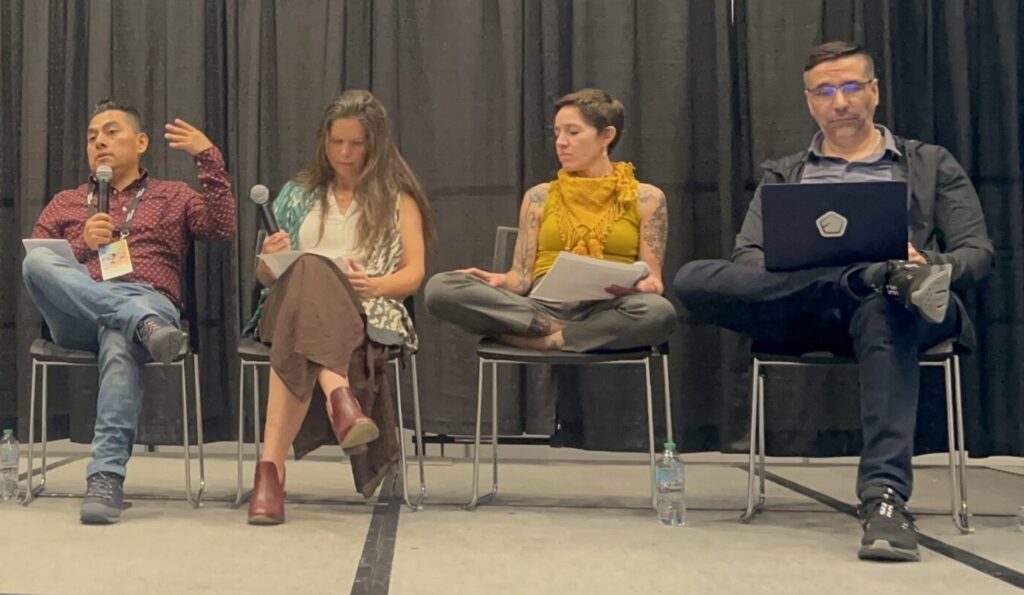
Bia: How do legal frameworks in México support or restrict the use of these substances in the context of Indigenous medicine practices and for therapy and research?
Anja Loizaga-Velder: Even though many foreigners see Mexico as a hotspot for psychedelic use and science, and there is a huge amount of psychedelic retreats publicized on the internet, Mexico’s legal landscape for psychedelic substances is based on a misguided legacy of prohibitionism and general cultural bias against psychedelics originating from inquisition in colonial times. However this landscape is also complex, ambiguous, and evolving. Currently, most psychedelics—including psilocybin mushrooms, peyote, and DMT—are still classified as controlled substances in the Mexican General Health Law and are generally illegal to possess, cultivate, or distribute. However, there are significant exceptions rooted in Mexico’s recognition of Indigenous rights and traditional practices. Under Article 195 bis of the Federal Penal Code, the use of psilocybin mushrooms and peyote is not prosecuted when it occurs within traditional Indigenous ceremonial contexts. This legal carve-out was specifically designed to protect the cultural and religious rights of Indigenous communities, who have used these substances as part of their cultural and medicinal practices for centuries.
In general, modern therapeutic use of psychedelics lacks a clear legal framework and remains in a gray space, and this has made it extremely difficult to advance scientific research in Mexico so far. Outside traditional Indigenous ceremonial settings, possession or use of psilocybin mushrooms or peyote remains illegal and can lead to severe penalties, including prison sentences. The current scheduling of psychedelics paired with non-transparent legal systems has regrettably also contributed to the harassment and, even, imprisonment of Indigenous practitioners when carrying their sacred medicines. As a result of Mexico’s ongoing drug war, the government has placed marines at the airports in charge of customs. Through these punitive measures, the state has enforced prison sentences against four Indigenous and four non-Indigenous people travelling with ayahuasca to Mexico for ceremonial and medicinal uses. This is a violation of basic human rights and a misuse of judicial power under the pretext of drug trafficking laws. Most of them have been released as result of the persistent work of the lawyers of the ICEERS ayahuasca defense fund. One Indigenous member of the Brazilian Noke Koi tribe, Aku Kamanawa, after having served over one year in prison–which was a truly terrible experience for him–and three years of ongoing legal battles, still remains in conditional liberty, unable to return home to Brazil.
In recent years, public and legislative attitudes have noticeably shifted. The former Senator, Alejandra Lagunes, has proposed a legislative reform to legalize psilocybin, aiming to create a framework for both therapeutic and ceremonial use, while explicitly recognizing and protecting Indigenous traditions. This initiative reflects a broader movement in Mexico to address mental health challenges with innovative therapies and to position the country as a leader in the emerging field of psychedelic science.
In summary, while psychedelics remain largely illegal in Mexico, there are important legal protections for Indigenous ceremonial use, and active legislative efforts are underway to expand regulated access—particularly for therapeutic purposes. The coming years will likely see further legal evolution as Mexico seeks to balance innovation in mental health care with respect for its rich ancestral heritage. It is essential that Indigenous voices are an active part of any legislative or medical process involving traditional plant and fungi medicines in our country.
Bia: How can we ensure that the movement toward psychedelic medicalization does not result in the appropriation or erasure of Indigenous traditions and cosmologies?
Carmen Amezcua: The answer, I believe, begins with a fundamental shift: we must move from extraction to collaboration. That means centering Indigenous leadership not only symbolically, but structurally—in research, in clinical protocols, and in the economic benefits derived from these practices.
Co-designing therapeutic frameworks with traditional healers, not just consulting them, is one critical step. It’s about decision-making power, not just representation. This process must be rooted in a framework of ethical reciprocity—what some of us call the seven R’s: Reverence, Respect, Responsibility, Relevance, Regulation, Reparation, and Reconciliation.
Co-designing therapeutic frameworks with traditional healers, not just consulting them, is one critical step. It’s about decision-making power, not just representation.
Carmen Amezcua
In Mexico, where sacred plants like peyote (hikuri) and psilocybin mushrooms have been used ceremonially for centuries, these issues are deeply felt. The Wixárika, Mazatec and other Indigenous groups have issued clear statements denouncing the exploitation of their rituals and warning against the ecological and cultural degradation caused by tourism and commercialization. Yet too often, their spiritual frameworks are reduced to aesthetic elements or stripped of meaning to fit into a clinical mold.
One major risk of the medicalization project is that it can strip these plants of their context—biologizing what is spiritual, quantifying what is deeply qualitative. In doing so, we risk not only flattening the cultural complexity of these medicines but also undermining their effectiveness.
These plants are not merely pharmacological agents; they are understood by many Indigenous traditions as entities—teachers, guides, spirit beings. To integrate them meaningfully, we must be willing to expand our models of healing to include spiritual and cosmological dimensions, even when they challenge our scientific paradigms.
Benefit-sharing models must also be put into place. That means creating ethical licensing structures that ensure Indigenous communities directly benefit—financially, ecologically, and culturally—from any commercialization of traditional knowledge. It also means protecting sacred territories from overharvesting and preventing the rise of so-called “plastic shamans” who appropriate rituals for personal gain.
Bia: From the perspective of a professional in the public health system, why do you consider regulatory change necessary?
Raul Escamilla Orozca: Firstly, to ensure safety, quality, and accountability. In the present state of legal confusion regarding entheogens, there is no set standard by which people can judge an unsafe practice, and thus, both users and providers are placed at risk. A regulatory approach would establish norms for training, certification, and the quality of practitioners, particularly those operating at the intersection of traditional and clinical settings.
Secondly, to preserve Indigenous and traditional knowledge. The foundations of entheogens are deeply rooted in Mexican Indigenous cosmology and culture, as well as healer practices. Current drug laws often criminalise these age-old practices of health or restrict them to a “cultural exemption”; that has no guarantee for protection and represents zero integration into public health. By introducing regulations, traditional medicine systems might win legal recognition. In this way, local and Indigenous healers can collaborate with public health institutions to promote intercultural medical assistance models.
Thirdly, Mexico is confronting serious problems in the areas of mental health and addiction, often exacerbated by physical or structural violence. Entheogens can be used as adjuncts in the treatment of several severe mental disorders supported by a growing body of scientific data (mainly depression, anxiety, posttraumatic stress disorder, addiction and existential distress). Regulatory reform would create clinical protocols, ethical guidelines, and a research infrastructure necessary to deliver these treatments in a safe, accessible, and equitable manner.
Next point is that under the current prohibition framework, certain marginalised groups are more heavily affected. Thus, both mental illness and traditional medicine are stigmatised. Both legislation and regulation are now necessary to transform the framework from one of punishment to one that benefits the individual and promotes a therapeutic model of public health.
Several significant obstacles hinder Mexican scientific research into entheogens, stemming from both ecological and geographical reasons. Reform in legislation will enable Mexico to conduct clinical trials, pursue academic research, and innovate ethically, while preserving its own knowledge systems.
Lastly, countries such as Switzerland, Brazil, Australia, the United States, Canada, and New Zealand have all reoriented their policies to support entheogenic therapies within their public health systems. As a signatory to both international human rights treaties and international health treaties, Mexico must provide the most effective, culturally specific, and evidence-based care available.
Control is not just a matter of legality but an imperative for public health. This is crucial for securing safety in use, helping to utilise traditional knowledge more effectively, expanding treatment options, and transforming Mexico’s current mental health system into a more comprehensive and effective model.
Discover the Indigenous Reciprocity Initiative of the Americas
Bia: How can therapists and researchers collaborate with Indigenous leaders in a way that is respectful, reciprocal, and legally appropriate?
Osiris: My starting point is as a member of the Mazatec community and native of Huautla de Jiménez. For seventy years this place has been the reference to talk about sacred mushrooms and María Sabina, the story is long and it is urgent to say that the global psychedelic movement and psychedelic science exists because of the knowledge that Indigenous peoples have provided voluntarily or involuntarily. In this perspective, researchers and scientists have played a determining role in this process by legitimizing their narratives from science and a racial, economic, and cultural superiority.
Right now there are attempts at cultural misappropriation and legitimizing things about sacred plants that Indigenous people do not know about. So, neocolonialist practices are intensified with scientific, academic, and spiritual narratives. Even with this violence, Indigenous peoples have shared their knowledge and continue to do so for the healing of people with psycho-emotional problems. The challenge for western people is to question themselves where the origin of these illnesses comes from and if it is fair to believe that everything can be cured with heroic doses of sacred plants.
This preamble is to say that there is no formula to solve the conflicts of colonialism over Indigenous territories, however there are proposals that are trying to build fair relations between the global north and Indigenous peoples based on dialogue and respect for Indigenous autonomy, their knowledge and sacred plants. There must be many dialogues to create protocols, activate laws that guarantee the defense of Indigenous peoples, their rights, their territories, and their ancestral knowledge.
It is important to recognize the efforts of non-Indigenous allies in trying to build reciprocity and bridges between the global north and south to repair, restore, and preserve many of the Indigenous cultural elements. Many of them try to understand the complexities of Indigenous realities, and they know that this is a long road but with beneficial impacts for humanity. In this process, Indigenous voices must take the lead role and avoid efforts and goodwill from being co-opted by particular agendas in Indigenous communities and in the global north.
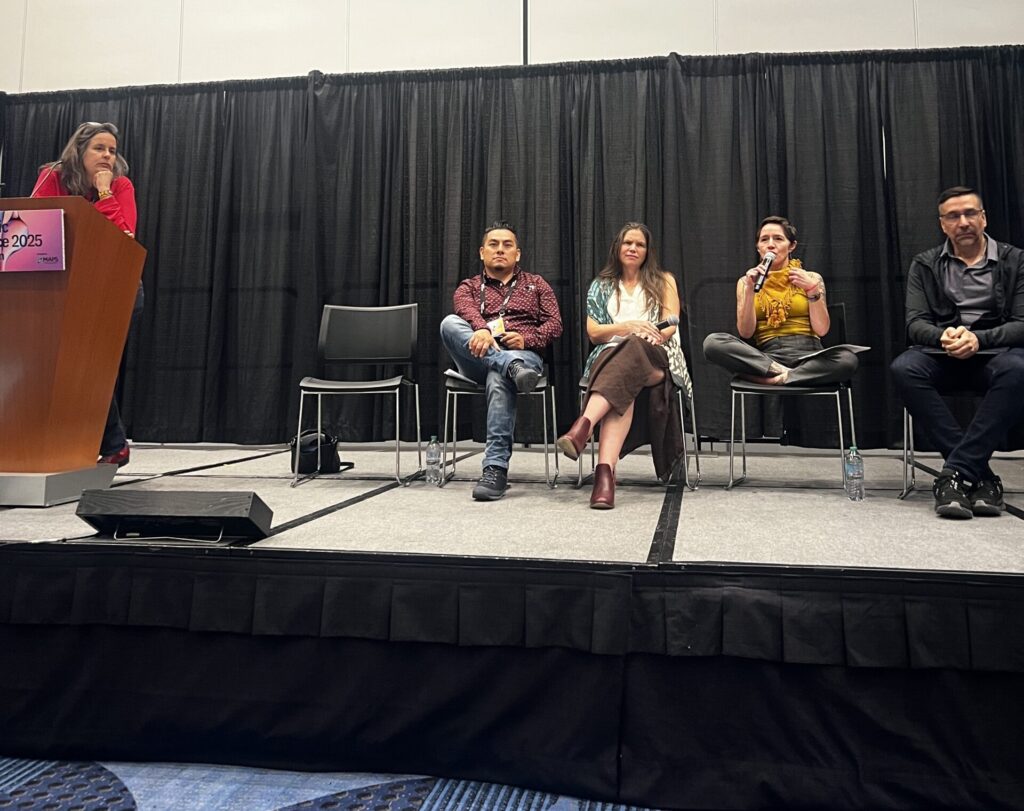
Bia: Given its rich tradition of sacred plant use and contemporary scientific community, how can Mexico contribute uniquely to the global psychedelic movement?
Anja: Mexico occupies a unique position in the global psychedelic science movement, and its potential contributions are both profound and multifaceted. First and foremost, Mexico’s historical legacy with sacred plants—like psilocybin mushrooms, peyote, and salvia divinorum—predates Western science by centuries. Indigenous cultures have developed sophisticated ceremonial frameworks for these medicines. These living traditions are not just historical; they are ongoing, with Indigenous curanderos and communities actively preserving, adapting, and transmitting their knowledge today. The story of María Sabina, the Mazatec chota-a tchi-née, whose ceremonies introduced psilocybin mushrooms to the world, is emblematic. Her legacy—and that of countless unnamed Indigenous practitioners—demonstrates the depth of Mexico’s ethnobotanical wisdom. This is a resource of global importance: the ceremonial context, emphasis on set and setting, and integration of the community are now recognized in clinical research as critical factors for safe and effective psychedelic therapy. By sharing these frameworks and insisting on their ethical and reciprocal integration in global mental health efforts with psychedelics, Mexico can help shape psychedelic science to be more integrative, respectful, and effective.
Secondly, Mexico’s biodiversity is extraordinary. It is home to the world’s largest variety of psychoactive species, many of which are still not being studied or fully understood yet. This ecological wealth offers opportunities for scientific research, conservation, and the responsible development of new therapeutic approaches. At the same time, it places Mexico at the center of urgent conversations about biocultural conservation—how to protect both the plants and the cultural contexts that give them meaning.
Mexico’s contemporary scientific community is increasingly engaged with these questions. There is also a growing movement to ensure that Indigenous voices are not only included but are central in these discussions, promoting models of collaboration, benefit-sharing, and Indigenous sovereignty.
The global appetite for psychedelic experiences and therapies risks commodifying and medicalizing sacred plants and appropriating Indigenous knowledge. Mexico’s contribution, therefore, must also be to set ethical precedents …
Anja Loizaga-Velder
However, there are important challenges. The global appetite for psychedelic experiences and therapies risks commodifying and medicalizing sacred plants and appropriating Indigenous knowledge. Mexico’s contribution, therefore, must also be to set ethical precedents: to demonstrate how nations can protect Indigenous rights from biopiracy, support biocultural conservation, and foster respectful, reciprocal relationships between traditional stewards and the scientific world.
In summary, Mexico’s unique contribution lies in its ability to bridge ancient wisdom and modern science, to offer living models of ceremonial use, to protect and study its unparalleled biodiversity, and to lead by example in ethical policy and collaboration. By doing so, Mexico can help ensure that the global psychedelic movement is not only innovative, but also just, sustainable, and deeply rooted in respect for the cultures and ecosystems from which these medicines originate.
Bia: How do Mexican professionals in psychology and psychiatry view the integration of traditional plant medicine into modern mental health frameworks?
Carmen: Within Mexican psychology and psychiatry, there is growing recognition of the value of traditional medicine. Conditions like susto, nervios, and espanto—long marginalized by Western nosology—are increasingly being acknowledged as culturally relevant expressions of psychological distress. In public institutions, especially in rural areas, curanderos and herbalists are already being integrated into health programs, albeit informally.
Yet the field remains divided. While some clinicians and researchers embrace the potential of psychedelics like ayahuasca and psilocybin, others remain cautious, citing the need for more robust evidence. What’s missing, in many cases, is a framework for intercultural medicine—one that neither romanticizes nor rejects traditional knowledge, but instead seeks ways to respectfully combine it with biomedical approaches.
Pioneering efforts are emerging. Pilot studies are being conducted on culturally adapted psychedelic-assisted therapy protocols. Training programs for mental health professionals are beginning to include modules on spiritual care, ritual safety, and cultural humility. These are hopeful signs.
The way forward, I believe, lies in intercultural synthesis—not a flattening or dilution of either worldview, but a carefully negotiated space where multiple epistemologies can coexist.
This requires time. It requires trust. And it requires a radical humility on the part of those of us trained in Western models of care.
We are not the first to discover these medicines. We are arriving late to a conversation that has been ongoing for generations. The least we can do is listen—deeply, respectfully, and with the awareness that true healing can only occur when it honors not just the individual, but also the culture, the land, and the spirit from which it arises.
Bia: How can international audiences, practitioners, and researchers support the preservation of Mexico’s ancestral plant wisdom in ethical and meaningful ways?
Raul – Firstly, by acting under the supervision of Indigenous people, not simply as consultants or tokens of Indigenization. Ensure that all research and cooperative activities observe Free, Prior, and Informed Consent (FPIC). Never engage in practices which extract wisdom. It should not be turned into trade goods; neither should it be displaced by something with no community or environmental value.
Secondly, collective knowledge and traditional information is public property. Help to establish legal protection (e.g., biocultural rights, benefit-sharing agreements, protected areas) for traditional knowledge and its products. Without specific informed consent, do not publish or register in the patent system any knowledge obtained from communities.
Thirdly, Indigenous governance systems and the ways they stipulate the use of medicinal plants must be respected. We should fund or promote community-operated projects such as conservation and cultural education programs, which help to keep traditional ways alive.
We need to coordinate with traditional knowledge-keepers to develop models of intercultural care that combine ancestral wisdom with evidence-based medicine. Traditional knowledge holders should be co-authors when appropriate. The outcomes of research must benefit communities, not just institutions or private companies.
Support discussions and cultural exchanges that enable both parties to learn from each other, rather than focusing on tourism or religious tourism. Ceremonies, symbols, or the use of plant medicine should never become commercialised properties in retreats or wellness industries.
Use your influence to boost Indigenous voices in debates over national and international policy. Encourage reforms that respect the holy status of plants like peyote and protect them from overharvesting, commercialization, and criminalization.
Raul Escamilla Orozca
Use your influence to boost Indigenous voices in debates over national and international policy. Encourage reforms that respect the holy status of plants like peyote and protect them from overharvesting, commercialization, and criminalization. Legislation should not abolish traditional plant uses or turn observance into a criminal act.
Lastly, we should provide financial support, venues, training opportunities, and institutional entry points for Indigenous scholars, youth, and practitioners on their terms. In research funding and opportunities to publish articles, challenge the existing imbalance which favours rich, industrialised countries.
In short, from curiosity to solidarity, from extraction to reciprocity, and consumption to conservation, international partners must change their attitude towards tribal spiritual heritage. To preserve Mexico’s ancestral plant wisdom, it will require a lot of humility, long-term relationships, and fairness, not just admiration for the strength of these plants. The roles of international audiences, practitioners, and researchers are crucial in preserving Mexico’s ancient plant wisdom. We need, however, to approach this work with respect, commitment, and humility in mind.
Art by Michelle Velasco.
Note: This article was originally presented as a panel, “Plant Medicine in Mexico: From Traditional Use to Psychedelic Therapy,” at Psychedelic Science 2025 on June 19, 2025 in Denver, Colorado.
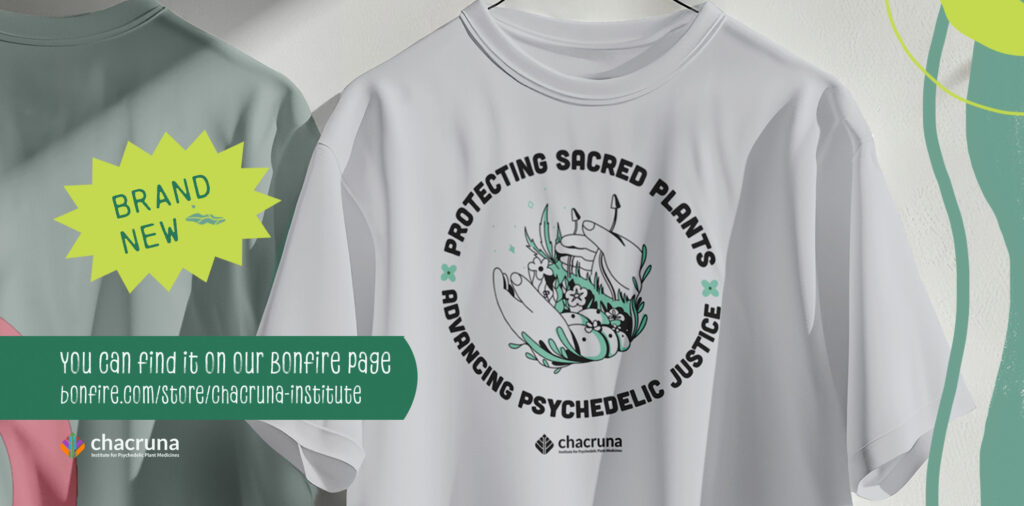
Shop Our Latest T-Shirt Design, “Protecting Sacred Plants.”
Take a minute to browse our stock:

Did you enjoy reading this article?
Please support Chacruna's work by donating to us. We are an independent organization and we offer free education and advocacy for psychedelic plant medicines. We are a team of dedicated volunteers!
Can you help Chacruna advance cultural understanding around these substances?
Become a Chacruna Member
To make a direct donation click the button below: