


- Psychedelics, Chloroquine for the Climate Pandemic? - November 14, 2025
- Back to the Roots: Psychedelic Science Rebuilds After MDMA Denial - July 14, 2025
- Jonathan Ott, apostle for jurema and entheogens, dies at 76 - July 8, 2025
Chemist made history with spiritual psychedelic self-experiments
At the age of 76, American chemist Jonathan Ott died on Saturday, July the 5th. He was an enthusiast of dimethyltryptamine (DMT) extracted from the tree jurema-preta (Mimosa tenuiflora) and one of the inventors of the term “entheogen,” which he preferred to “psychedelic” because it indicated the inner manifestation of something divine.
Ott published several works on psychedelics (I have referenced five of them in my book A Ciência Encantada de Jurema [The Enchanted Science of Jurema], released in May by the Brazilian publisher Fósforo). In a 2000 article, he mentioned in the title, written in Portuguese, the name of the entheogen worshipped in Indigenous villages and Afro-Brazilian terreiros in the Brazilian Northeast: “Pharmahuasca, Anahuasca and Vinho da Jurema.”
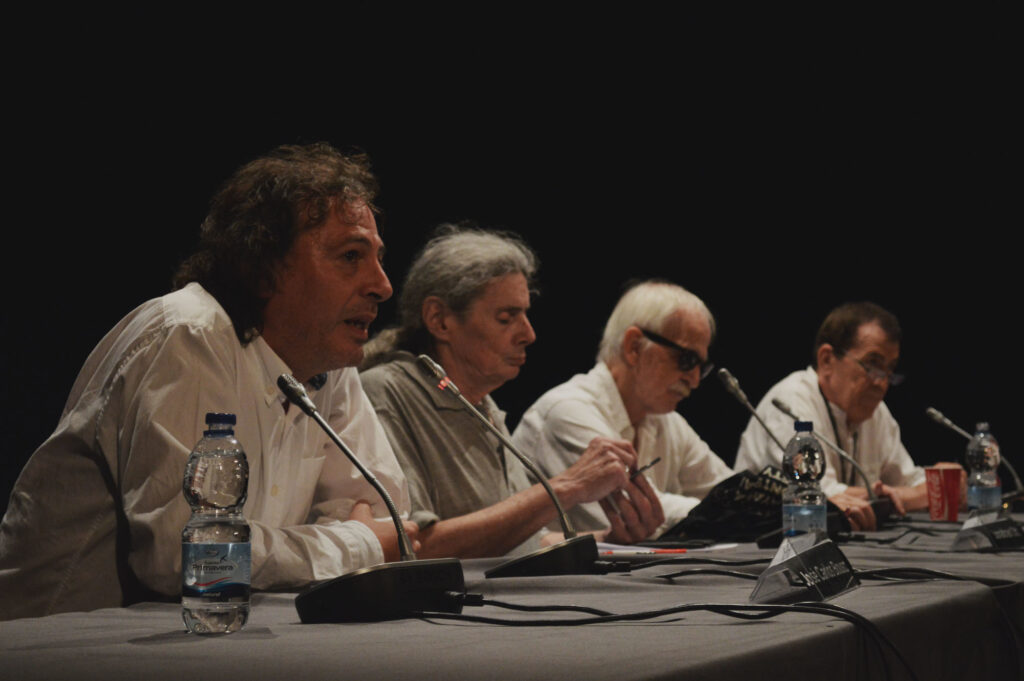
Pharmacotheon was published in 1992, which I read in Spanish translation (La Liebre de Marzo, 1996) with more than 600 pages. The volume has a preface by another legendary psychonaut, Albert Hofmann, who, in 1943, proved the psychedelic effect of the LSD he had invented in 1938.
Hofmann drew attention to Ott’s method of self-experimentation. After drinking a cold infusion of macerated jurema-preta roots, he became a proponent of the theory that the plant can alter consciousness on its own, without other ingredients.
Could this be the solution to the “lost inhibitor” of the drink invented by Indigenous people from the semi-arid backlands of Brazil? Juremeiros’ recipes for preparing the brew have always been kept secret, in order to protect traditional knowledge from colonial persecution and appropriation.
The inhibitors in question are substances capable of stopping the action of the monoamine oxidase (MAO) enzyme and thus preventing it from degrading DMT in the digestive tract. In ayahuasca, the DMT from chacruna leaves reaches the brain through the inhibitory action of compounds present in the mariri vine.
There has been much speculation about which substances play this role in the jurema wine. Could they be purported inhibitors from the tree manacá, or maybe wild varieties of passion fruit or cashew? Another explanation would be the presence of some MAO inhibitor in Mimosa tenuiflora itself, named yuremamine by a group of researchers from Finnland in 2005.
Ott himself popularized among psychonauts the recipe for what he called “anahuasca” (ayahuasca analogues) using jurema-preta. The most accessible source of inhibitor would be macerated Syrian rue seeds (Peganum harmala).
It was with these instructions from Ott that the Brazilian daimista Wanda Maria da Silveira Barbosa, known as Yatra, began using shamanic jurema to treat drug addicts accompanied by the Friends of the Forest organization in the Netherlands, in 1996.
On a trip to Rio de Janeiro in 1997, she introduced the concoction to psychonauts such as anthropologist Rodrigo Grünewald. He had studied the Atikum juremeiro people of Serra do Umã (State of Pernambuco) and put Yatra in touch with them, who welcomed the visiting psychonaut and drank Ott’s globalized version of the sacrament with her.
The chemist began his psychonaut journey with LSD when he sought to go underground as a conscientious objector against the Vietnam War around 1968. As a chemistry student, in 1973 he attended a lecture by ethnobotanist Richard Evans Schultes on the so-called “plants of the gods.”
He became a disciple of Schultes and, through him, of Hofmann and Robert Gordon Wasson. In 1979, dissatisfied with the stigma and semantics of the term “psychedelics,” Ott coined the neologism “entheogen” with Wasson, Carl Ruck, Jeremy Bigwood, and Dany Staples.
With the psychedelics he studied and experimented with, Ott said he learned that every place is sacred: “I firmly believe that the spiritual use of entheogens is today one of the brightest human hopes for overcoming the ecological crisis.”
“He was a pioneer to the psychedelic movement. His departure represents a huge loss … Jonathan combined scientific research with radical curiosity, openness and personal experimentation to decipher thousands of molecules.
Dr. Bia Labate
“He was a pioneer to the psychedelic movement. His departure represents a huge loss,” says anthropologist Bia Labate, head of the Chacruna Institute. “He was very influential author, researcher and ethnobotanist. Jonathan combined scientific research with radical curiosity, openness and personal experimentation to decipher thousands of molecules.
According to Labate, his Palenque Conversations, hosted in Palenque, Mexico, could be considered a precursor to contemporary psychedelic conferences. Ott lived in a ranch in Mexico, advocating for the right to use psychoactive substances as part of a lifestyle.
“He was charismatic and sweet man with encyclopedic knowledge. He always had a good story to tell and remained an outsider skeptical of the powers that be, helping to change the world from the margins.”
Note: A version of this story appeared originally in Portuguese in the blog Virada Psicodélica published by the Brazilian daily newspaper Folha de S.Paulo and can be found here.
DISCLAIMER: The views expressed here are by Leite, and not Chacruna. Leite sits on the advisory board of Chacruna.
Art by Mariom Luna.

Shop Our Latest T-Shirt Design, “Protecting Sacred Plants.”
Take a minute to browse our stock:

Did you enjoy reading this article?
Please support Chacruna's work by donating to us. We are an independent organization and we offer free education and advocacy for psychedelic plant medicines. We are a team of dedicated volunteers!
Can you help Chacruna advance cultural understanding around these substances?
Become a Chacruna Member
To make a direct donation click the button below: