

- Psychedelics, Chloroquine for the Climate Pandemic? - November 14, 2025
- Back to the Roots: Psychedelic Science Rebuilds After MDMA Denial - July 14, 2025
- Jonathan Ott, apostle for jurema and entheogens, dies at 76 - July 8, 2025
Forest medicines induce reverence for nature but do not provide any environmental panacea, certainly not at the COP30 summit
Climate pandemics are fueled by the delusion of limitless growth gone viral, and neo-shamanism is no cure for that
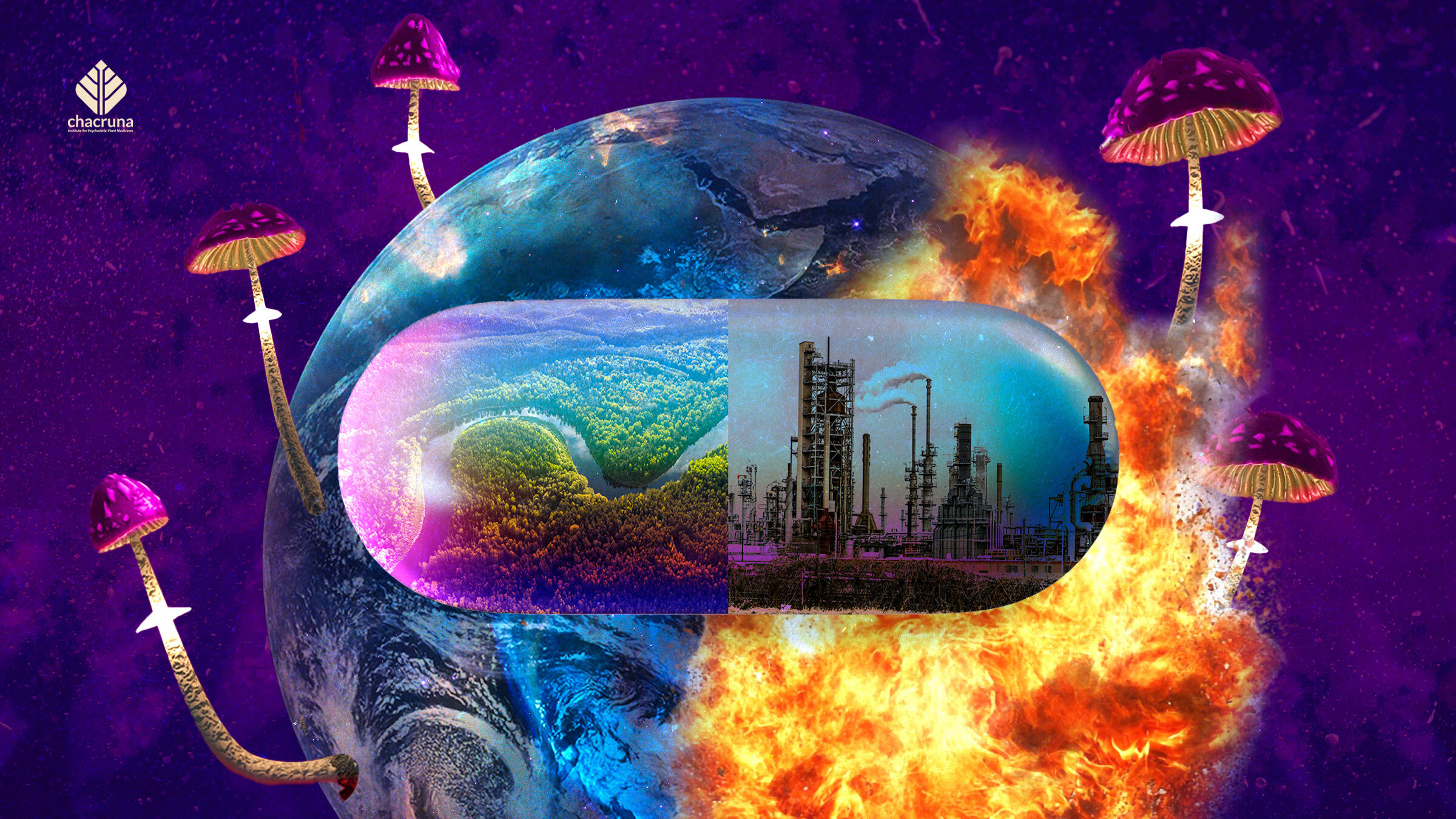
A question that won’t go away asks whether psychedelic substances, through the reverence they induce for nature, could halt the ecological crisis. On the occasion of COP30—a climate summit taking place in Brazil, November 10-21, 2025, that presents a new act in a comedy of errors that has been playing out since 1992—it is worth exorcising the notion that forest medicines would have the power to awaken consciences and disarm the global warming bomb.
The arguments I make below are inspired by an interview that anthropologist Justine Quijada gave to journalist Shayla Love. Their conversation about animism and psychedelic shamanism was published by the newsletter, The Microdose.
There is some symbolism in the fact that the UN Framework Convention on Climate Change (UNFCCC) was adopted in Rio de Janeiro, a.k.a. Cidade Maravilhosa (Marvelous City), during the Rio-92 conference, and 33 years later it arrives in Belém do Pará, the port of entry to the world’s largest river and largest chunk of rainforest, a biome now at risk of collapse due to global warming.
The Amazon forest, besides being a gigantic carbon sink, is home to two hundred Indigenous peoples. Their lands are the most preserved in Brazil, with only 1% of the reserves deforested since 1985, according to the MapBiomas NGO consortium, compared to 20% that has been cleared in private areas.
Several of these ethnic groups, perhaps the majority of them, make regular use of plants containing psychedelics, in the form of brews or powders. The shrub chacruna and the mariri vine, or yagé, are the ingredients for the ayahuasca tea; the resin of virola trees is used to make yekoana rapé (snuff), and another mind-altering snuff, yopo, is obtained from the seeds of angico trees.
Indigenous cosmologies attribute soul, spirit, personality—clumsy translations of concepts incongruent with Western materialism—to everything in the world.
Indigenous cosmologies attribute soul, spirit, personality—clumsy translations of concepts incongruent with Western materialism—to everything in the world. Plants, animals, even landscape features, such as mountains, rivers, and waterfalls, are social beings, a condition not exclusive to living humans or their ancestors.
Those substances are tools to facilitate communication, often negotiation, with these powerful entities. Generally, it is the shamans who move between these societies, but psychedelic preparations can also be used by other people in certain situations.
Discover the Indigenous Reciprocity Initiative of the Americas
Thus, among non-Indigenous people fascinated by the so-called “power plants,” a direct association was forged between altered states of consciousness and the values of preserving flora and fauna. It is a somewhat romanticized view, that of the inebriated noble savage living in harmony with nature.
Quijada warns that this conception says more about the Western mentality, in its materialistic discomfort, than about the Indigenous way of being in the world. What we conceive of as separate nature and culture would be, for these peoples, a common domain, populated by people who are not necessarily human.
Entities that are not always friendly; in fact, they possess the power to bring about epidemics and famine, as well as contemporary plagues, such as illegal gold diggers. Dealing with them, in a psychedelic trance, does not always translate into encounters of peace and love. Rather, this is a notion sweetened by white people who rediscover themselves as part of nature and, in contrast to the inhumanity of their own culture, conclude that such belonging leads to ancestral wisdom founded on harmony.
It is useful to mention that advocates for psychedelics include the ilk of Robert Kennedy Jr., Peter Thiel, and Elon Musk in order to show that such compounds are not necessarily vehicles for ecological, pacifist, or altruistic beliefs. Not all forms of neo-shamanism are benevolent, as seen in the fury of Jake Angeli—the QAnon shaman, that guy with the horns—during the Capitol invasion in 2021.
Some of the most fervent followers of Jair Messias Bolsonaro, convicted former president of Brazil, were leaders of the ayahuasca religion União do Vegetal. Godfathers of Santo Daime, psychedelic researchers, and Indigenous or non-native shamans have also been involved in cases of sexual or spiritual abuse.
Landowners who deforest the Amazon can certainly consecrate ayahuasca or rapé and, even if they are an exception, continue to believe that they are working for the future of Brazil and to feed the world with soybeans and corn. Probably only self-interest, in the monetization of carbon credits for renouncing deforestation, might convert them to the environmental cause.
Deforestation in the Amazon has decreased 50% in the last three years of Luiz Inácio Lula da Silva’s administration, but the same government is working to increase oil exploration not far from the Amazon river’s mouth. The planet remains dependent on fossil fuels. Carbon emissions keep going up, and 2025 is on track to become the second hottest year on record, with or without COP30.
No, psychedelics do not qualify as a panacea against extreme events like the tornado-seeding cyclone in the state of Paraná a few days ago. In a decade, 250 million people—70,000 per day—have left their homes devastated by climate extreme events (droughts, wildfires, hurricanes, floods, landslides).
Against the epidemic of destruction, psychedelics—come they from the forest or from the lab—would amount to nothing more than a placebo, the chloroquine of the climate crisis if you will.
Nature, assaulted by the unsustainable, relentless growth culture of capitalism, witnesses artificial infernos unleashed by forces that not even all the shamans in the world together could handle because the magnitude of forces unleashed by white people is unprecedented—and not least by the diplomats and environmentalists gathered in Belém, enclosed as they are in the capitalist box, with their ears shut to Indigenous peoples’ pleas and lessons.
The sky is falling on our heads. They have been warning us for some time now. Against the epidemic of destruction, psychedelics—come they from the forest or from the lab—would amount to nothing more than a placebo, the chloroquine of the climate crisis if you will.
Note: This story appeared originally in Portuguese in the blog Virada Psicodélica published by the Brazilian newspaper Folha de S.Paulo, here.
Disclaimer: The views expressed here are by Leite, and not Chacruna. Leite sits on the advisory board of Chacruna.

Shop our Collection of Psychedelic T-Shirts
Take a minute to browse our stock:





Did you enjoy reading this article?
Please support Chacruna's work by donating to us. We are an independent organization and we offer free education and advocacy for psychedelic plant medicines. We are a team of dedicated volunteers!
Can you help Chacruna advance cultural understanding around these substances?
Become a Chacruna Member
To make a direct donation click the button below: