


How a dusty ampoule in a Cairo hospital revealed a lost chapter of psychedelic medicine
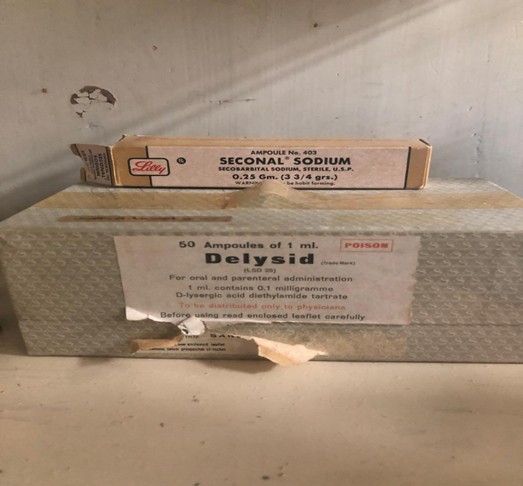
I will never forget the first time I saw that tiny glass vial. I was working as a clinical psychologist with the Behman Hospital, located in the Helwan suburb of Cairo, when I was inspecting an older wooden exhibit case and something caught my eye. Amongst the yellowed labels and outdated medical equipment lay a small vial labeled “Delysid LSD-25.” I am one of the very few clinicians in the area who have formal training in psychedelic-assisted therapy, and I knew exactly what I was seeing. But the question at hand was: why was it in this remote corner of an Egyptian hospital? Who had used it? And, more importantly, why had this story gone untold?
This revelation set me on a quest that would permanently alter my comprehension of psychedelic medicine’s past. What I discovered was nothing short of groundbreaking: a relatively little-known portion of Egyptian psychedelic psychiatry that defies all conventional assumptions about the first appearance and development of these therapies.
The story begins in February of 1960, on a crowded Cairo street, a chance encounter between two doctors brought Egypt into psychedelic psychiatry. Dr. Athanassios Kafkalides, a Greek neuropsychiatrist in Cairo, ran into his friend and colleague Dr. Behman. “Don’t miss the lecture, Kafkalides, it’s a revolution in psychotherapy,” Dr. Behman said, asking him to attend a lecture given by a British psychiatrist, whose name has since been lost to the archive, about a mysterious new drug.
The lecture began with the English expert holding up a Delysid (LSD-25) ampoule and addressing the group: “Ladies and gentlemen, this ampoule holds a new medicine with a very powerful action on the psychic sphere.” Dr. Kafkalides observed a patient, Amina, under the influence of LSD at Dr. Behman’s clinic after the lecture. The demonstration session with Amina was the turning point that would revolutionize Egyptian psychiatry. Dr. Kafkalides watched in awe as the patient accessed memories and consciousness inaccessible through conventional therapy. On LSD, Amina recalled events of her distant past with crystal clarity, experiencing profound psychological insights inaccessible with conventional approaches.
Satisfied with this experience and with two long-standing neurotic patients who had not been helped by conventional therapy, Kafkalides wrote to the scientific director at Sandoz (the Swiss company producing LSD sold under the name Delysid) in Cairo. 100 ampoules of Delysid Sandoz arrived in his office shortly afterwards, along with the accompanying literature. This was the beginning of what was to be a ten-year psychotherapeutic program at the Greek Hospital in Cairo, during which Kafkalides was to develop his own “autopsychognosia” method and treat patients with LSD-25.
While the rest of the Western world came to see the potential for therapeutic uses of psychedelics through heavily funded research programs in Europe and North America, Kafkalides worked in Egypt in total obscurity, almost entirely unknown to the global scientific community of his time.
While the rest of the Western world came to see the potential for therapeutic uses of psychedelics through heavily funded research programs in Europe and North America, Kafkalides worked in Egypt in total obscurity, almost entirely unknown to the global scientific community of his time. His findings, entirely absent from mainstream histories of psychedelic medicine and hardly recognized even by experts in the field, are a vital missing gap in the international conversation of consciousness exploration. This complete absence from the historical record not only illustrates the extreme Eurocentrism that characterizes psychedelic historiography but also means that we have lost decades of precious insight that would have significantly aided the development of culturally sensitive methods of psychedelic therapy in the present day. The recovery of Kafkalides’ neglected research does not simply correct a minor gap in our knowledge, instead, it calls for a radical reinterpretation of the history of psychedelic medicine to recognize important contributions that have been systematically excluded because of their non-Western origin.
A Forgotten Chapter
A typical history of psychedelic research is presented from the Western point of view, with famous milestones like Albert Hofmann’s discovery of LSD in Switzerland, Humphry Osmond and Abram Hoffer’s research on treating alcoholism in Canada, and Timothy Leary and Richard Alpert’s notorious Harvard Psilocybin Project. These histories are important, but they create the impression that psychedelic therapy was a strictly Western development, with innovations spreading outward from European and North American centers to the rest of the world. Recent scholarship in history by Erika Dyck, in her book, Expanding Mindscapes: A Global History of Psychedelics, has taken on the important challenge of decentralizing this dominant narrative, thus opening up the many international contexts in which psychedelic substances have been researched, used, and incorporated into various therapeutic and cultural practices.
But Egypt, a country at the crossroads of Africa, Europe, and the Middle East, was no passive recipient of Western psychiatric innovation. Egypt in the mid-twentieth century had sophisticated psychiatric centers that engaged with and domesticated new forms of therapy, such as psychedelic therapy. The Behman Hospital, built in 1940 as Egypt’s first private psychiatric hospital, and the Greek Hospital in Cairo were both places of innovation where practitioners brokered the complex intersection between global psychiatric innovation and Egyptian culture.
Although Kafkalides’ study is the best documented, he was not alone. Other Egyptian psychiatrists have studied the therapeutic potential of psychedelics in this period, including Dr. Benjamin Behman and his son-in-law, Dr. Fathi Loza, who were mentioned as early as 1959 writing to their British counterparts, inquiring about the therapeutic application of LSD for their psychiatric patients. Dr. Behman, the other figure in this narrative, was indeed one of the chief architects of Egypt’s experiment with psychedelic psychiatry. As the founder of Behman Hospital in 1940, the first private psychiatric hospital in Egypt and eventually the largest in the Middle East, Dr. Behman established an institutional framework that would be a tool of experimental psychiatric practice. His vision was beyond standard therapies, as seen in his affirmative efforts to introduce psychedelic therapy into Egypt. It was Dr. Behman who extended a personal invitation to the unnamed English psychiatrist to Cairo to introduce LSD therapy, having seen its revolutionary potential before many of his contemporaries. His insistence that Dr. Kafkalides observe patient Amina’s LSD session, and despite the English specialist’s reluctance, reveals less a professional interest than a deliberate plan to disseminate this information to Egyptian practitioners. Rather than an isolated collaboration between Dr Behman and Kafkalides, this moment belonged to a wider, fertile landscape of Egyptian psychedelic inquiry, one that positioned Egypt not as a peripheral observer, but as a full participant in the formative years of global psychedelic psychiatry.
Discover the Indigenous Reciprocity Initiative of the Americas
Dr. Kafkalides and The Unique Contribution of Autopsychognosia
At the center of this forgotten chapter is Dr. Athanassios Kafkalides, whose experimental therapy carried out at the Greek Hospital in Cairo is Egypt’s best-documented case of psychedelic psychiatry. During the subsequent years following the release of his first scientific paper in 1963, on the application of LSD as a therapeutic tool in treating psychoneuroses featuring a case of conversion therapy which would later be cited in the Proceedings of the IV World Congress of Psychiatry (Madrid, 1966), Kafkalides developed a therapeutic system he termed autopsychognosia, or “inner knowledge of the soul.”
LSD-25 was administered to at least 43 patients as part of a methodologically precise investigation of prenatal and perinatal experience, with specific focus on life inside the womb and the birth process itself. His theoretical model, which was further developed in one of his later books, The Power of the Womb and The Subjective Truth, was based on the central hypothesis of the “rejecting womb / primitive terror” psychic imprint. By surmounting the Western paradigms of his era, Kafkalides argued that such highly affective internal states held therapeutic meaning regardless of their objective verifiability, thus challenging the epistemological underpinnings of Western psychiatry.
Of particular interest, his research prefigured several of the major principles of transpersonal psychology by a decade of their official articulation, thus proving that culturally specific, non-Western settings, such as Egypt, were not only receptive to but also capable of producing original theoretical breakthroughs. The international recognition of Kafkalides’ work came in 1966 when he represented Egypt at the IV World Congress of Psychiatry and made a presentation on a case treated with LSD. This momentous event not only legitimized his therapeutic practice but also placed Egypt firmly on the international psychedelic map, challenging the hypothesis that innovation in this field was exclusive to Europe or North America.
His work involved the integration of certain cultural allusions native to the Egyptian environment, including the use of local metaphors and symbolism drawn from local traditions to interpret the psychedelic experiences of patients.
The most important value of Kafkalides’ work lies in the manner in which it represents a case of transcultural adaptation, the term used in the field to describe the way that therapeutic techniques, originally formulated in one cultural context, are reworked on their translation to another. How Kafkalides translated psychedelic therapy to the Egyptian environment is especially informative regarding the applicability of these powerful instruments in multicultural settings. His work involved the integration of certain cultural allusions native to the Egyptian environment, including the use of local metaphors and symbolism drawn from local traditions to interpret the psychedelic experiences of patients. Linguistically, Kafkalides skillfully navigated the difficulties involved in working within an environment that was multilingual, conducting therapy in Greek with Greek-Egyptian patients and recording cases using a mixture of Greek, Arabic, English and French, thereby constructing an innovative therapeutic vocabulary that bridged Western psychiatric jargon and local expressions of psychological states.
Additionally, the institutional situation of the Greek Hospital in Cairo, which enjoyed more autonomy than would have been possible in many Western contexts, as well as Egypt’s relatively permissive regulatory environment regarding experimental treatments in the 1960s, allowed Kafkalides to work out his autopsychognosia approach with minimal external interference. This was in sharp contrast to the situation experienced by his European and North American contemporaries, who increasingly struggled to work within institutionalized constraints.
Beyond Eurocentrism
Egypt’s exclusion from psychedelic historiography is an aspect of broader Eurocentric assumptions in our narrative of the global exchange of medical knowledge. Conventional histories have a tendency to place Western medical institutions as producers and non-Western locations as recipients, ignoring the complex, multilateral transactions through which psychiatric knowledge and practice were rebuilt across cultures.
By reclaiming this missing chapter, we put back together a more nuanced picture of how psychedelic techniques circulated throughout the globe in the mid-twentieth century. Egyptian psychiatrists were not mere passive recipients of Western innovations but active actors who grasped and most likely shaped these techniques in ways that were suitable to their own local cultural and institutional contexts.
Those same structural accommodations Egyptian practitioners created, such as the use of culturally appropriate metaphors within sessions, tapping into terminology from Indigenous spiritual practices within therapy, and situating therapy within institutional contexts that are familiar, gesture toward an emergent form of culturally responsive psychedelic practice that deserves further scholarly attention. For instance, Egyptian cosmological and mythological metaphors appeared in patients’ LSD sessions, material not “imported” from Western models but emerging spontaneously out of the cultural background of the therapeutic setting. This rediscovered history prompts us to question other potential sites of psychedelic innovation that have similarly been excluded from prevailing histories. How would our understanding of psychedelic medicine change if we more fully incorporated Latin American, Asian, African, and Middle Eastern viewpoints? What other lost chapters remain to be discovered?
Relevance to Contemporary Psychedelic Medicine
As psychedelic medicine experiences a global renaissance, with optimistic investigation into treatments for conditions ranging from depression to addiction to end-of-life suffering, the Egyptian past can serve as a model for contemporary practice. The failures and achievements of individuals like Kafkalides, who worked across cultural divides to bring psychedelic techniques into non-Western contexts, offer strong precedents for new programs to develop culturally attuned models for psychedelic therapy.
This is particularly relevant to the emerging interest in psychedelic practices within Arab contexts. As researchers and clinicians across the region begin to investigate the therapeutic potential of these substances, drawing on Egypt’s history of psychedelic psychiatry provides inspiration as well as pragmatic lessons. How might contemporary Arab models of psychedelic therapy draw on this forgotten history while being attentive to present cultural, religious, and institutional realities?
The very adaptations that Egyptian therapists developed in the mid-twentieth century, from theoretical orientations, through practical protocols, to interpretive vocabularies, demonstrate the innovative creativity that occurs as therapeutic practices cross cultural boundaries.
The Egyptian case is a reminder that effective deployment of psychedelic therapy across non-Western cultural landscapes is not simply the unproblematic transplantation of research protocols that have been developed in Western environments into culturally diverse environments. Rather, it is a sensitive adaptation that is done with respect for local healing traditions, conceptual vocabularies, and institutional milieus. The very adaptations that Egyptian therapists developed in the mid-twentieth century, from theoretical orientations, through practical protocols, to interpretive vocabularies, demonstrate the innovative creativity that occurs as therapeutic practices cross cultural boundaries.
Looking Forward by Looking Back
As we near the start of what has been hailed as the “second wave” of psychedelic research, this re-discovery of Egypt’s lost psychedelic traditions is very opportune indeed for reflection. By expanding our historical horizon from the traditional Western-centric accounts, we gain a greater understanding of the range of ways in which these powerful tools have been conceptualized and used throughout the various cultures.
This wider history can illuminate more culturally attuned and inclusive models of modern psychedelic medicine. Rather than reflexively presuming universal applicability of research models developed largely within Western laboratory cultures, we can draw on past precedents of transcultural adaptation like the Egyptian one to shape approaches more authentically in conversation with diverse healing traditions and epistemologies.
The latest research project on psychedelic therapy in the context of Egyptian psychiatry seeks to offer a comprehensive understanding of this otherwise neglected aspect, which entails an in-depth scrutiny of the institutional dynamics, therapeutic uses, and cultural meanings that characterize this phenomenon. The research shall not only cover published sources but also draw upon previously undiscovered archives that are now surfacing in Cairo and Greece, in addition to exclusive interviews with those who witnessed these pioneering research programs firsthand. Through consideration of this historical context, we not only better understand the past, but we also gather valuable information that is relevant to navigating the complex cultural politics of psychedelic medicine in the future.
Chapters on such topics as African healing ceremonies and Arab mystical traditions have been largely neglected and are still largely unpublished; yet the attempt to shed light on these overlooked histories is a necessary act of historical justice. Their dissemination serves to enrich the international psychedelic canon by offering culturally situated, psychologically nuanced, and truly pluralistic paradigms.
Art by Mulinga.
References
Dyck, E. (2008). Psychedelic Psychiatry: LSD from Clinic to Campus. Johns Hopkins University Press.
Dyck, E., & Elcock, C. (Eds.). (2023). Expanding Mindscapes: A global history of psychedelics. The MIT Press. https://mitpress.mit.edu/9780262546935/expanding-mindscapes/
Kafkalides, A. (1963). Application thérapeutique de la diéthylamide de l’acide d-lysergique (Delysid ou LSD-25) sur les psychonévroses. Annales Médico-Psychologiques, 121(2), 191–200.
Kafkalides, A. (1966). A case of homosexuality treated with LSD-25. Paper presented at the IV World International Congress of Psychiatry, Madrid. (Excerpta Medica, 1966).
Kafkalides, A. (1967). Intra-uterine security: The cause of the Oedipus and Electra complexes in two cases treated with LSD-25. Paper presented at the International Congress of Psychotherapy, Wiesbaden. (Published in The International Journal of Prenatal and Perinatal Psychology and Medicine, 8(4), 427–431).
Kafkalides, A. (1980). The Knowledge of the Womb: Autopsychognosia with Psychedelic Drugs. Editions Heket. (English translation published in 1999).
Kafkalides, A. (1989). The Power of the Womb and the Subjective Truth. Triklino House.
Murad, Y. (1950). Comparative Psychiatry and Egyptian Mental Health. Cairo University Press.
Sessa, B. (2012). The Psychedelic Renaissance: Reassessing the Role of Psychedelic Drugs in 21st Century Psychiatry and Society. Muswell Hill Press.
Shop Our Latest T-Shirt Design, “Protecting Sacred Plants.”
Take a minute to browse our stock:


Did you enjoy reading this article?
Please support Chacruna's work by donating to us. We are an independent organization and we offer free education and advocacy for psychedelic plant medicines. We are a team of dedicated volunteers!
Can you help Chacruna advance cultural understanding around these substances?
Become a Chacruna Member
To make a direct donation click the button below: