
Trump’s Push for Psychedelic Therapies Puts Counterculture Aside
Presidential Order to Accelerate Treatments Consecrates Right-Wing Adherence to Mind-Altering Substances
Donald Trump’s executive order directing his government to expedite access to treatments with ibogaine, MDMA, and psilocybin, while not unforeseen, has stunned those who have been in the field of mind-altering substances for longer. Centuries or millennia, in the case of Indigenous peoples, or decades, in the case of survivors and heirs of the hippie movement of the 1960s/70s.
Those who call the shots now are biomedicine, the right wing, capital, and the military. The president allocated $50 million USD to match private investments in psychedelic research and demanded fast-track approvals from regulatory bodies for the new drugs—in effect, six days later HHS secretary Robert Kennedy Jr. formalized priority for three private organizations to advance studies of psilocybin and methylone (an empathogen similar to MDMA).
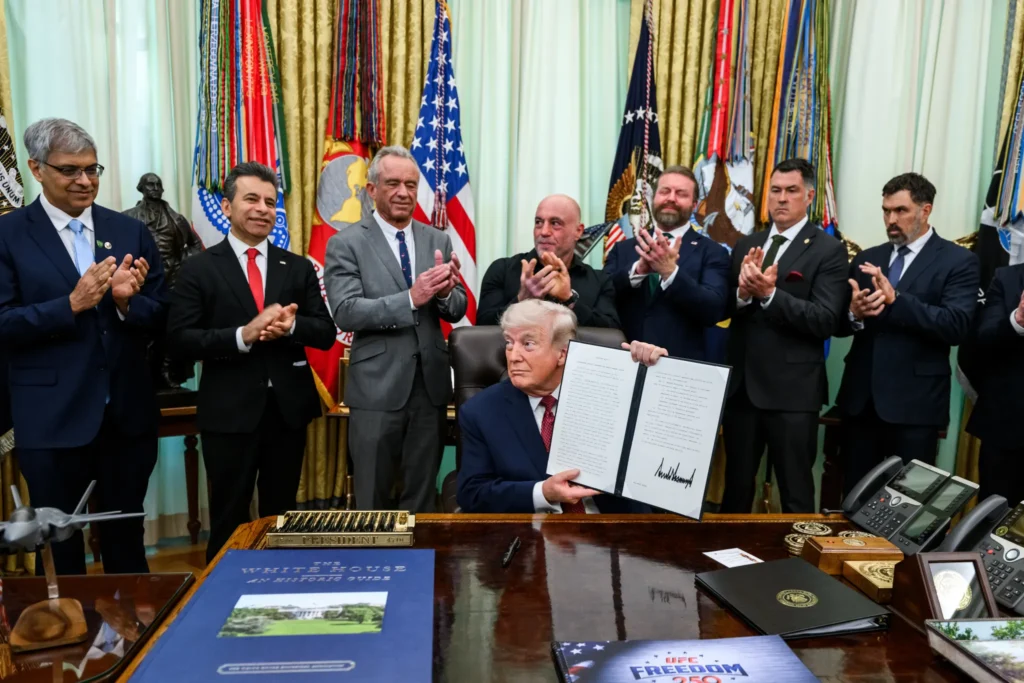
There is something ironic in the presidential decree having been announced on the eve of Bicycle Day (April 19th), celebrated by psychonauts worldwide as the starting point of the lysergic era, efficiently aborted by the prohibitionism of yet another Republican president, Richard Nixon, who declared a War on Drugs in 1971.
On that Monday in 1943, Albert Hofmann, a chemist at the Swiss laboratory Sandoz, ingested 250 micrograms (millionths of a gram) of LSD-25, a compound he had synthesized in 1938. It seemed like a small amount, but it was quite a strong dose. He cycled home, the landscape dissolving along the way on this first intentional acid trip.
LSD remained unrestricted until 1965, when the US government began limiting shipments of the substance to researchers and psychiatrists through Sandoz, under the trade name Delysid. With the growing use of the drug by proponents of free love, rock music, and pacifism, conservatives managed to include it in the most restrictive list of controlled substances, Schedule 1, lumping them together with heroin and cocaine along with marijuana.
“The star of the White House announcement wasn’t LSD, but ibogaine, a substance originally extracted from the root of an African plant, Tabernanthe iboga, now also produced in laboratories. Ibogaine became popular among US war veterans for treating trauma.”
It only took half a century for psychedelics to take a 180-degree turn, now with the reactionaries’ foot firmly on the accelerator of history. The star of the White House announcement wasn’t LSD, but ibogaine, a substance originally extracted from the root of an African plant, Tabernanthe iboga, now also produced in laboratories. Ibogaine became popular among US war veterans for treating trauma.
This is undoubtedly a symptom of the atrophy of the libertarian and rebellious spirit so dear to the psychedelic movement. It’s also symptomatic that ibogaine is being prioritized in the Trump administration, as it’s a therapy with far less scientific evidence than MDMA (ecstasy) and psilocybin from magic mushrooms, which have already undergone phase III clinical trials to treat post-traumatic stress disorder (PTSD) and treatment-resistant depression, respectively.
Biomedical research, not veterans’ associations, was ultimately responsible for the rehabilitation of psychedelics for medicine in the last two decades. But the health officials in the Trump administration, such as Kennedy Jr. and the head of the FDA, Marty Makary, did not come to power by bowing to scientific evidence—just look at what they have said and done regarding vaccines.
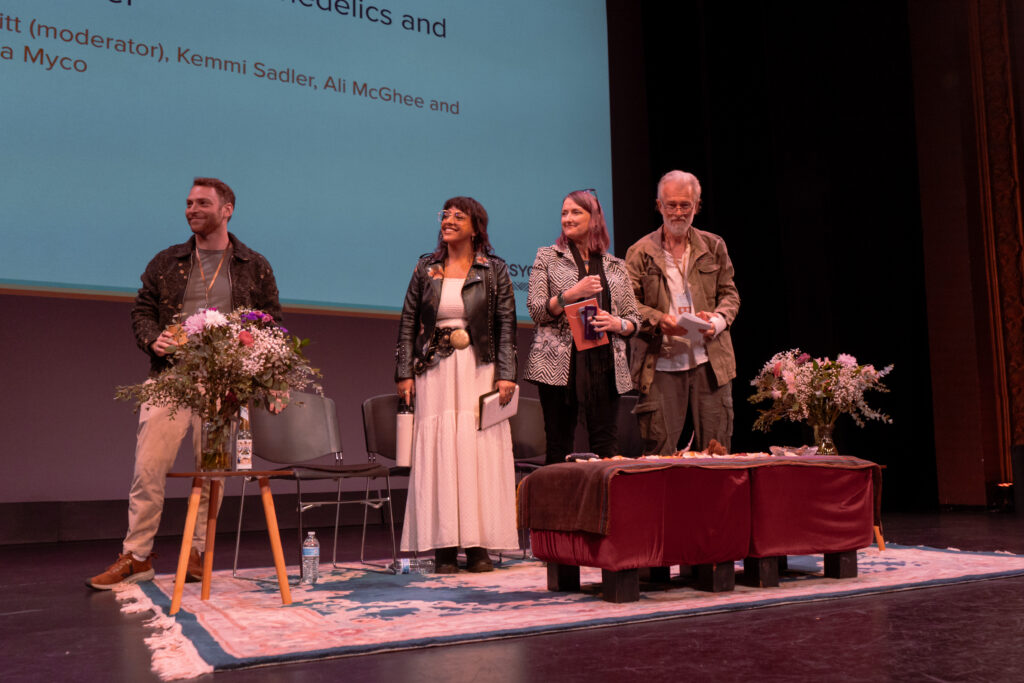
The Saturday of the executive order, April 18th, was also the second day of the Psychedelic Culture 2026 (PCU26) conference, held by the Chacruna Institute at the Brava Theatre, a feminist and LGBTQIA+ icon in San Francisco’s Mission District. The Californian city was at the epicenter of the countercultural movement when the Summer of Love of 1967 erupted there, whose echoes can be heard 49 years later in events like this.
The contradictions and paradoxes of the psychedelic scene under Trump were at the center of the opening speech of PCU26 by the Brazilian anthropologist Beatriz Labate. “Culture is not secondary to science. Indigenous knowledge is not a footnote. The question of who benefits needs to be clarified. Complexity is not the enemy of progress, it is a precondition for it,” she pondered.
“We repeat these things because the work is not finished. Change is irregular. It moves in spirals, not in straight lines.”
There were three days of panels, debates, and artistic performances by two hundred presenters, 12 of them Indigenous from Brazil, Canada, Mexico, and Peru, for an audience of over 600 people. The multicultural vein of the event was a manifestation of resistance in light of the prevailing anti-immigrant atmosphere in the U.S., as Labate pointed out in her opening remarks.
A Brazilian scholar of religions, Henrique Antunes, an anthropologist and research director at the Chacruna Institute, was unable to attend because his visa was denied. However, visual artist Rita Huni Kuin was present and, in a panel on the rights of Indigenous peoples, stated that their demand regarding what they call “sacred medicines” is “above all for respect” from companies and researchers.
Labate recalled that psychoactive substances such as DMT from ayahuasca, psilocybin from mushrooms, and mescaline from the peyote cactus only reached the field of scientific research through traditional peoples. She cited the case of British psychiatrist Humphry Osmond, who coined the term “psychedelic” (soul, or mind revealing) in 1957 and participated in peyote ceremonies of the Native American Church (NAC).
“How does a licensed therapist in the US hold more institutional authority than a healer who has worked with these plants for 40 years?”
Bia Labate
“If ceremony is not on the margins of psychedelia, but at its origin, if Indigenous practice is not an exotic supplement, but a fundamental condition, then how did we arrive at a time when a clinical trial is more legitimate than a ceremony?”—she questioned. “How does a licensed therapist in the US hold more institutional authority than a healer who has worked with these plants for 40 years?”
It would therefore be inappropriate to speak of a “psychedelic renaissance,” since Western science is, in reality, nothing more than a newcomer. But Labate clarified that it is not a matter of idolizing or demonizing Indigenous knowledge, on the one hand, or science, on the other. To which one could add: this despite sectors of the Indigenous movement betting more on conflict than on respectful, authentic dialogue, not driven by foreign motives. “Other people are trying to represent us,” complained Rita Huni Kuin.
Several panels and speeches also criticized the lack of social justice in the return of psychedelics to academic and business respectability. Black people remain a preferred target of incarceration for possession of psychoactive substances, under suspicion of being drug dealers. They are also underrepresented in clinical studies, which recruit volunteers from white people with above-average income and education, not to mention the rare presence of LGBTQIA+ participants.
While biomedical regulation is still pending, frustrated as it was in August 2024 with the government’s refusal to license MDMA for PTSD, the use of psychedelics by Americans is growing. Anthropologist Jaz Cadoch, a scholar in the field, pointed out that 8.8% of the U.S. adult population (more than 20 million individuals) reported using such substances in the previous year—but the vast majority, 98.5% of them, resort to them outside of legally available means.
It is not the psilocybin services authorized in the states of Oregon and Colorado that legally provide “magic” mushrooms to this multitude, nor registered ketamine clinics, which serve tens, perhaps hundreds of thousands, not millions of people. Consumption occurs on dance floors, often by young people who lack professional support for preparation and integration of psychologic content, seen as essential by proponents of psychedelic therapies.
Thousands of war veterans have access to psychedelic treatment for PTSD and depression, but they travel abroad—Mexico and Costa Rica, in general—to take ibogaine or ayahuasca. Still, millions of them suffer from mental disorders, which lead to the suicide of 18 veterans per day. A legion of people suffering the collateral damage of too many wars waged unilaterally by the US, which conservatives want to mitigate, and pro-psychedelic progressives want to enlist as allies.
At PCU26, Marine veteran Juliana Mercer, deployed to Afghanistan and Iraq, read a statement about Trump’s executive order (Mercer worked for five years in San Diego helping veterans with PTSD and is now a director at the NGO Healing Breakthrough) at Labate’s request. For the executive director of Chacruna, who cannot be suspected of militarism, contact with traumatized soldiers and their demands has contributed to humanizing her perspective on the issue.
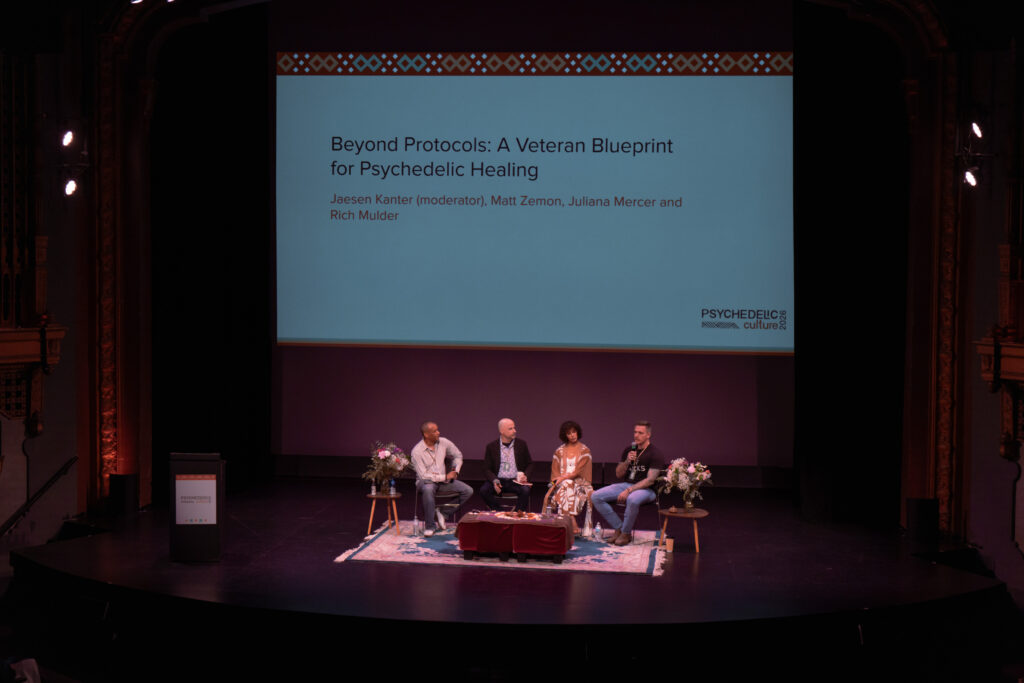
Mercer welcomed the government’s action as an acknowledgment that the treatments currently available to soldiers are not working: “The president deserves recognition, but we must also be clear about what the executive order does and does not do.” And she added: “Progress, not yet access.” The dominant fear among veterans, but not only on this front, is that the biomedical model of resuming psychedelics will result in expensive treatments, whose licensing could still take years until therapeutic protocols are established and covered by health insurance.
“The dominant fear among veterans, but not only on this front, is that the biomedical model of resuming psychedelics will result in expensive treatments, whose licensing could still take years until therapeutic protocols are established and covered by health insurance.”
The pursuit of this peculiar countercultural-military alliance is among the controversial initiatives of Rick Doblin, founder of the Multidisciplinary Association for Psychedelic Studies (MAPS), an organization that has been fighting for the approval of MDMA to treat PTSD for 40 years now. From MAPS emerged the company Lykos, which failed in 2024 in its attempt to approve the drug.
Doblin has already shared the stage with Rick Perry, a Republican who was governor of Texas and Secretary of Energy in Trump’s first term. At PCU26, the former hippie participated in the final panel, “Science, Culture, and the Evolving Role of Psychedelic Research Today,” alongside Betty Aldworth and Ismail Lourido Ali, co-executive directors of MAPS.
“How do we talk to people with whom we otherwise disagree on everything else?” Doblin asked the audience at the Brava Theater. He hailed Trump’s executive order supporting the substances and said he had underestimated, in the 1960s, the role of culture in the reaction to psychedelics, which would lead to the War on Drugs.
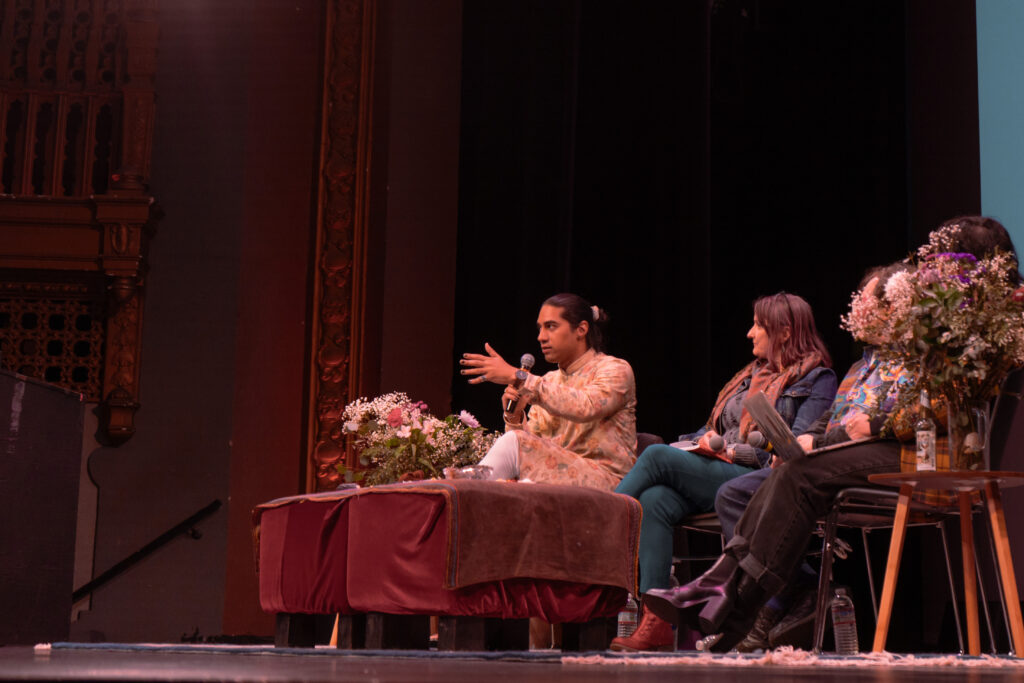
At this point, the MAPS leaders’ panel was interrupted by pro-Palestinian activists in the audience. Shouting, cell phones raised to record everything, they denounced the genocide in Gaza and demanded that Doblin, a Jew, do the same, to which he replied—amidst boos—that he wouldn’t use that word, genocide.
He claimed that MAPS tries to bring MDMA trauma healing to Lebanon and the West Bank, just as it has already worked with fighters in Afghanistan, Iraq, and Ukraine: “We work with perpetrators as well as victims, anywhere in the world.”
Ismail Ali, of Pakistani descent, would not shun the G-word and added pragmatically, but somewhat dissonantly: “When you’re trying to appeal to the worst people in the world, it’s really important that you don’t tell them that people who commit violence regret it after taking psychedelics.” And immediately afterwards: “This culture of violence is not what I want to mainstream into.”
“This culture of violence is not what I want to mainstream into.”
Ismail lourido ali
Another point of friction within the psychedelic movement lies in religion, a no less powerful current in American culture, to say the least. It was at the center of another conference, a week earlier and on the other side of the US, Psychedelic Intersections: Bridging Humanities, Religion, & Law. On April 10th and 11th, the meeting brought together more academics than activists at Harvard University’s Divinity School, in a tone no less critical of the direction of the psychedelic revival.
Right at the opening session, Ramzi Fawaz, a professor at the University of Wisconsin and host of the podcast Nerd from the Future, said he was deeply uninterested in the medical model for rehabilitating psychedelics: “It won’t cure anyone,” he declared. “There is no magic bullet.”
Richard Saville-Smith, an independent Scottish researcher, and Sharday Mosurinjohn, from Queen’s University in Canada, spoke of rope in the house of the hanged man when tracing the genealogy of what they called the mystical deviation of psychedelic science. Laura Appleman and Jennifer Oliva, from the universities of Willamette (Oregon) and Indiana respectively, ridiculed the popularity of psychedelics among celebrities and in the wellness industry, primarily targeting Gwyneth Paltrow’s Goop company.
Discover the Indigenous Reciprocity Initiative of the Americas
Historian J. Christian Greer, from Stanford University, even rejected the idea of a renaissance in the field. According to him, the public perception of the psychedelic movement is distorted by the “War on Drugs fog,” the organized violence of prohibitionist propaganda. The resulting moral panic and historical erasure have obscured the fact that mind-altering substances never truly disappeared from culture, only to then rise from the grave.
One manifestation of this underground resistance is the existence of psychedelic churches. Although several congregations are now emerging to legitimize the adult use of ayahuasca and mushrooms, many others have been born and died since the 1950s in the USA (not to mention Santo Daime, a congregation that emerged in the Brazilian state of Acre in the 1930s around the Amazonian beverage). “Americans love to get high.”
“All things considered, the biomedical, corporate, and conservative model of Trump & Co. for reintroducing psychedelics in the mainstream is just one model among many, even if it currently appears hegemonic.”
The very concept of counterculture would be dubious, insofar as it obscures the diversity of currents originating in the 1960s, from ecofeminism to afrofuturism. Echoing Fawaz’s inaugural speech, Greer argues that scholars of psychedelics, as he prefers, should shift the focus from the substances to the people who use them and to the multiplicity of social experiences under their effect.
All things considered, the biomedical, corporate, and conservative model of Trump & Co. for reintroducing psychedelics in the mainstream is just one model among many, even if it currently appears hegemonic. Many bet, though, on its inability to deter the spiral that has dragged and continues to drag various peoples and cultures, since time immemorial, towards altered consciousness.
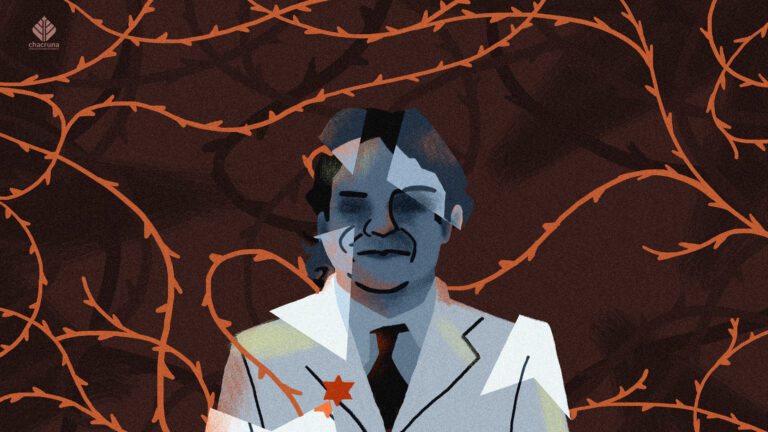
Art by Mulinga.
Marcelo Leite traveled to Cambridge, Massachusetts, at the invitation of the Lemann Dialogue, and to San Francisco, California, at the invitation of the Chacruna Institute. A similar version of this text was first published in Portuguese by Folha de S.Paulo here.