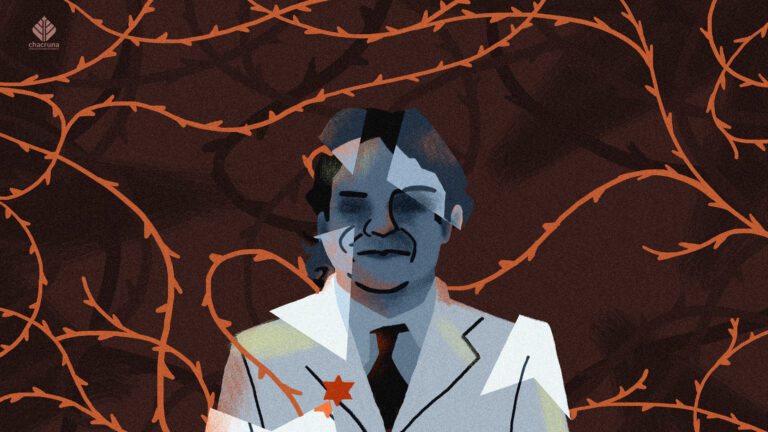

Just as has happened with countless accounts belonging to organizations and collectives in the psychedelic field in recent years, Chacruna Latinoamérica faced the deactivation of its Instagram account once again earlier this year. Following an initial shutdown in 2021, history repeated itself in 2026. After months of waiting and an opaque appeal process, the account was permanently deactivated without clear notification.
In light of this situation, a formal legal appeal was filed with the support of attorney Victoria Cvitanovic, a member of Chacruna’s board of directors. And while many users believe this is deliberate harassment by Meta, legal experience suggests that it is not necessarily targeted persecution, but rather what thousands of organizations systematically face: algorithmic censorship due to poorly governed AI.
“Legal experience suggests that it is not necessarily targeted persecution, but rather what thousands of organizations systematically face: algorithmic censorship due to poorly governed AI.”
Content moderation on digital platforms does not occur through careful human review; it relies on artificial intelligence systems that operate probabilistically and, often, without appropriate human oversight. Recently, at the community forum organized by the Chacruna Institute titled “The Psychedelic Press: Navigating Censorship, Ethics, and the Market,” participants analyzed how phenomena such as Google’s “Medic Update” have reshaped knowledge hierarchies on the web.
In that discussion, experts such as Shelby Hartman (Co-founder of DoubleBlind), Attila Szabo (Editor of the Journal of Psychedelic Studies), and Deborah Parrish Snyder (Synergetic Press) concluded that these algorithms tend to prioritize content from rehabilitation clinics over harm reduction education, so that this logic ultimately renders ancestral knowledge and community practices invisible, erroneously labeling them as “advocacy” or promotion of drug consumption.
In addition to the above, there is a glaring contradiction in Meta’s policies. While the Restricted Goods and Services Policy prohibits sharing some experiences related to personal substance use, they ironically allow the promotion of alcohol, tobacco, and firearms — products with devastating social and health repercussions. Moreover, the guidelines allow for “debating or defending the legality of entheogens, or discussing their scientific or medical merits.” Despite this stated allowance, the experience of Chacruna and so many other educational accounts highlights the arbitrariness of the censorship Meta has imposed on its users in the name of deterring “potentially harmful activities.”
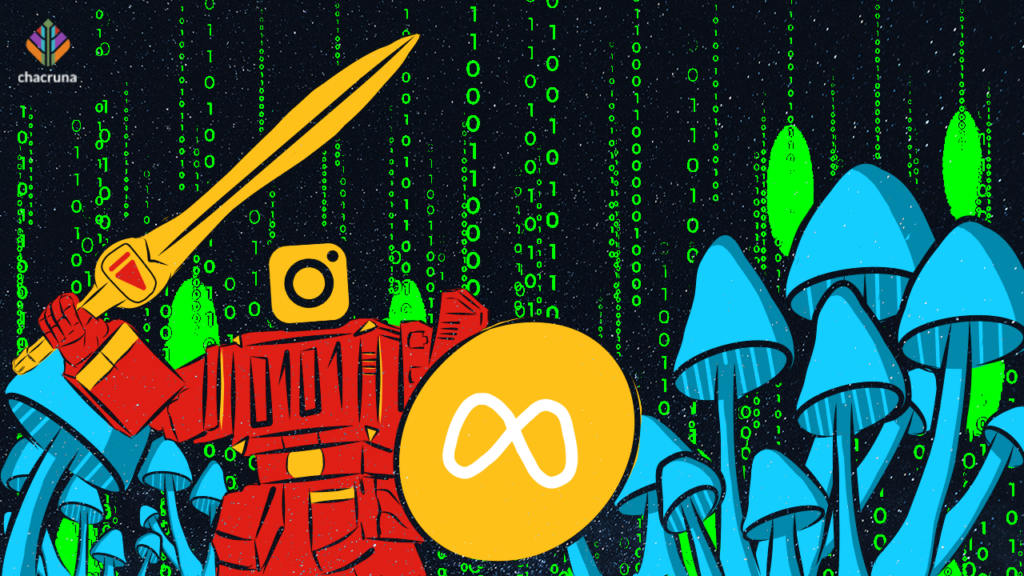
The automation of content moderation on social media leads to inconsistent results and indiscriminate measures such as “cascading blocks,” where the suspension of one account reverberates across various associated accounts simply because they share digital relationships or similar content. On the other hand, there can be a very fine line between content that promotes substance use and content that informs or debates it — a distinction that is controversial even for human evaluators — so it is inevitable that these AI systems will misclassify some content as inappropriate.
In another Chacruna forum, titled “How Cybersecurity, AI, and Social Media Shape the Psychedelic Future?,” Victoria Cvitanovic, who is also a lawyer specializing in psychedelic medicine, cybersecurity, and data privacy, along with Milica Radovic Mandic, founder of Psilocybin San Francisco and Chacruna’s Digital, Design, and Media Advisor, reflected on how public debates surrounding psychedelics are no longer mediated solely by users themselves, journalists, or institutions, but have come to include a whole range of recommendation systems, from automated filters to algorithmic architectures and language models (LLMs) powered by Artificial Intelligence.
However, while these technologies can offer structured responses and recognize text patterns, they completely lack lived experience, biological empathy, and the ability to assess risks in real time. Thus, just as it would be unthinkable and irresponsible to let a machine act as a guide or facilitator in a psychedelic experience—since ethical containment requires a human capable of reading body language and maintaining a relational bond — we should not delegate the supervision and moderation of our posts to artificial intelligence, for in both cases we would be subject to the same vulnerability, which consists of a total absence of context and human understanding.
“By relying on this incomplete and error-prone algorithmic supervision, we are at the mercy of technologies that operate as ‘black boxes.‘”
By relying on this incomplete and error-prone algorithmic supervision, we are at the mercy of technologies that operate as “black boxes.” This explains why a post about psilocybin might be allowed one day and censored the next without any justification. Other examples of flagged content include informational posts that warn about dosages and drug-drug interactions, narratives that explore the upsides of psychedelic journeying, and even educational content that provides information on the therapeutic potential of the substances, which are misclassified as endorsements of drug use.
And when users initiate the appeal process, an additional layer of arbitrariness is revealed, as it is an impersonal mechanism where there is no opportunity for the user to present arguments, nor for the tech companies to provide accountability. Appeals are accepted or denied without any explanation, leaving unclear the behaviors that allegedly violated community guidelines and the changes the user could implement to continue using the platform.
Thus, without proper justification or proof of violation by Meta and without the possibility of further appeal by users, various accounts sharing content related to psychedelics have been systematically suspended. As journalist Mattha Busby states in an article written for DoubleBlind, these waves of suspensions are so frequent that losing one’s account has become almost a rite of passage for activism in this field.
In the case of psychedelics, political bias exacerbates this lack of transparency, given that educational content can be classified as inappropriate due to the stigmatization and moralization of the therapies, beliefs, knowledge, and forms of leisure surrounding these substances.
All in all, social media has ceased to be mere platforms for personal interaction and has become a working tool and a hub for public debate. In the case of the psychedelic field, we are talking about various organizations that promote education, best practices, access, and the protection of the many rights related to the human relationship with these substances.
Discover the Indigenous Reciprocity Initiative of the Americas
Thus, when these accounts are disabled, years of educational work are lost and vital networks of cooperation are dismantled. In practice, these platforms’ content moderation strategies restrict the right to information and participation in important public debates, while also limiting users’ ability to mobilize. Especially in the field of harm reduction, where access to evidence-based information saves lives, preventing the dissemination of content that addresses the issue of drugs from a public health perspective becomes a true disservice to society.
As international relations expert Alejandra Medina from the project Échele Cabeza has pointed out, this situation pushes organizations toward self-censorship out of fear of arbitrary sanctions. However, and despite the fact that the digital environment prioritizes controversy and spectacle, we find ourselves between a rock and a hard place, since it is not sustainable to abandon these channels of dissemination, but nor is it acceptable to passively submit to censorship.
“In the face of the digital offensive, responding means confronting censorship and fueling educational resistance.”
So at Chacruna Latinoamérica we have decided to maintain a strong virtual presence to defend the right to information, cultural autonomy, and cognitive freedom. Thus, our institutional conviction is crystal clear: beyond the algorithmic barriers that hinder our mission, the central goal is to build a world where sacred plants and cultural traditions are protected, valued, and understood as part of cultural identity. In the face of the digital offensive, responding means confronting censorship and fueling educational resistance.
Art by Mariom Luna.