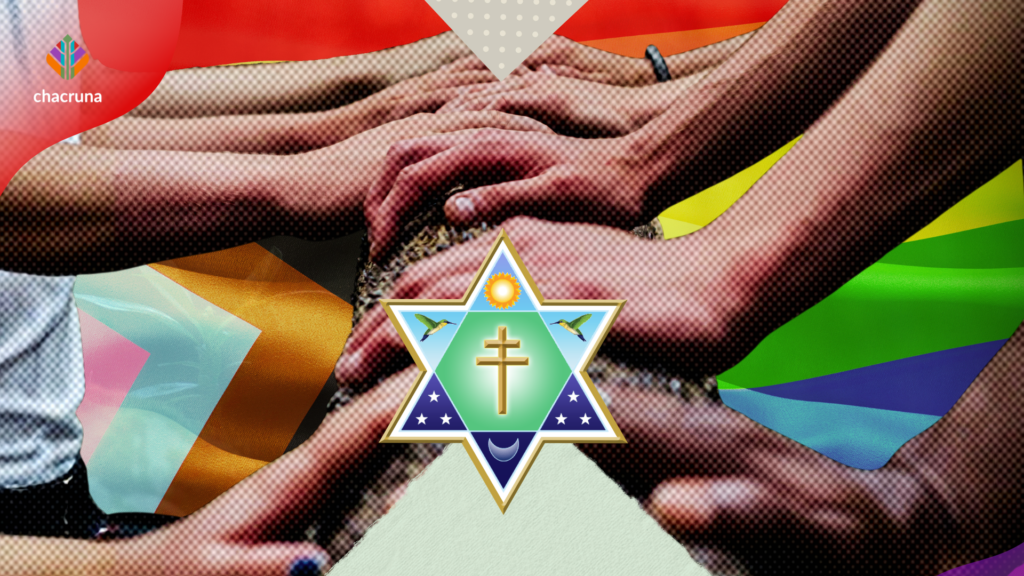
In 2023, the Brazilian magazine CartaCapital published an interview with researcher Julia Moura about the Brazilian psychedelic field. According to Moura, one of the most significant events within this microsocial world that year was the marriage between my wife, Ana Clara de Castro, and me at the Santo Daime church Céu da Divina Estrela, in Santa Luzia, Minas Gerais. The event was considered especially significant because, for the first time in the Santo Daime context, a same-sex couple was married in an official ceremony, wearing the white farda – the official ceremonial attire used by Santo Daime members during formal celebrations – and inside the ritual hall itself, a space where, until then, only heterosexual couples had been permitted to marry.
“According to Moura, one of the most significant events within this microsocial world that year was the marriage between my wife, Ana Clara de Castro, and me at the Santo Daime church Céu da Divina Estrela, in Santa Luzia, Minas Gerais”
It is important to note that, prior to our wedding, other same-sex marriage ceremonies had already taken place within the Brazilian Santo Daime context, though they were not recognized as official ceremonies. One landmark example was the marriage of Lígia and Klarissa Platero in 2014, documented in an article written by the couple and published by the Chacruna Institute. In their account, the authors explained that, due to restrictions imposed by church leadership, they were required to hold their wedding outside the official ritual hall. Nevertheless, despite facing homophobic conditions, these initiatives already demonstrated not only the presence of LGBTQIAPN+ people within Santo Daime but also their aspirations for belonging, recognition, and equality within the Daime community. Moreover, these acts of agency have been fundamental to expanding spaces for LGBTQIAPN+ individuals within the Santo Daime religion and to fostering broader debates about the right of LGBTQIAPN+ people in Brazil to religious practice and religious identity.
As part of this broader process, it is also worth mentioning the First National Gathering of LGBTQIAPN+ People of Faith, held in Rio de Janeiro in 2025. The gathering was organized by the NGO Fundo Positivo, which supports and funds civil society organizations working in HIV prevention and the promotion of diversity, with additional support from Federal Congressman and Pastor Henrique Vieira (PSOL). Its purpose was to bring together LGBTQIAPN+ religious practitioners and allied faith leaders to draft an interfaith declaration against religious fundamentalism, which was presented to the Brazilian National Congress later that year. I signed the document as an LGBTQIAPN+ representative of the Santo Daime tradition, then affiliated with a Santo Daime church in Minas Gerais connected to ICEFLU, alongside representatives from Afro-Brazilian religions, Judaism, Islam, Catholicism, Neopaganism, Evangelical denominations, and Kardecist Spiritism.
It is worth remembering that, although this was the First National Gathering of LGBTQIAPN+ People of Faith, interfaith dialogue among LGBTQIAPN+ religious communities had already been taking place in Brazil, particularly within the annual São Paulo LGBTQIAPN+ Pride Parade. What struck me, however, was that this was among the first occasions in which an ayahuasca religion was officially represented in an LGBTQIAPN+ interfaith setting.
At that gathering, however, among the ayahuasca religions officially recognized under CONAD Resolution No. 001/2010 – Santo Daime, Barquinha, and União do Vegetal (UDV) – only Santo Daime had a representative at the First National Gathering of LGBTQIAPN+ People of Faith. This contrasted sharply with other religious traditions present at the event, many of which had dozens of representatives and/or were represented by established intra-religious queer organizations, such as Evangelicxs pela Diversidade, the National Network of LGBT+ Catholic Groups, and Gaavah: The LGBTQIA+ Jewish Collective in Brazil.
From a sociological perspective, this reveals, on the one hand, some of the challenges faced by ayahuasca religions not only in cultivating interfaith relationships but also in maintaining a public presence within spaces of political dialogue. More importantly, it highlights their limited openness to discussions surrounding issues such as homophobia and LGBTQIAPN+ identities. This assessment is reinforced by episodes that became publicly known, including the homophobic discrimination experienced by singer Marcos Lessa at a União do Vegetal (UDV) church in 2023, and the leak of a letter sent by Raimundo Monteiro, one of the UDV’s longest-serving leaders, to the Brazilian Armed Forces urging a military coup following the 2022 presidential elections. According to journalist Marcelo Leite, homophobia and anti-Workers’ Party (PT) sentiment have also been major sources of internal conflict within the religion. Against this backdrop, the presence of a branch of Santo Daime at the First National Gathering of LGBTQIAPN+ People of Faith – however modest – suggested that new possibilities were emerging from those who had chosen to come “out of the closet.”
During the event’s opening interfaith ceremony, the Igreja do Culto Eclético da Fluente Luz Universal (ICEFLU – the institution that has led the international expansion of Santo Daime – was publicly invited into institutional dialogue with the LGBTQIAPN+ community:
“I ask this sacred medicine, the Divine Being Santo Daime, that our church may honor this ecumenism [which inspires the very name of ICEFLU] by embracing LGBTQIAPN+ people as well, and that it may build alliances with us – institutional alliances – and recognize us as legitimate subjects.”
Paulina Valamiel
An important point is that, although I was the only Santo Daime member physically present at the gathering, I was well aware of the existence of many other LGBTQIAPN+ Daime practitioners and remained in contact with some of them, particularly through social media and WhatsApp groups. These digital spaces have become important sites where queer daimista identities are increasingly expressed publicly, especially in the context of the “internetization” of ayahuasca and its acceleration following the COVID-19 pandemic. I was certain that these individuals extended far beyond my own social networks. This led me to ask: after all, how many of us are there? And how do we, in the diversity of our identities, experience religious belonging within Santo Daime?
The data presented in the following pages offer an initial portrait of the remarkably diverse profile of LGBTQIAPN+ Daime practitioners in Brazil. They raise important questions for future research on social markers of difference, religious belonging, and psychedelic experience, while also providing valuable evidence to support the development of internal policies of inclusion and care – measures desired by a significant portion of the community represented in this survey.
It is important to emphasize that this report offers the first comprehensive overview of the experiences of LGBTQIAPN+ Santo Daime practitioners in Brazil in 2025, based on responses from 309 participants. As with any study, however, it represents a particular empirical snapshot and should be understood in light of its limitations. In this case, for example, the survey was disseminated primarily through Instagram and WhatsApp groups, a recruitment strategy that likely influenced the sample’s demographic composition, particularly in terms of age and regional distribution.
Survey of LGBTQIAPN+ Santo Daime Practitioners in Brazil (2025)
Sociodemographic Characteristics
Geographically, survey respondents were distributed as follows: 39.8% resided in Brazil’s Southeast region, 26.9% in the Northeast, 16.2% in the South, 7.4% in the Central-West, and 5.5% in the North, while 4.2% lived outside Brazil.
In terms of age, the sample was predominantly young, with the largest proportions falling within the 25–34 age group (45.6%) and the 35–44 age group (25.2%). The remainder of the sample was distributed as follows: 12.6% were between 18 and 24 years old; 9.1% were between 45 and 54; 3.2% were between 55 and 64; 2.6% were 65 years of age or older; and 1.6% were under the age of 18.
Regarding gender identity, 46.6% of respondents identified as cisgender women, 42.1% as cisgender men, 5.5% as non-binary, 1.6% as transgender men, 1.3% as transgender women, and 2.9% selected the category “Other.”
With respect to sexual orientation, 34.3% identified as gay, 32.7% as bisexual, 16.2% as lesbian, and 10.6% as pansexual. An additional 16.8% selected the category “Other.”
The survey population also exhibits a relatively high level of educational attainment, with the majority of respondents holding either a university degree or a lato sensu postgraduate qualification.
With regard to religious trajectory, most respondents had joined Santo Daime relatively recently. Specifically, 25.9% reported having been initiated between one and three years earlier, while 22% indicated between four and seven years of participation. Another 20.7% had been initiated between eight and twelve years ago; 10% had joined less than one year prior to the survey; 6.8% had between thirteen and seventeen years of involvement; 6.1% had been members for more than twenty-three years; 5.2% reported having been “born into the doctrine”; and 3.2% had between eighteen and twenty-two years of participation.
Regarding racial distribution, although the majority of the sample identified as White (55.7%), there was also a substantial proportion of respondents who identified as Pardo (30.7%), alongside smaller proportions of Black respondents (7.4%) and Indigenous respondents (2.9%). However, when examining length of participation in the religion, an important pattern emerges. Among practitioners with more than twenty-three years of involvement (6.1% of the sample), White men predominated, while no Black respondents were represented and Pardo practitioners appeared only in very small numbers.
The intersections of sexual orientation and race become even more apparent when examining participation in different spheres of religious life. Although 70.9% of respondents reported having performed at least one ritual function – most commonly serving in supervisory or ceremonial oversight roles (fiscalização) – only 33.8% indicated that they had held institutional leadership or administrative positions. Among these, the most common roles were secretary and treasurer. Particularly noteworthy is the absence of Indigenous respondents in institutional positions and the very limited representation of Black respondents within these spaces.
Among other findings, these data are noteworthy for revealing a clear dissociation between ritual participation and institutional inclusion. They suggest that, although LGBTQIAPN+ individuals – and practitioners from racially diverse backgrounds – are generally welcomed to participate in the ritual life of Santo Daime communities, this diversity is considerably less visible within positions of authority and decision-making.
LGBTQIAPN+ Experiences in Santo Daime
With regard to lived experiences, the data portray a markedly ambivalent landscape. On the one hand, perceptions of respect are relatively high: 48.2% of respondents reported that they always feel respected within their Santo Daime communities, while 25.2% stated that they frequently feel respected. An additional 17.8% indicated that they feel respected sometimes, 5.2% rarely, and 3.6% never.
On the other hand, a substantial proportion of respondents also reported experiences of violence and discrimination, revealing that positive perceptions of inclusion coexist with significant experiences of exclusion and prejudice.
Among respondents who reported having been direct targets of homophobia (28.8%), gay men constituted the majority – a finding that is particularly striking and, I must admit, contrary to my own expectations. Moreover, among the five transgender men who participated in the survey, three reported having experienced homophobia. Taken together, these findings point to the need for further research into the specific ways in which dissident masculinities are regulated and policed within the Santo Daime context.
The most commonly reported forms of violence included negative and disrespectful comments, social exclusion, interference with gender expression, and psychological harassment. Respondents also frequently described experiences directly related to the regulation of sexuality, such as interference in their affective and sexual relationships and proposals to “cure” their sexual orientation through the ritual use of Daime/ayahuasca, hymns, or prayer. These experiences were reported by at least twelve participants, including six cisgender women, five cisgender men, and one non-binary lesbian participant. Such practices closely resemble forms of so-called “conversion therapy,” whose application by psychologists in Brazil has been prohibited since Federal Council of Psychology Resolution No. 01/1999 and which continue to be the subject of legal and political dispute through legislative initiatives such as Bill No. 504/2020.
A more detailed analysis of the data also demonstrates that these experiences are not distributed evenly across the sample. Pardo and Black respondents appeared more frequently among those who reported feeling disrespected and among those who had experienced discrimination, once again highlighting the intersection of race and sexuality in the production of vulnerability. This finding is particularly noteworthy considering that Santo Daime was founded by a Black man and that its earliest followers were predominantly Black and caboclo. It therefore lends support to hypotheses concerning the racial whitening of the religion as one of the consequences of its globalization.
Similarly, the absence of Indigenous LGBTQIAPN+ respondents in institutional positions suggests important limits to the inclusion not only of LGBTQIAPN+ individuals but also of Indigenous peoples more broadly. It is important to acknowledge, however, that the number of Indigenous LGBTQIAPN+ respondents in the sample was very small. This gap raises important questions. To what extent are Indigenous LGBTQIAPN+ people choosing to maintain and strengthen their own ceremonial traditions within their communities rather than participating in Santo Daime contexts? Alternatively, although alliances between certain Santo Daime churches – such as the Centro Eclético Flor de Lótus Iluminada (CEFLI) in Acre – and Indigenous peoples, including the Huni Kuin, are well documented, these relationships do not necessarily translate into Indigenous participation within Santo Daime’s institutional structures. This observation invites further reflection on the limits of such alliances and on the ways in which people, practices, and forms of authority circulate – or fail to circulate – between these different religious traditions. Beyond any normative evaluation of the survey results, however, I do not believe that the available data are sufficient to support definitive conclusions, underscoring instead the need for further research on ethnic and racial diversity within Santo Daime.
Another important finding is that, beyond appearing to shape the likelihood of “coming out,” generational differences also seem to be associated with patterns of racial and gender diversity within the sample. Among LGBTQIAPN+ respondents with the longest histories of participation in Santo Daime, the predominant profile was that of White men living in Brazil’s Southeast region, characterized by lower levels of racial diversity and a higher frequency of reports of negative or derogatory comments.
By contrast, respondents with gender-diverse identities – including transgender and non-binary individuals – were more concentrated among those who had joined Santo Daime more recently. This pattern was particularly evident among non-binary respondents, whose presence was most significant among practitioners with up to three years of wearing the farda (the religion’s ceremonial uniform). These findings suggest that the increasing visibility of gender diversity within Santo Daime is a relatively recent phenomenon, one that remains in the process of being negotiated within religious communities.
At the same time, it is noteworthy that the greatest levels of vulnerability were also reported among younger respondents, indicating that newer generations of LGBTQIAPN+ practitioners may face distinct challenges as they seek recognition and belonging within the religion.
According to the survey, among respondents under the age of 18, bisexual and lesbian girls constituted the majority. Most alarmingly, the most frequently reported form of violence within this group was sexual harassment.
Finally, it is particularly significant that 88.4% of respondents considered the creation of committees, working groups, or other institutional bodies dedicated to LGBTQIAPN+ representation to be important. This finding indicates the existence of a clear internal demand for greater recognition and institutional mechanisms to address these issues, reinforcing the hypothesis that the Santo Daime field is currently undergoing a period of contestation and transformation.
Discover the Indigenous Reciprocity Initiative of the Americas
Santo Daime and Religious Homophobia
The survey findings suggest that, despite the increasing diversity of identities present within Santo Daime, the experiences of LGBTQIAPN+ practitioners cannot be understood through a simple binary of inclusion versus exclusion. Rather, LGBTQIAPN+ life within the religion is shaped by an ambivalent moral regime.
That is, as Marcelo Natividade (2009; 2013) has argued, religious contexts shaped by Christian legacies often operate through moral classifications that combine inclusion with regulation, enabling the incorporation of dissident subjects while simultaneously delimiting legitimate ways of living gender and sexuality. This is exemplified by the Catholic maxim that “God loves the sinner but hates the sin.” Thus, although there is no explicit or systematic condemnation of LGBTQIAPN+ people or homosexuality in Santo Daime’s doctrinal texts, such as its hymns, values associated with purity, bodily discipline, and the control of desires constitute a normative horizon that permeates Daimista religious life.
It is important to note that these principles apply to all practitioners, including heterosexuals. However, I argue that their effects are not distributed evenly. For heterosexual subjects, these norms tend to function as mechanisms for regulating sexuality within broadly legitimized models. For LGBTQIAPN+ subjects, however, they may generate additional tensions, particularly when articulated with the structural homophobia of society and the moral legacies of Christianity and, perhaps, of Amazonian patriarchies.
Accounts gathered during this research indicate that these dynamics can profoundly shape the affective and sexual trajectories of some practitioners. At the same time, it is important to emphasize that many participants also described experiences of acceptance, belonging, and recognition within their religious communities. Moreover, studies such as Clancy Cavnar’s (2014) point to experiences of acceptance reported by LGBTQIAPN+ individuals in their direct relationship with ayahuasca, regardless of the ritual context. What emerges, therefore, is a complex landscape characterized by ongoing disputes over the meanings of sexuality, the ayahuasca experience, spirituality, and the Daimista tradition itself. It can thus be argued that, within the context of Santo Daime, religious homophobia does not appear as a uniform or overtly violent phenomenon, but rather as part of a continuous process of negotiation, conflict, and transformation.
The Centrality of Gender and Sexuality in the Globalization of Santo Daime
Originating among rubber tappers and their families in the Amazon during the first half of the twentieth century, Santo Daime began attracting urban middle-class sectors from the 1970s and 1980s onward, gradually becoming integrated into global religious flows and, more recently, into the so-called psychedelic renaissance. For many of the new adherents who joined during the final decades of the twentieth century, the religion represented an alternative to modern individualism and capitalism, offering intense communal experiences, collective forms of subsistence, and a spirituality deeply connected to nature (VALAMIEL, 2025).
During this period, issues related to gender and sexuality often remained in the background in comparison to the power of spiritual experiences, the sense of community, and the charisma of religious leaders, as I demonstrated in my doctoral dissertation.
However, an important generational shift can be observed. Whereas practitioners who joined the religion during the 1970s and 1980s tended to silence dissident sexualities or avoid more explicit discussions of gender, those who entered after the 2000s began expressing their gender identities and sexualities more openly, frequently challenging established norms, religious leadership, and institutional structures.
I argue that this process was intensified by the expansion of the internet, the growing diversification of the ayahuasca field, and, above all, the increasing diffusion of social movements and identity-based debates within this milieu. Social media, grassroots collectives, and digital platforms have become spaces for denunciation, mutual support, the circulation of information, and political organizing. At the same time, Santo Daime has increasingly had to compete with a broad range of ayahuasca experiences, including neo-shamanic groups and Indigenous ceremonies, many of which tend to relax or reject rigid gender markers in ritual organization. Within this context, practices such as the binary separation of men and women and the regulation of ritual attire have increasingly come to be perceived by some newer adherents as overly conservative.
Moreover, this scenario should be understood in light of broader social transformations related to the growing visibility and public recognition of LGBTQIAPN+ identities over recent decades. In the Brazilian context, institutional and legal advances – such as the recognition of same-sex unions as family entities in 2011 and the criminalization of homophobia and transphobia as equivalent to the crime of racism in 2019 – may have contributed to expanding the conditions for self-identification and public recognition of these identities, thereby also influencing the demographic composition observed in the present sample.
“Practices such as the binary separation of men and women and the regulation of ritual attire have increasingly come to be perceived by some newer adherents as overly conservative.”
As part of the tensions between tradition and innovation that are inherent to religions in the contemporary world, as Peter Berger (2017) suggested, the continuity and social relevance of religious traditions depend, to some extent, on their capacity to engage with the cultural transformations of their time. Within this context, gender and sexuality have become a strategic dimension of the transnationalization of Santo Daime, constituting a particularly fertile terrain of conflict and negotiation between tradition and innovation.
At the same time, this observation raises a number of questions that extend beyond the scope of the present study but appear fundamental for future research. Does overcoming inequality and discrimination necessarily require the abandonment or reformulation of certain gender divisions embedded in ritual practices, institutional structures, or cosmological conceptions? To what extent are particular changes understood as legitimate adaptations, and at what point are they perceived by some actors as profound alterations to the tradition itself? Who holds the authority to define the direction of these transformations? Understanding the dynamics of the globalization of Santo Daime and ayahuasca through these lenses has become essential for analyzing the contemporary trajectories of the religion and the negotiations through which it seeks to sustain its place in an increasingly globalized world.

Note: This article was originally published in Portuguese on Chacruna Latinoamerica here.
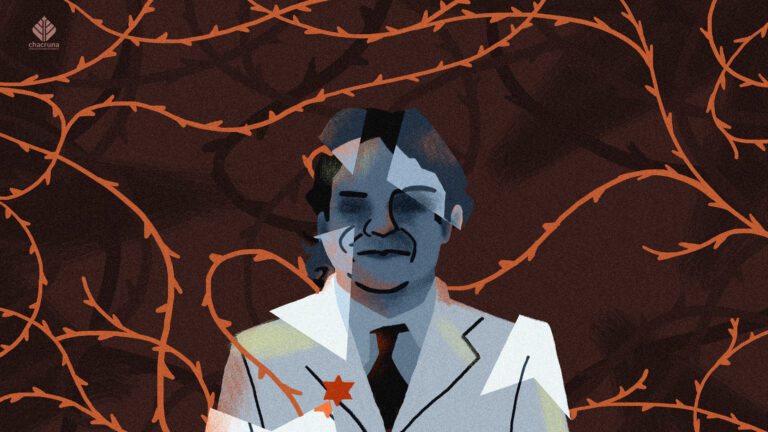
Art by Fernanda Cervantes.
References
BERGER, Peter L. Os múltiplos altares da modernidade: rumo a um paradigma da religião numa época pluralista. 1. ed. Petrópolis, RJ: Vozes, 2017.
CAVNAR, Clancy. The Effects of Ayahuasca Ritual Participation on Gay and Lesbian Identity. Journal of Psychoactive Drugs, 2014.
COSTA, Janaina C. O olhar de um ex-guerrilheiro sobre a religião: alex polari de alverga e a história ayahuasqueira. 2002. Disponível em: <http://www.neip.info/upd_blob/0001/1370.pdf>. Acesso em 24 de março de 2026.
NATIVIDADE, Marcelo. Sexualidades ameaçadoras: religião e homofobia(s) em discursos evangélicos conservadores. Sexualidad, Salud y Sociedad – Revista Latinoamericana. n. 2, p.121-161, 2009.
NATIVIDADE, Marcelo. Homofobia religiosa e direitos LGBT: Notas de pesquisa. Latitude, Vol. 07, nº 1, pp. 33- 51, 2013.
VALAMIEL, Paulina. Uma análise da atuação das mulheres na transnacionalização do Santo Daime. Belo Horizonte: Tese de Doutorado em Sociologia, UFMG, 2025.