Opening Remarks – Psychedelic Culture 2026
Good morning, everyone.
On behalf of Ambassador Ronaldo Costa Filho, it is a true honor to be here with you today at Psychedelic Culture 2026.
I would like to begin by thanking Brava Theater and Chacruna Institute for Psychedelic Plant Medicines for making this gathering possible. Spaces like this are rare—and necessary. They serve as bridges: between ideas and cultures, between science and traditional knowledge, between past and future.
“Spaces like this are rare—and necessary. They serve as bridges: between ideas and cultures, between science and traditional knowledge, between past and future.”
I would also like to warmly welcome the Brazilian participants, and in particular, Rita Huni Kuin—an artist, a leader, and a powerful voice of Indigenous knowledge and cultural expression. Bem-vindos.
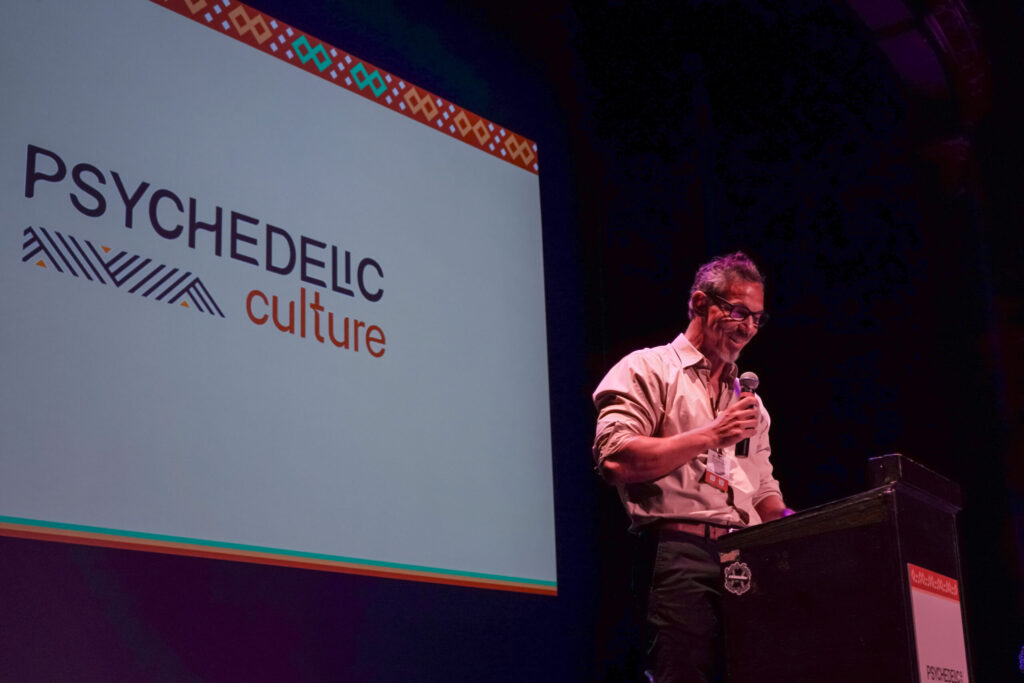
The Consulate-General of Brazil in San Francisco has been partnering with Chacruna for the past three years. During this time, we have supported initiatives that reflect our broader mission: to promote Brazilian culture, to present the richness and complexity of our society, and to strengthen our communities abroad.
But beyond institutional goals, this partnership has been, for me, a learning journey.
I have learned that Indigenous perspectives are not peripheral—they are central to global debates, including those taking place at the United Nations on biodiversity and climate. There has been important progress in recognizing the value of traditional knowledge, in defending the rights of Indigenous peoples, and in protecting biodiversity. At the same time, it is important to highlight the uneven landscape of international commitments in this field.
I have also learned something more fundamental: that the protection of Indigenous territories and ways of life is not just a cultural matter—it is a condition for environmental conservation and for social justice.
“The protection of Indigenous territories and ways of life is not just a cultural matter—it is a condition for environmental conservation and for social justice.”
And that this can only be achieved through reciprocity—through a respectful dialogue between science and traditional knowledge.
At the same time, we must acknowledge the complexity of the current landscape of plant medicines and psychedelic-assisted therapy.
On one hand, we see the growing recognition of their therapeutic potential, including in new clinical and community settings. On the other, we see the rapid global expansion of practices—through churches, collectives, and international retreats—which creates new opportunities for healing, but also demands greater responsibility.
Responsibility to avoid exploitation.
Responsibility to prevent misuse.
And responsibility to honor the origins of this knowledge.
Discover the Indigenous Reciprocity Initiative of the Americas
In Brazil, we have been taking political steps to amplify Indigenous voices, for instance, the creation of the Ministry of Indigenous Peoples and the adoption of inclusion policies—such as scholarships and affirmative pathways into public service—that seek to bring Indigenous perspectives into decision-making spaces.
But there is still much to be done.
Not long ago, children in Brazil were taught that the country was “discovered” in 1500—erasing the existence of millions of Indigenous people who had lived there for centuries. Revisiting these narratives is not just about telling the true history. It is about recognizing who has been—and continues to be—the true guardians of knowledge.
Guardians of memory.
Guardians of territory.
Guardians of the living relationship between humans, nature, and the sacred.
“As we move forward in this evolving field, I believe we must hold on to a few essential principles: ancestry, territory, and guardianship.”
As we move forward in this evolving field, I believe we must hold on to a few essential principles: ancestry, territory, and guardianship.
And above all, we must recognize the essential educational mission carried out by the Chacruna Institute over the years. Much of what I have shared today—much of what I have learned—has been shaped by this space of dialogue. It reminds us that innovation does not mean starting from zero, but rather learning how to listen.
Thank you very much, and I wish you all an inspiring and meaningful conference.
Art by Mulinga.