Psychedelics for Lula
This is a historic moment for the Associação Psicodélica do Brasil, the Brazilian Psychedelic Association, and we would happily spend it promoting our own work: two free congresses that drew more than 800 participants between them, with talks ranging from Indigenous knowledge to a reading of the psychedelic market through Marxist dependency theory by one of our directors. We could go on at length about how every hour of that work is voluntary and nobody is paid a penny, or about the third and final volume of Psicodélicos no Brasil, due out in November.
But we have bigger fish to fry. Brazil is holding its tenth direct presidential election since the end of the military dictatorship in 1985: the first round took place on 4 October, and the run-off is on 25 October.
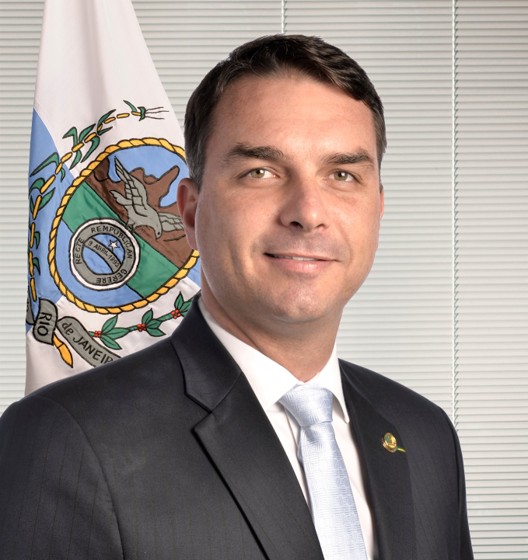
The country is split down the middle. Flávio Bolsonaro, the right-wing candidate, finished first with roughly 47% of the valid vote, ahead of Lula, and a Flávio victory would run a direct line from Brasília to the Trump administration.
“A Flávio victory would run a direct line from Brasília to the Trump administration.”
It is worth knowing who that man is. In 2020 prosecutors in Rio de Janeiro charged Flávio Bolsonaro, his former aide Fabrício Queiroz and fifteen others with embezzlement, money laundering, and running a criminal organisation. We call it the rachadinha, the little split: according to prosecutors, staff in his office at the Rio state legislature, where he sat before moving up to the Senate, handed part of their salaries back to the boss. On that payroll were the mother and the wife of Adriano da Nóbrega, a former captain in Rio’s police special forces whom prosecutors named as a leader of the Escritório do Crime, a death squad that hired out gunmen in the west of the city. Years earlier, as a state legislator, Flávio had awarded him the Tiradentes Medal, the legislature’s highest honour; in 2020 police shot Nóbrega dead in Bahia, more than a thousand kilometres up the north-eastern coast, where he had gone into hiding. The criminal complaint was thrown out in 2022 after key evidence was ruled inadmissible, with no ruling on the substance of the allegations, and a separate civil case followed in 2023 without Flávio among the defendants. In September 2026 Gilmar Mendes, a justice of our supreme court, upheld access to the bank and tax records of Danielle da Nóbrega, Adriano’s former wife, in that civil case. This is not a man who merely kept unfortunate company among Rio’s milícias, the mafias of serving and former police officers that control whole neighbourhoods of the city. This is the milícia‘s own bookkeeping, routed through a senator’s office and now standing for the presidency.
On drugs, his position is a matter of public record. In April 2024 the Senate approved a proposed constitutional amendment that would make possession of any quantity of any illicit drug a crime, written into the rights chapter of our constitution and drafted to overrule the supreme court, which was on the verge of decriminalising cannabis for personal use. Flávio voted in favour, mocking the justices from the floor. While foreign visitors are sold ancestral medicine as a luxury retreat, this amendment would enshrine in the Brazilian constitution that a Black kid from a marginalised community with three grams in his pocket is a criminal. Ayahuasca for the gringos, prison for the poor.
His brother runs the foreign desk. Eduardo Bolsonaro, then a federal deputy, moved to the United States and lobbied the White House against his own country, quite openly. The bill arrived in July 2025: Magnitsky sanctions, the instrument the US Congress built for human rights abusers, aimed at Alexandre de Moraes, the justice presiding over the coup investigation, together with a 50% tariff on Brazilian goods, announced in a letter signed by Trump that cited a criminal trial as its reason. Eduardo lost his seat in December 2025 for missing too many sessions of parliament. A Brazilian family asked a foreign power to punish Brazil for prosecuting them, and the foreign power obliged.
Lula refused to put Bolsonaro’s trial on the bargaining table. “We accept negotiation and not imposition,” he said when Trump threatened the tariffs. He kept talking to Washington without conceding its right to dictate what a Brazilian court could do, and by December 2025 the US had dropped several of the tariffs and lifted the sanctions on Moraes, while Bolsonaro’s conviction still stood. What makes Lula a threat to Trump is the example he sets: a country of the global south that negotiates without kneeling.
Brazil had its own 6 January, minus the neo-Nazi shamanism. It came two years after the American one, on 8 January 2023, when a few thousand people stormed the supreme court, Congress and the presidential palace in Brasília and set about smashing them up.
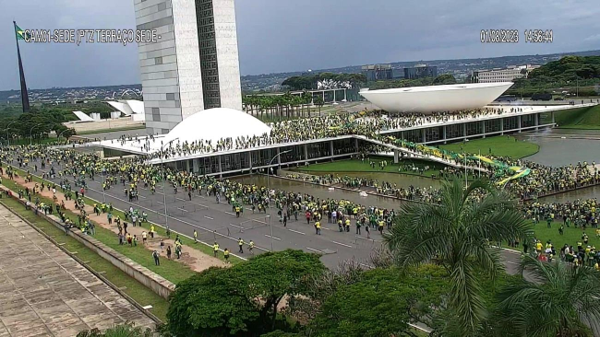
When Jair Bolsonaro, Flávio’s father, lost the 2022 election, he refused to concede. His supporters camped outside army barracks in dozens of cities, waiting for the generals to step in, while a slogan ran through the lunatic fringe of the far right promising that Bolsonaro senior was about to call out the air force, the army and the navy to annul the result and “restore order.” The weeks before January brought bombs, cars set alight, and a failed plot to blow up a fuel tanker at Brasília airport, and none of it was isolated.
Federal police found a draft decree at the home of Bolsonaro’s former justice minister, which we call the minuta do golpe, the coup draft. It would have placed the electoral court, the body that oversees Brazilian elections, under emergency federal control and handed a government-appointed commission the task of reviewing the presidential result. A second document, printed inside the presidential palace in November 2022 by a reserve general and discussed at the home of Bolsonaro’s running mate, himself a retired four-star general, bore the title Punhal Verde e Amarelo, the Green and Yellow Dagger, after the colours of our flag. Officers from the army’s special forces drew it up as an operational plan, naming each target in turn (the president-elect Lula, his vice-president Geraldo Alckmin, Justice Moraes) and setting out the method, the timing and the team assigned to each killing. Prosecutors say Bolsonaro knew and agreed.
Nothing like what came next had ever happened here. In September 2025, Brazil convicted a former president of attempting a coup d’état and sentenced him to 27 years and three months, and for the first time in our history it convicted the high command as well: three four-star army generals and an admiral, men who had run the presidential intelligence office, the Ministry of Defence and the Navy, sentenced to between 19 and 26.5 years. In Latin America, generals who try to seize a country usually retire on a full pension; these ones went to prison. Two were taken into custody in November 2025 under a protocol negotiated directly between the court and the army command, and Bolsonaro was arrested that same month, having taken a soldering iron to his ankle tag shortly before he was due to begin his sentence. Decades of impunity for coups ended in a cell in Brasília.
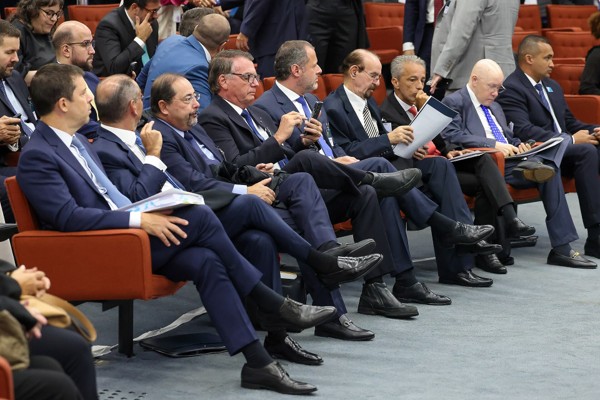
That, in the end, is what the ballot on 25 October is about.
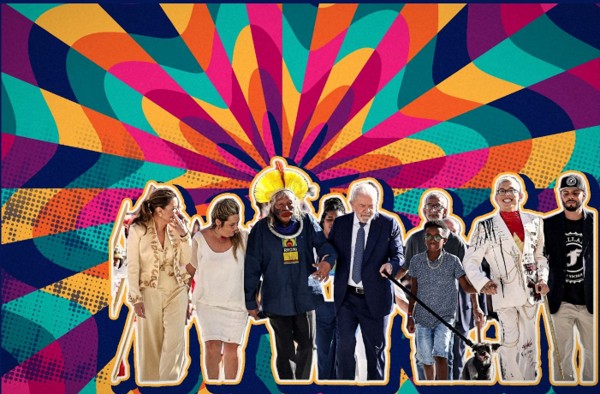
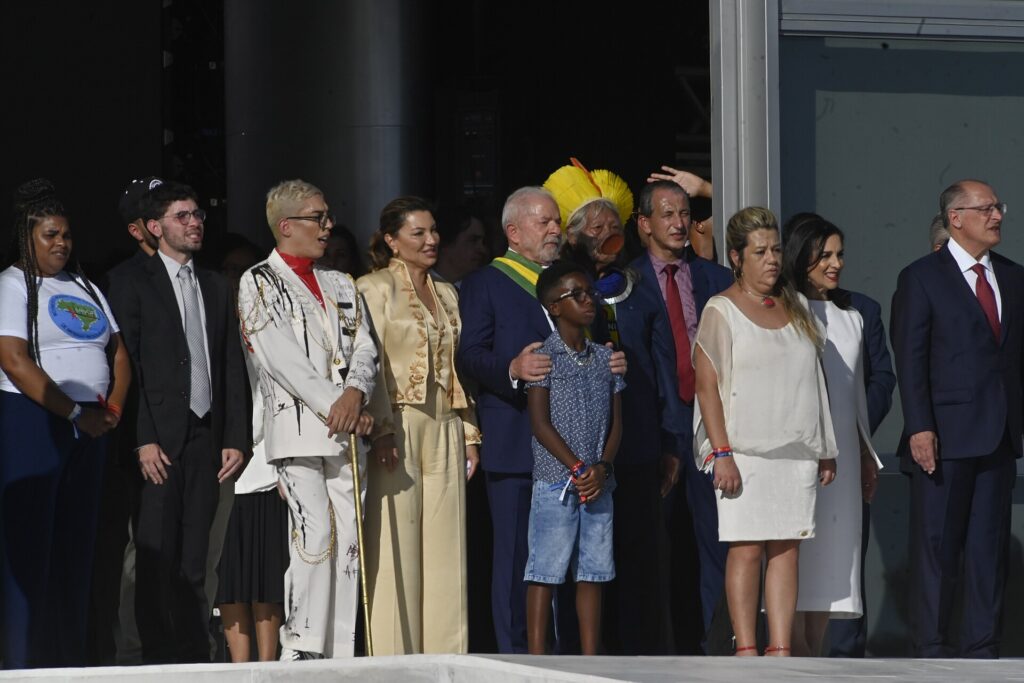
Go back to 1 January 2023, the day Lula put on the presidential sash. By tradition the outgoing president hands it over, but Bolsonaro was not there: he had already flown off to sunny Florida, which is curious timing for a man with nothing to fear. So, representatives of the people climbed the palace ramp and handed it to Lula in his place: a Black waste picker, the Indigenous leader Chief Raoni, a child, a metalworker and a disability activist.
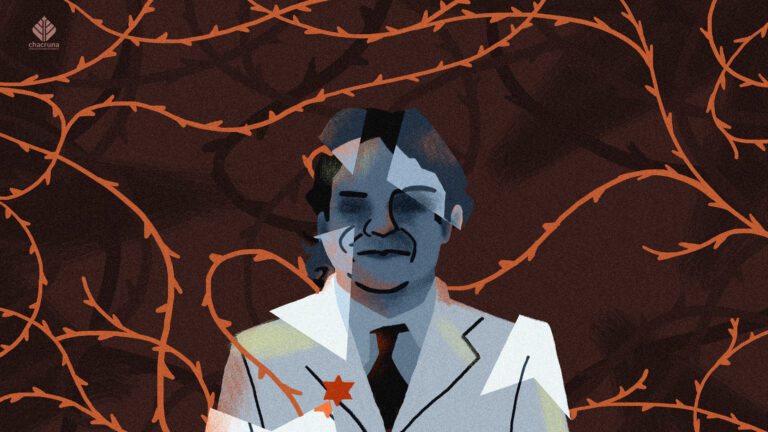
Lula turns 81 this month. He won that third term in 2022 after 580 days in prison on corruption convictions that the supreme court later annulled for lack of jurisdiction; in a separate ruling, the court found that the judge who had put him away was biased.
That judge, Sergio Moro, went on to become Bolsonaro’s justice minister. He resigned in April 2020, accusing Bolsonaro senior of political interference in the federal police, and in a book published the following year accused him of undermining the fight against corruption in order to protect Flávio. Today he is Flávio’s ally and the governor-elect of Paraná.
Luiz Inácio Lula da Silva is just another Silva, the commonest surname we have: a Smith, a Mohammed, a Nagy, a Hernández. Every country has its share of them under one name or another, people who met hunger and death very young and survived simply by refusing to die.
His first two terms, from 2003 to 2010, launched a handful of programmes. Bolsa Família, a cash transfer paid to the mother on condition that the children stayed in school and kept their vaccinations up to date, reached some 12.7 million families by the end of his second term. Fome Zero, Zero Hunger, was the food security strategy that took Brazil off the UN Hunger Map in 2014. ProUni offered low-income students scholarships at private universities in exchange for tax exemptions for the institutions, while the expansion of the federal university and technical school network put the children of people who had never finished primary school into higher education. Luz para Todos brought electricity to millions of rural households, Minha Casa; Minha Vida built subsidised housing at scale; and the fight for racial quotas, Brazil’s version of affirmative action, changed who sits in a Brazilian classroom.
Discover the Indigenous Reciprocity Initiative of the Americas
Between 2010 and 2026 a few things happened. The fallout from the 2008 financial crisis reached us; social media boomed, and with it selfie cameras, the panopticon, influencers, and the pseudo-decentralisation of the media. Algorithms. Psychedelics began surfacing on social media. Steve Bannon. Facebook became Meta. Tesla, Cambridge Analytica, Gotham, Palantir. Trump I. Musk. The pandemic, vaccines, Fauci. Crimea, Ukraine, Iran. Trump II. Online betting apps. Palestine. Gaza. Gaza is gone. The Gulf of America. AI, OpenAI, Anthropic. And then Trump ordered faster access to psychedelic treatments, the FDA handed national priority vouchers to companies developing psilocybin and methylone treatments, and Eli Lilly bought AtaiBeckley for 2.8 billion dollars upfront.
Brazil survived Bolsonaro senior. On 8 January the institutions held, and more than 800 of the rioters have been convicted since.
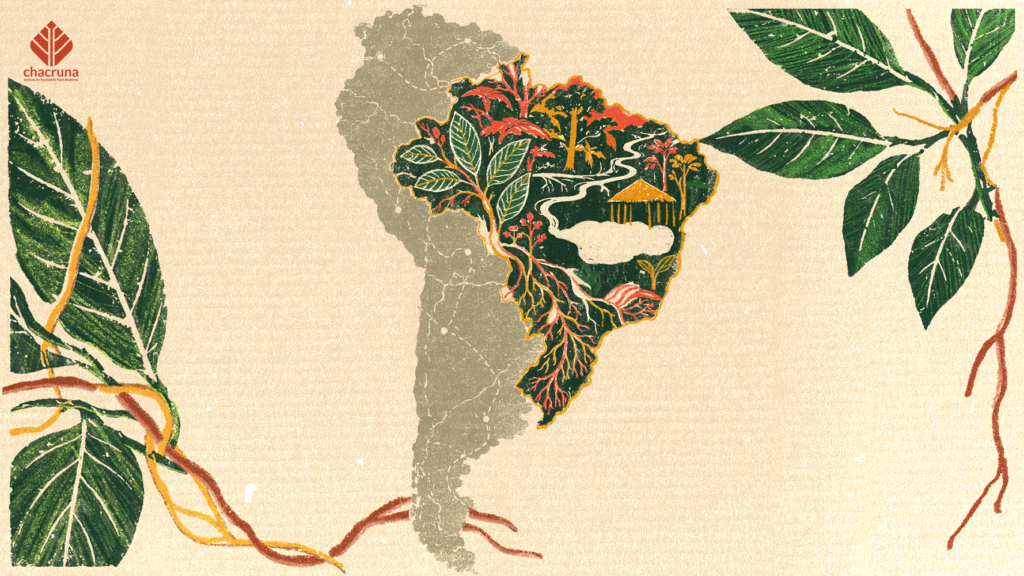
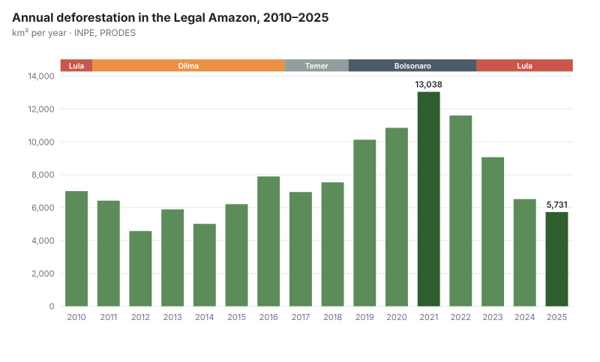
In the Legal Amazon, the administrative region that spans nine Brazilian states, annual deforestation rose from 7,536 km² in 2018, the year before Bolsonaro took office, to 13,038 km² in 2021, the highest rate in 15 years: 5,000 square miles of forest gone in 12 months. Under Lula it fell again, to 9,064 km² in 2023, 6,518 km² in 2024 and 5,731 km² in the year to July 2025, the lowest in eleven years.
The Yanomami, one of the largest relatively isolated Indigenous peoples in South America, whose Brazilian territory runs along the Venezuelan border and is roughly the size of Portugal, were left to starve while that curve climbed. When Lula took office in January 2023, the government declared a public health emergency there: tens of thousands of people struck by malaria, mercury poisoning, and hunger, all of it following in the wake of some 20,000 illegal gold miners.
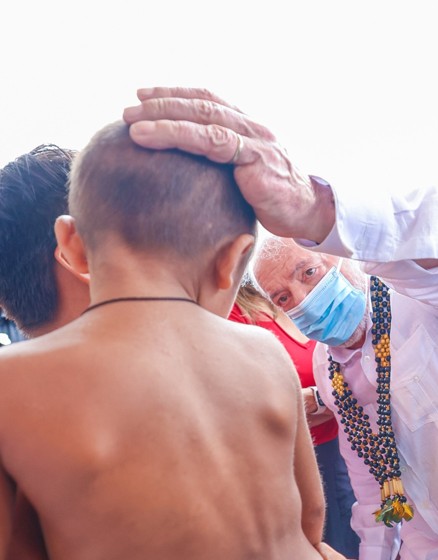
Illegal gold mining tears up the forest and poisons the rivers with mercury, and the gold does not stay put. Federal police documents reported in 2022 accused an Italian refiner, Chimet, of buying gold through a trader allegedly supplied by illegal miners in the Amazon; Apple, Amazon, Microsoft, and Alphabet all listed that refiner in their supply chains, and Chimet said it had cut ties with the trader once it learnt of the allegations. The forest enters the global market as gold, while its peoples enter as scenery for someone else’s spiritual awakening. What does respect for ancestral medicine mean if the people who keep it alive are left to drink poisoned water?
What Lula wanted was to put the poor in the budget, and he did, while also making a good many bankers spectacularly rich. We have no shortage of criticisms of his government, but he respects our constitution and the separation of powers between the executive, the legislature and the judiciary.
Now look at the legal ground beneath all those retreats. In Brazil, the religious use of ayahuasca is recognised under a 2010 resolution of CONAD, the national drug policy council, and in September 2026 federal prosecutors in Acre, the Amazonian state on the Peruvian and Bolivian borders where our ayahuasca religions were born, recommended that the council and Anvisa, our counterpart to the FDA, reopen that framework and set up working groups to hear Indigenous communities and ayahuasca churches. The resolution does not extend to psilocybin, which sits on Anvisa’s banned list; mushroom growers have been arrested for it. Jamaica, by contrast, never scheduled psilocybin at all, and retreats there sell mushroom experiences to foreign visitors while residents fight for access to beaches cut off by private developments and resorts. Legal where it serves foreign clients, criminal where it touches us.
Picture a psychedelic subscription: LSD with or without ads, the cheaper tier interrupting the experience every 15 minutes with a word from a partner. Psychedelic therapy, ad-supported or premium. The industry’s backers want a world in which nobody owns anything and everything is a subscription, in which we stay dependent on their machinery to build our houses, their technology to watch our borders, and their factories to extract and encapsulate our medicines.
They want to sell us the cure for a trauma their own empire manufactured.
If there is a psychedelic alliance worth fighting for, it runs the other way, and it begins with defeating the right in Brazil, the only way to keep the rainforest standing along with the people who steward it and every animal and plant within it.
“If there is a psychedelic alliance worth fighting for, it runs the other way, and it begins with defeating the right in Brazil, the only way to keep the rainforest standing along with the people who steward it and every animal and plant within it.”
Ayahuasca does not happen by itself, and the vine does not find its own way into anyone’s cup. It is planted, propagated from cuttings, tended for years, harvested, pounded and cooked for hours with the leaf. Human hands do that work, and those hands belong to the people who suffer most.
It troubles us that under Obama and Biden the bombing of other countries, the drone strikes, and the embargo on Cuba all carried on. It is worse still to hear the word “psychedelics” in Trump’s mouth while the same administration rallies Latin American governments behind its campaign against “narco-terrorists” and designates Brazil’s two largest criminal gangs as terrorist organisations.
The war on drugs is alive and well inside psychedelic-assisted therapy.
This country is the stage for deaths and imprisonments built on a lie told by an American in 1971, the year Nixon stood up and declared drugs public enemy number one; an Ipea study of drug-trafficking cases sentenced in 2019 found that most involved small quantities. Brazil is no safe haven for drug users, and yet it is here that foreign visitors are sold luxury psychedelic experiences.
If we don’t decriminalise all drugs, all of this is in vain.
If we keep backing a government that embargoes an entire island, kidnaps other nations’ presidents, starts wars and attacks sovereign countries…
If we don’t stop the right in Brazil,
If we don’t re-elect Lula…
then the gringos will have plenty of land for their data centres.
And that is not what we want.
Psychedelics for Lula.
Vote!
Note: This article was originally published in Portuguese on Chacruna Latinoamerica.
Art by Michelle Velasco.

Help us celebrate our 10th anniversary! Buy our anniversary t-shirt today!
Sources
Links checked on 11 October 2026.
- The Christian Science Monitor, 5 Oct 2026 — What Bolsonaro vs. Lula says about democracy in Brazil. https://www.csmonitor.com/World/Americas/2026/1005/brazil-president-election-lula-bolsonaro
- OCCRP, 29 Sep 2020 — Brazilian President’s Son Charged with Embezzlement, Graft. https://www.occrp.org/en/daily/13188-brazilian-president-s-son-charged-with-embezzlement-graft
- The Intercept, 17 Jan 2019 (updated 22 Jan) — Who Killed Marielle Franco?. https://theintercept.com/2019/01/17/marielle-franco-brazil-assassination-suspect/
- The Brazilian Report, 12 Feb 2020 — Adriano da Nóbrega killed in Bahia. https://brazilian.report/power/2020/02/12/bolsonaro-adriano-nobrega-militia-organized-crime/amp/
- The Brazilian Report, 17 Apr 2024 — Senate approves drug possession amendment. https://brazilian.report/liveblog/politics-insider/2024/04/17/senators-supreme-court-drugs/amp/
- Al Jazeera, 30 Jul 2025 — Brazil slams ‘unacceptable’ US sanctions on judge overseeing Bolsonaro case. https://www.aljazeera.com/news/2025/7/30/us-sanctions-brazils-supreme-court-judge-overseeing-case-against-bolsonaro
- Al Jazeera, 9 Jul 2025 — Trump singles out Brazil for 50 percent tariffs over Bolsonaro trial. https://www.aljazeera.com/news/2025/7/9/trump-singles-out-brazil-for-fifty-percent-tariffs-citing-political-motives
- AFP via CP24, 18 Dec 2025 — Brazil strips Bolsonaro’s son of congressional seat. https://www.cp24.com/news/world/2025/12/19/brazil-strips-bolsonaros-son-of-congressional-seat/
- Al Jazeera, 17 Jul 2025 — Brazil’s Lula slams Trump, says there is no ‘logic’ to US tariff threat. https://www.aljazeera.com/news/2025/7/17/brazils-lula-slams-trump-says-there-is-no-logic-to-us-tariff-threat
- CBS News / AP, 12 Dec 2025 — U.S. removes Brazilian judge Alexandre de Moraes from its sanctions list. https://www.cbsnews.com/news/us-removes-brazilian-supreme-court-judge-alexandre-de-moraes-sanctions-list
- RTÉ News, 26 Dec 2022 — Brazilian man arrested for bomb plot ahead of Lula inauguration. https://www.rte.ie/news/2022/1226/1343739-brazil
- The Brazilian Report, 12 Jan 2023 — Draft decree found at Anderson Torres’s home. https://brazilian.report/liveblog/2023/01/12/jair-bolsonaro-draft-decree/amp/
- Al Jazeera, 19 Nov 2024 — Brazil arrests five suspects in alleged Lula assassination plot. https://www.aljazeera.com/news/2024/11/19/brazil-arrests-five-suspects-in-alleged-lula-assassination-plot
- Al Jazeera, 11 Sep 2025 — Brazil Supreme Court sentences Bolsonaro to 27 years over coup plot. https://www.aljazeera.com/news/2025/9/11/brazils-bolsonaro-found-guilty-of-coup-plot-by-top-court
- Al Jazeera, 22 Nov 2025 — Brazil’s Bolsonaro detained for damaging ankle monitor. https://www.aljazeera.com/news/2025/11/22/brazils-bolsonaro-arrested-days-before-start-of-27-year-prison-sentence
- Al Jazeera, 30 Dec 2022 — Jair Bolsonaro leaves Brazil for Florida, avoiding Lula handover. https://www.aljazeera.com/news/2022/12/30/jair-bolsonaro-leaves-brazil-for-florida-avoiding-lula-handover
- Al Jazeera, 23 Mar 2021 — Brazil Supreme Court rules judge who convicted Lula was ‘biased’. https://www.aljazeera.com/news/2021/3/23/brazil-supreme-court-says-judge-who-convicted-lula-was-biased
- Al Jazeera, 24 Apr 2020 — Brazil justice minister resigns, accuses Bolsonaro of meddling. https://www.aljazeera.com/news/2020/4/24/brazil-justice-minister-resigns-accuses-bolsonaro-of-meddling
- Al Jazeera, 18 Apr 2026 — Trump joined by Joe Rogan as he signs order to speed up psychedelic review. https://www.aljazeera.com/news/2026/4/18/trump-joined-by-joe-rogan-as-he-signs-order-to-speed-up-psychedelic-review
- CNN, 24 Apr 2026 — FDA moves to fast-track review of psilocybin and methylone for mental health. https://www.cnn.com/2026/04/24/health/fda-psychedelic-drugs-priority-vouchers
- CNBC, 16 Jul 2026 — Eli Lilly to buy psychedelics maker AtaiBeckley for $2.8 billion. https://www.cnbc.com/2026/07/16/eli-lilly-to-buy-psychedelics-maker-ataibeckley-2point8-billion.html
- Associated Press via OPB, 18 Nov 2021 — Brazil’s Amazon deforestation surges to worst in 15 years. https://www.opb.org/article/2021/11/18/brazil-s-amazon-deforestation-surges-to-worst-in-15-years/
- INPE (technical note), 27 Feb 2026 — Consolidated PRODES rate for the Legal Amazon in 2025: 5,731 km². https://data.inpe.br/wp-content/uploads/sites/3/2026/03/A-taxa-consolidada-de-desmatamento-para-os-nove-estados-da-Amazonia-Legal-para-2025-e-de-5.731-km2.pdf
- Al Jazeera, 24 Jan 2023 — Calls for action as Brazil Yanomami Indigenous people face crisis. https://www.aljazeera.com/news/2023/1/24/calls-for-action-as-brazil-yanomami-indigenous-people-face-crisis
- Reuters via Euronews, 25 Jul 2022 — Illegal Brazil gold tied to Italian refiner and Big Tech customers. https://www.euronews.com/next/2022/07/25/brazil-environment-gold
- Agência Brasil (English), 1 Jun 2026 — US designates two Brazilian factions as terrorist organizations. https://agenciabrasil.ebc.com.br/en/internacional/noticia/2026-05/us-designates-two-brazilian-factions-terrorist-organizations