In November 2025, I helped organize a small retreat in Oaxaca, Mexico for a group of racialized psychotherapists. I came to this work as both a racialized therapist and a community psychologist, curious about whether plant medicine, specifically psilocybin mushrooms, might support healing from racial trauma when approached with care, consent, and cultural responsibility. The retreat also created space to reflect on how therapeutic work with racialized clients might shift when healers themselves are offered care.
“While spending time in Oaxaca and learning about plant medicine practices rooted in ceremony and relational care, I began to explore how culturally grounded group spaces might support healing from racial trauma.”
Questions of equity, belonging, and collective care have long shaped my research and teaching. Over time, one pattern has become clear: many psychotherapists receive little preparation for addressing racial trauma, despite working closely with clients whose lives are shaped by it. At the same time, racialized clinicians often navigate this work while carrying their own racial wounds, frequently in isolation. Spaces where practitioners can come together to tend to these experiences are still rare.
These tensions led me to wonder what might shift if racialized psychotherapists were offered intentional spaces to heal together. While spending time in Oaxaca and learning about plant medicine practices rooted in ceremony and relational care, I began to explore how culturally grounded group spaces might support healing from racial trauma. This inquiry required resisting the extractive ways psychedelic knowledge is often taken from its cultural context and approaching plant medicine with respect, reciprocity, and accountability to the communities that have protected these traditions. I approached this work as a visitor and learner, recognizing that these practices emerge from living cultural traditions that are not my own and cannot be separated from the communities that continue to sustain them.
Honouring Place, Culture, and Relationship
Oaxaca holds a deep and complex relationship with psilocybin mushrooms. These medicines are embedded within Indigenous ceremonial traditions that have endured despite histories of colonization and cultural extraction. Entering into this context required humility and ongoing reflection. From the beginning, I remained in conversation with facilitators about intention, ethical participation, and the protection of community knowledge. The goal was not to translate tradition into a therapeutic model, but to approach the work in ways that honoured the land, the people, and the medicines themselves. The retreat was only possible because of relationships with local facilitators and ceremony leaders who generously shared their time, knowledge, and care. Throughout the planning process, I remained in conversation with them about how the retreat would be held and what responsibilities accompanied this work. While I do not speak on behalf of these traditions or communities, their guidance continually reminded me that respectful engagement requires ongoing listening, humility, and accountability.
As a community psychologist and professor teaching Community, Cultures, and Psychedelics, I approach healing practices with the understanding that they do not exist outside of culture. They are shaped by history, place, and relationship. Yet much of mainstream counselling continues to prioritize individual change, often overlooking how collective trauma and social conditions shape both suffering and healing. This retreat was an attempt to move in a different direction. The experience centered community, connection, and shared care as the foundation of healing.
Discover the Indigenous Reciprocity Initiative of the Americas
The Experience
Six racialized psychotherapists from Canada and the United States participated in the retreat, supported by three facilitators who assisted with preparation, logistics, ceremony support, and integration. As visitors, we were continually reminded that we had entered a place with its own histories, responsibilities, and living traditions, and that our role was to learn rather than to claim expertise. Before arriving in Oaxaca, participants joined two online preparation sessions focused on relationship-building, intention-setting, and shared agreements around consent, safety, and care. These conversations helped us orient toward one another with attentiveness and responsibility.
Upon arriving in Oaxaca City, we shared a welcome dinner and began getting to know one another. The retreat itself took place in the Sierra Sur mountains several hours outside the city. Surrounded by dense forest and mountain air, the landscape invited us to slow down and soften into the experience. Care was also carried through the work of the retreat staff. They prepared nourishing meals, offered tea and cacao, and greeted us each day with warmth. Though not present inside the ceremony space, their care was a reminder that healing is often sustained by quiet forms of relational labour that remain largely invisible.
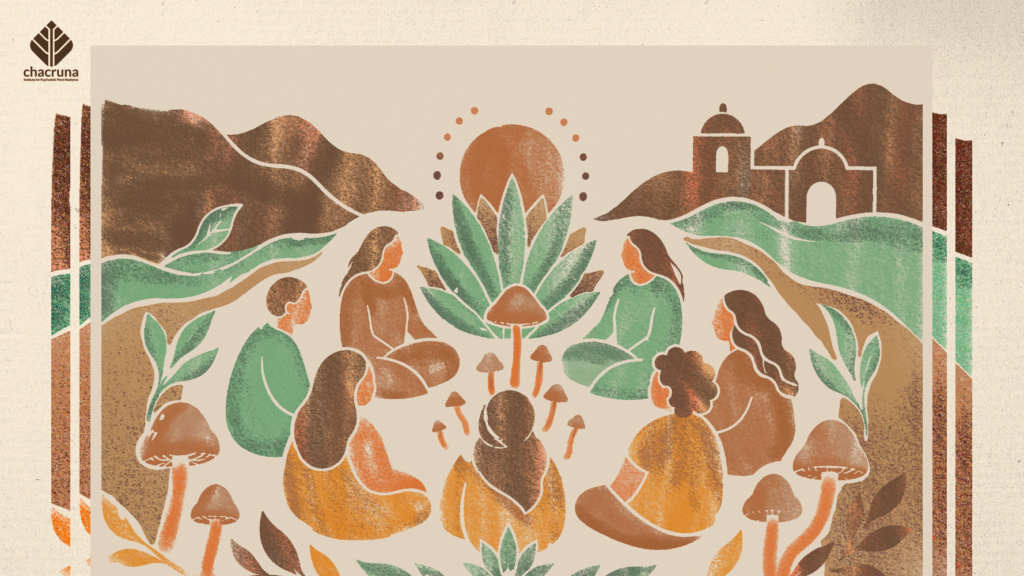
Before the mushroom ceremony, we participated in a temazcal ritual, a purification practice intended to clear the mind and body. The ceremony was led by a curandera from the Sierra Sur region of Oaxaca, whose work is rooted in Indigenous spiritual traditions and carried through lineage, calling, and relationship with the sacred. To respect her privacy and in accordance with her wishes, I have intentionally limited identifying details about her community and practice. She was supported by a Rarámuri curandero, whose healing practice is grounded in his own lineage and community traditions, along with two facilitators who attended to the group throughout the ceremony. The curandera held the ceremony with a steady and attentive presence that created a nurturing container for the group. She moved through the space responsively, attending to shifts in emotion with prayer and cleansing practices that conveyed both strength and gentleness. At times, both the curandera and the curandero appeared to work directly with the traumatic energy present in the room. Together, they cleared heaviness from the space and supported a sense of restoration. We closed the ceremony through music, rest, shared fruit, and a nourishing meal. Healing moved quietly through the space, shaped not only by the medicine but by the relationships that held the experience. In the days that followed, we engaged in integration through group dialogue, art-making, movement, breathwork, and nature walks. These practices allowed insights to emerge through multiple forms of expression, both individually and collectively.
Healing Racial Trauma in the Body and Lineage
Racial trauma does not live only in memory; it lives in the body. It can appear through hypervigilance, exhaustion, and bracing that become normalized within therapeutic spaces. Throughout the retreat, I observed how the psychedelic experience created conditions for emotional release and somatic integration. Pain and grief were able to move rather than remain contained. For many participants, this involved reconnecting with bodily wisdom and a renewed sense of belonging. For racialized psychotherapists in particular, this kind of embodied healing can interrupt cycles of burnout and vicarious trauma, restoring presence in both personal and professional life.
For some participants, the process also opened an ancestral dimension, where lineage, memory, and inherited stories came into view. Many Indigenous and diasporic traditions emphasize that healing is relational and intergenerational, shaped by histories and social contexts rather than contained within the individual alone. The curandera’s attunement appeared to support this process. Her ability to sense what was moving beneath the surface and respond through prayer, presence, and cleansing created conditions where deeper material could emerge without being forced or interpreted. Engaging lineage in this way seemed to restore rootedness and continuity, transforming inherited trauma into something closer to ancestral wisdom.
What I Carry Forward
What stays with me most from this experience is not a single moment from the ceremony, but the feeling of being held in community, lineage, and shared understanding. As racialized healers, many of us are taught to endure and translate pain into insight. We are expected to remain regulated and competent even as our nervous systems carry generations of harm. This retreat reminded me how rare it is for racialized psychotherapists to be in spaces where we are not the container and are able to receive care ourselves.
“When we tend to our own wounds in community, we do more than heal ourselves. We strengthen the roots that allow us to keep showing up for our clients, our communities, and the generations that follow.”
Being together in Oaxaca, preparing together, eating together, slowing down together mattered as much as the medicine itself. Healing unfolded through witnessing, shared silence, laughter, and the relief of not having to explain ourselves. The experience also deepened my commitment to approaching psychedelic work with humility. These medicines do not belong to us. They come from living traditions shaped by land, culture, and community. Our responsibility, especially as clinicians and researchers, is to engage in ways that protect and respect those lineages. For me, reciprocity also means recognizing that these relationships do not begin and end with a retreat. It requires ongoing collaboration, listening, and ensuring that this work continues to be guided by the people and communities who have carried these traditions across generations.
I am left with questions:
- What becomes possible when racialized healers are given intentional space to heal together?
- How might therapeutic work shift when we are more resourced and less alone?
- What would it mean to reimagine psychedelic-assisted therapy not only as an individual intervention, but as a communal practice rooted in care, reciprocity, and connection?
This retreat was not an endpoint but a beginning. It reminded me that healing moves through us, between us, and beyond us. When we tend to our own wounds in community, we do more than heal ourselves. We strengthen the roots that allow us to keep showing up for our clients, our communities, and the generations that follow. When I think back to those days in the mountains of Oaxaca, what stays with me most is the quiet power of being together in a space where healing was held collectively.
Art by Michelle Velasco.