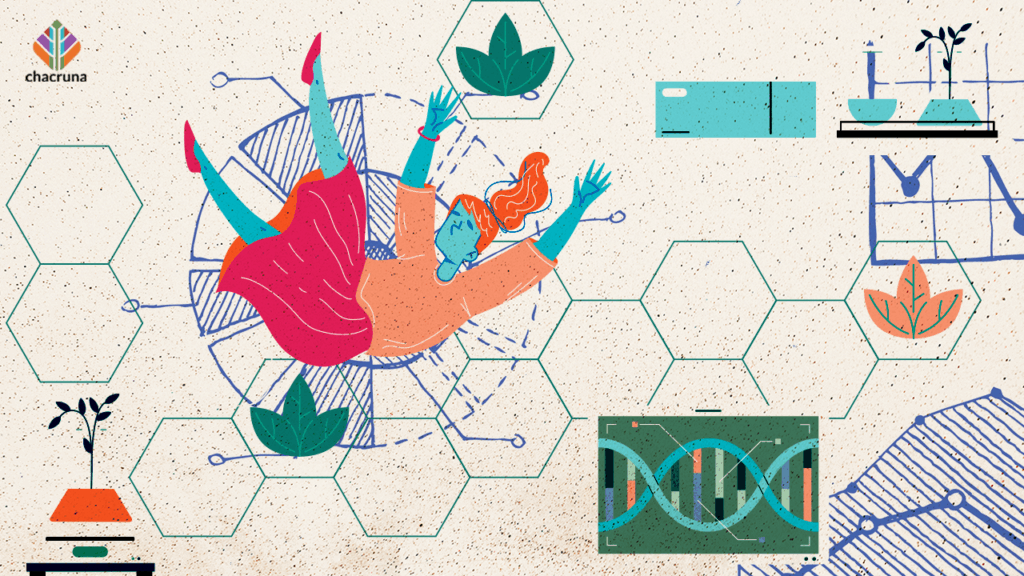
When my co-authors and I finished reviewing 75 scientific studies on psychedelics for substance use disorders, one result stood out more than any other.
Women were largely absent.
This was not a metaphor. It was literal. Across decades of research on substances often described as promising tools for treating addiction—ayahuasca, psilocybin, MDMA, LSD, ketamine—women were consistently underrepresented, rarely analyzed, and almost never discussed. In many studies, they were present only as a percentage in a table. In others, they were not present at all.
“Across decades of research on substances often described as promising tools for treating addiction—ayahuasca, psilocybin, MDMA, LSD, ketamine—women were consistently underrepresented, rarely analyzed, and almost never discussed.”
I am a psychologist, and I work with women who struggle with substance use disorders. Their bodies, histories, fears, and social realities are not abstract variables to me. They are the clinical reality. When I began this scoping review, published in the International Journal of Drug Policy, I was not expecting perfection—but I was struck by how limited the attention to women still was in a field that often emphasizes care, sensitivity, and transformation.
What I Found When I Looked Closely
We reviewed every human study we could find that examined the potential therapeutic use of psychedelics for problematic alcohol or drug use. We included both clinical trials and observational studies, spanning more than sixty years of research.
Out of 75 studies, only 18 (24%) had samples that were even close to being sex-balanced. Nine studies included no women at all. Five did not report participants’ sex. Only 11 studies analyzed whether psychedelic-related outcomes differed between men and women. And none—none—engaged with sex or gender in their discussion sections.
This absence matters. Not because of ideology, but because substance use disorders are deeply shaped by sex and gender. Women often develop addiction more rapidly after first use. They experience higher rates of trauma and gender-based violence. They face stronger stigma, greater fear of losing custody of their children, and more barriers to seeking treatment. Biologically, differences in hormones, body composition, and metabolism affect how drugs are processed and felt.
Ignoring these realities does not make research more neutral. It makes it less accurate.
“Psychedelic research does not exist in a vacuum. Like much of biomedical science, it has developed within a research culture that historically treated male bodies as the default.”
Psychedelics in the Context of Medical Research
Psychedelic research does not exist in a vacuum. Like much of biomedical science, it has developed within a research culture that historically treated male bodies as the default. For many years, women were considered “too complex” for clinical trials, due to hormonal fluctuations, menstrual cycles, or the possibility of pregnancy.
The persistent underrepresentation of women in clinical studies, with sex and gender often unreported or left unanalyzed, has consequences that are now well documented: medications later withdrawn from the market because they posed greater risks for women, adverse reactions that went unnoticed for years, and treatments optimized for one body and generalized to all.
Psychedelic science did not create this problem. But so far, it has not fully escaped it either.
Not Just a Numbers Problem
One might argue that this is simply a matter of time. That newer studies include more women. That regulations now require reporting sex as a biological variable.
There has been some improvement. After a 2016 policy by the U.S. National Institutes of Health requiring consideration of sex as a biological variable, female participation in clinical trials did increase. In the studies we examined, women represented 36% of participants in trials conducted after this strategy, compared to just 11.6% before that point.
Still, 36% is not enough, and inclusion alone does not address the problem.
Most studies still do not analyze outcomes by sex. They do not test whether effects differ. They do not ask whether women respond differently, benefit differently, or experience different risks. And they almost never reflect on what it means that women are underrepresented in the first place.
Science does not only advance through data collection. It advances through interpretation. And interpretation is where women largely disappear.
A Pattern That Goes Back Further
This is not the first time women have been rendered invisible in psychedelic research.
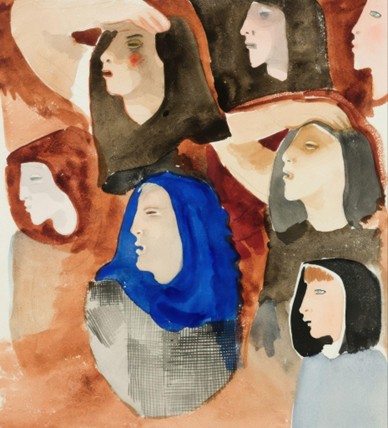
Historians have shown how, in early psychedelic trials, women often appeared as unnamed observers, caregivers, or guides—present, essential, but absent from the official record. Erika Dyck’s Chacruna chronicle, Women’s Participation in Psychedelic Trials, beautifully traces this history and reminds us how much of women’s labor and presence has been erased rather than acknowledged.
It becomes clear that the issue is not only who is studied, but who is positioned to ask the questions. Research across biomedical fields shows that studies led by women—particularly when both first and senior authors are women—are more likely to examine sex or gender differences.
This pattern appeared in our review as well. Among the 11 studies that actually analyzed differences between men and women in the effectiveness of psychedelics for treating substance use disorders, two had a female first author, and six included at least one female author. While these numbers are small, they suggest that attention to sex and gender does not emerge randomly—it is shaped by whose perspectives are present in the research process itself.
Why This Matters Clinically
Psychedelics are not just molecules. They are experiences. And experiences are shaped by bodies, histories, and social positions.
If women are more vulnerable to certain adverse effects—as some evidence suggests for substances like MDMA—this matters for safety. If trauma histories are more prevalent among women with substance use disorders, this matters for preparation and integration. If caregiving responsibilities and stigma affect women’s ability to participate in treatment, this matters for access.
A therapy that aims to be transformative benefits from being attentive to these differences.
“If psychedelics are to play a meaningful role in treating addiction, research will need to go beyond simply including women as participants.”
Looking Forward
This Chronicle is not a rejection of psychedelic science. On the contrary, it comes from taking its promises seriously.
If psychedelics are to play a meaningful role in treating addiction, research will need to go beyond simply including women as participants. It must ask better questions. It must design studies that are powered to detect sex differences. It must report outcomes transparently. And it must treat sex and gender not as nuisances, but as sources of insight.
Psychedelics are often described as tools that help us see what was already there, but hidden. In that sense, perhaps this is also their challenge to science itself: to look again, more carefully, and notice who has been missing from view.
References
Correa da Costa, S., Bormann, N. L., Oesterle, T., McGinnis, M. T., Ho, M.-F., Vettleson-Trutza, S. A., Rummans, T., & Gold, M. S. (2025). The Role of Psychedelics in the Treatment of Substance Use Disorders: An Overview of Systematic Reviews. Brain Sciences, 15(10), 1056. https://doi.org/10.3390/brainsci15101056
Daitch, V., Turjeman, A., Poran, I., Tau, N., Ayalon-Dangur, I., Nashashibi, J., Yahav, D., Paul, M., & Leibovici, L. (2022). Underrepresentation of women in randomized controlled trials: a systematic review and meta-analysis. Trials, 23(1), 1038. https://doi.org/10.1186/s13063-022-07004-2
Lal, R., Deb, K. S., & Kedia, S. (2015). Substance use in women: Current status and future directions. Indian Journal of Psychiatry, 57(Suppl 2), S275–S285. https://doi.org/10.4103/0019-5545.161491
Liechti, M. E., Gamma, A., & Vollenweider, F. X. (2001). Gender differences in the subjective effects of MDMA. Psychopharmacology, 154(2), 161–168. https://doi.org/10.1007/s002130000648
Sugimoto, C. R., Ahn, Y.-Y., Smith, E., Macaluso, B., & Larivière, V. (2019). Factors affecting sex-related reporting in medical research: A cross-disciplinary bibliometric analysis. The Lancet, 393(10171), 550–559. https://doi.org/10.1016/S0140-6736(18)32995-7
Wojdyslawski Nigri, A., Falcão de Arruda, I., Gouveia Ferreira Maia, C., Tófoli, L. F., & Carezzato, F. (2025). Psychedelics for substance use disorders: Are women being addressed? A scoping review. International Journal of Drug Policy, 145, 104960. https://doi.org/10.1016/j.drugpo.2025.104960
Art by Mulinga.