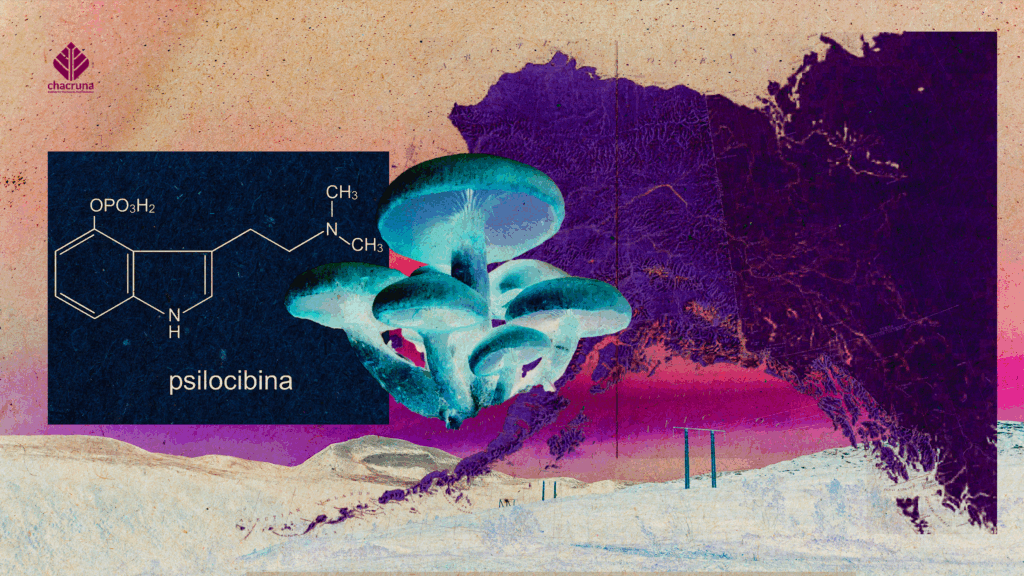
In 2026, Alaskan voters may weigh a ballot measure that would broadly reform policies for some psychedelics. If adopted, the Alaska Natural Medicine Act brings a three-pronged approach to psychedelics that includes decriminalization for personal use, regulated medical access for mental health treatment, and the creation of a Traditional Use Council of Indigenous knowledge holders that would advise and support on natural medicine practices.
The proposed ballot measure includes five compounds: psilocybin, psilocin, DMT, mescaline (not including peyote), and ibogaine. Currently, advocates are working to raise funds to collect 35,000 signatures between now and the end of the year, before the state’s first legislative session.
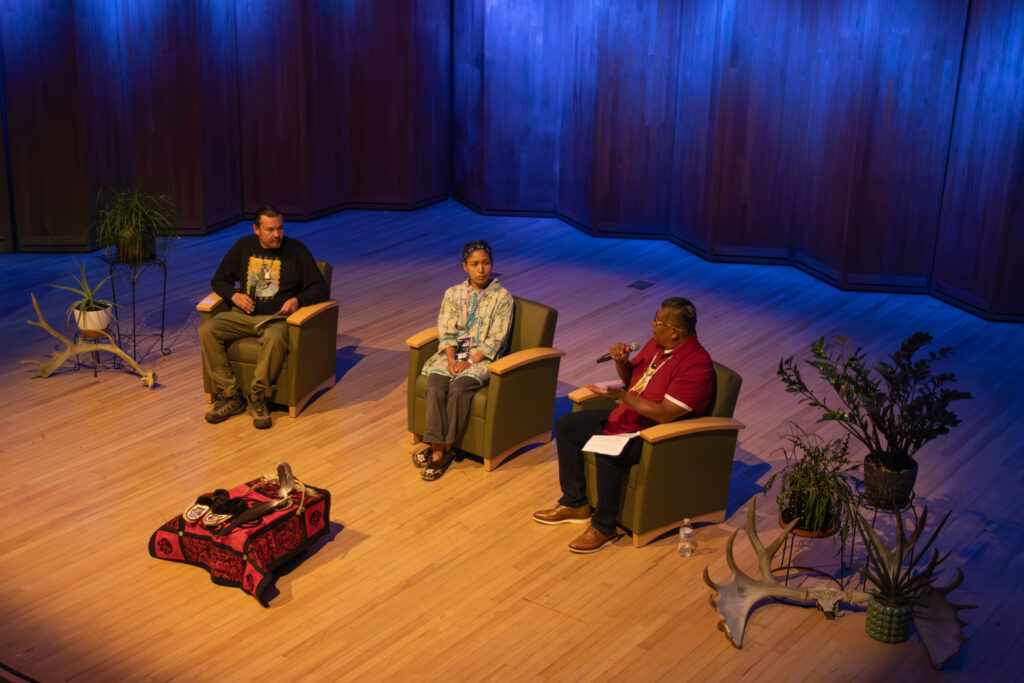
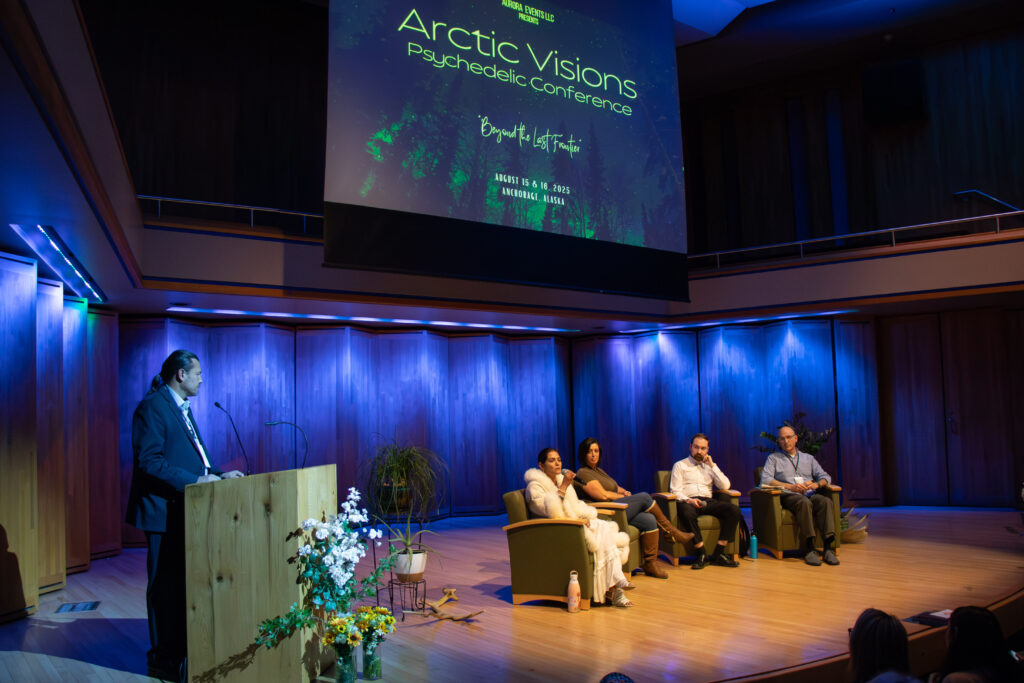
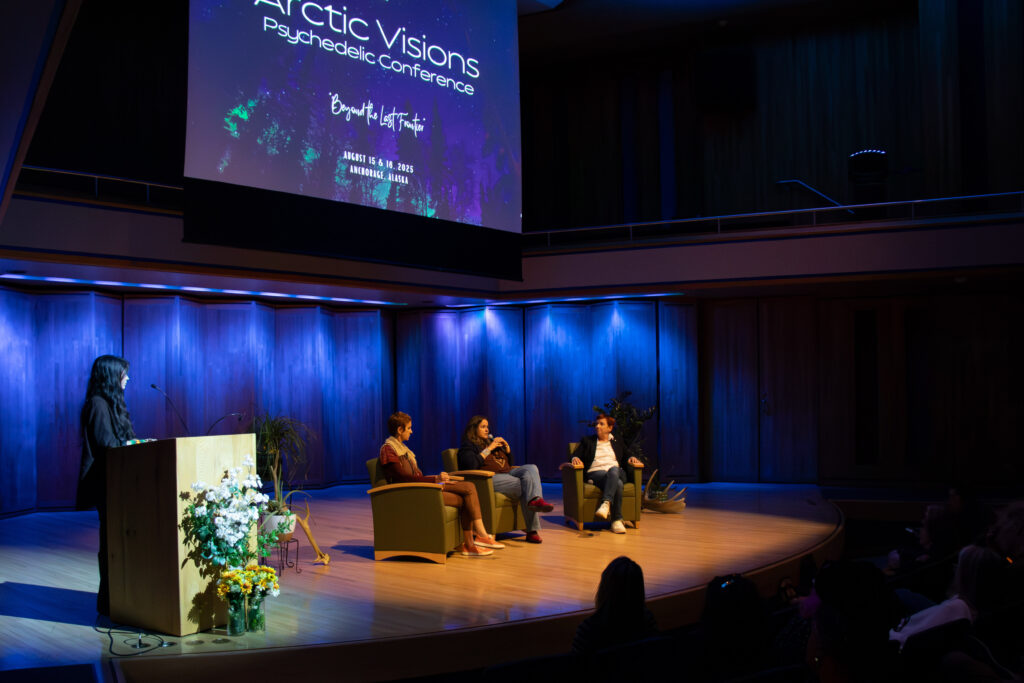
Modeled after Colorado’s Natural Medicine Health Act, approved by voters in 2022, the ballot measure was developed by the Indigenous-led group Natural Medicine Alaska. The team submitted the ballot measure the week of Psychedelic Science, and received certification to collect signatures right before this year’s Arctic Visions conference, a two-day gathering that convened luminaries of both the Alaskan and global psychedelic movement.
The Evolution of a Movement
Proponents of the ballot measure hope that its passage will establish Alaska as “the North Star of the psychedelic reform movement,” says David Karabelnikoff, Natural Medicine Alaska’s Alaska Policy Advisor, who is Aleutian Athabascan and a member of the Knik tribe. Karabelnikoff connected with Natural Medicine Alaska’s president and principal organizer, Regina Randall, through the Alaska Entheogenic Awareness Council.
“I’ve been involved in the recovery and sobriety movement here in Alaska, and have seen a lot of disparity with the native community in that space,” he says. “They are suffering from addiction and alcoholism and not really finding a lot of success in the conventional treatment modalities that are available.” Alaska has some of the highest rates of mental illness, suicide, and addiction in the U.S., as well as a higher-than-average veteran population, many of whom suffer from high PTSD, depression, and addiction.

Currently, he says, state taxes support sending people suffering from opioid addiction to treatment centers with low success rates, with an average cost of $600,500 per year. Ibogaine could offer a better option. “With ibogaine, the high success rate means the state would see significant savings. Like many states, Alaska is struggling with budget and costs. This would reduce drains on the system.” In one study, 80% reported no or diminished withdrawal symptoms and cravings after the treatment, with 30% reporting never using opioids again after the treatment.
After connecting on citywide decriminalization work Randall was doing in Anchorage, she and Karabelnikoff, along with the rest of the Natural Medicine Alaska team and its supporters, worked together to poll residents across the state, gathering sentiments about psychedelic legislation. “We thought we could really draft something with a ballot measure that would be much more innovative than what we could pass at the Anchorage Assembly,” he says.
The team polled residents three times to assess public sentiment. The first poll asked about “straight decriminalization,” says Karabelnikoff, with a 49% approval rate. The second, which also asked about use for mental health and included more focused education and outreach, had an approval rate of 65% for decriminalization and 84% approval for use in the treatment of mental health.
“It’s hard to get Alaskans to agree on 80% of anything,” he says, “but having more options for mental health treatment, especially for veterans, is hard for Alaskans to say no to. Alaska has a strong libertarian spirit. If you’re not hurting anyone and staying in your lane, why should the government infringe on your freedoms to do what you want, especially if it’s something that makes you a better person?”
“It’s hard to get Alaskans to agree on 80% of anything, but having more options for mental health treatment, especially for veterans, is hard for Alaskans to say no to. Alaska has a strong libertarian spirit. If you’re not hurting anyone and staying in your lane, why should the government infringe on your freedoms to do what you want, especially if it’s something that makes you a better person?”
David Karabelnikoff
Colorado’s Precedent
Early in the process, members of the Natural Medicine Alaska met with Kevin Matthews, co-chief proponent of Colorado’s Natural Medicine Health Act and architect of the Denver Psilocybin Campaign, and attorney Matthew Brockmeier, a lawyer at Antithesis Law, board member of the Psychedelic Bar Association, volunteer for Chacruna’s Council for the Protection of Sacred Plants, and supporter of the Colorado initiative, who then became a resource and support for the Alaska campaign. The support team also eventually included Jason Brandeis, W. Bryan Hubbard, among individuals and organizations such as Chacruna, who lent advice and support throughout the process.
Brockmeier notes that advocates in Colorado learned from cannabis legislation. “The approach we took with cannabis was kind of like candy or fast food,” he explains. “If you’re old enough, you can buy it with very little supervision. We were looking for a light touch since, but we saw really high potency stuff hit the market without much respect or reverence for the plant and its potential.
“That mostly reflects where we are as a society,” he adds. “Hedonistic, consumeristic, individualistic. With psychedelics, we are taking a different approach.”
In Colorado, the Natural Medicine Health Act eventually included provisions for use by healing centers and an allowance for personal use, as well as an unlimited number of licenses for facilitators – a difference from cannabis legislation that resulted in licenses being limited and, thus, often unaffordable. In Colorado, there is no upper limit to licenses that can be issued, but there is also a limit of five licenses per person. That ensures licenses won’t be consolidated or become “stratospherically expensive,” Brockmeier says. There will also be no over-the-counter sales of psychedelics in the state.
“One size doesn’t fit all. Alaska is different from California or Louisiana. We want to see a return to drug policy reform at the state level. Alaska would be a model for what other states could follow, replicate, and build on.”
Matthew Brockmeier
The act became the template for Alaska. “We saw what was passed in Colorado as what was possible,” he continues. The drafted measure in Alaska also includes provisions for microdosing, which was left out in Colorado for strategic reasons. “Alaska has a different set of considerations because of the remoteness of the population,” he explains. “Everyone who wants to use psilocybin, for example, may not have access to a healing center, because they may live in the bush or it might be too expensive.”
After Colorado, advocates looked at how the initiative might evolve. “The objective at the end is a fundamental overhaul of the Controlled Substances Act at the federal level in the United States,” says Brockmeier.
Brockmeier is not relying on the current administration’s warming attitude towards psychedelic healing, however, though he thinks it’s a step in the right direction. “We’ve heard big promises from the federal government before,” he says.
He notes that it’s critical the movement come through the states first. “We need to start looking at states as policy laboratories,” he says. “One size doesn’t fit all. Alaska is different from California or Louisiana. We want to see a return to drug policy reform at the state level. Alaska would be a model for what other states could follow, replicate, and build on.”
Protecting Traditional Use
Alaska’s ballot measure, unlike Colorado’s, includes the establishment of a Traditional Use Council and the removal of criminal penalties for “traditional use of traditional natural medicines by adults 21 and older.”
“Alaska has expanded on what happened in Colorado with the recognition that shoehorning legacy healers into the regulated market could work, but that having a pathway for legacy healers feels more authentic, and ensures people are able to continue what they’ve been doing already with these plants,” Brockmeier says.
The Traditional Use Council will recognize Indigenous knowledge holders and their work with psychedelic plants and fungi in a way both Brockmeier and Karabelnikoff hope will set a precedent for other states. “I feel proud to be part of a campaign that is Indigenous and Alaska native-led,” Karabelnikoff says. “We are trying to balance and weave together the different aspects of regulated medical access, traditional use, and the decriminalization movement, and we have come up with something that – through the weaving of those three braids – will strengthen and get support from all of these aspects within the community. Being Indigenous ourselves, we recognize that the knowledge practitioners hold is really meant to be respected.”
Protecting traditional use, he adds, will also support and strengthen community and help people heal from intergenerational trauma. “My hope is to see intertribal ceremonies come to Alaska, where people from South America can bring their ceremonies and healing modalities to sit with Alaska’s native community, to have Indigenous exchange and grow those ties together.”
He credits the small team for pressing ahead even when they faced discouragement. “If it wasn’t for our grassroots team being adamant about making this happen, it wouldn’t,” he says.
“Having attended twice in the row Arctic Visions in Alaska, and sitting on the Advisory board of the Entheogenic Awareness Council, I continue in awe of what this mighty team is doing. Chacruna is proud to support this initiative, as it is Indigenous-led, woman-led, and locally grown – grassroots and bottom up,” says Chacruna’s Executive Director, Dr. Bia Labate. She continues “Alaska, with its traditional roots, remoteness, gorgeous landscapes, and folks with strong spirit who endure such challenging natural conditions, is setting up an example to the country and the world: when regulating psychedelics, Indigenous wisdom keepers should be at the forefront.”
“Mission Critical”
Signatures must come from 6% of three-fourths of house districts in the state and must be collected in person, including in very remote areas, a process that will incur high costs.
Karabelnikoff and Brockmeier stress that now is a critical time for the campaign. “We are reaching out to the national audience within the psychedelic space to ask for help and resources,” Karabelnikoff says. “We need the movement to take note of Alaska and support what we are doing here. Many hands make light work, and we need encouragement, emotional support, and financial contributions to make this a reality.”
“We need the movement to take note of Alaska and support what we are doing here. Many hands make light work, and we need encouragement, emotional support, and financial contributions to make this a reality.”
David Karabelnikoff
Brockmeier urges anyone who wants to support to do so now. “It’s critical for the future of the psychedelic movement and for our country that we continue to make progress at the state level. It’s critical to the world and our species that we start going in the right direction.”
Once the required signatures are collected, they will be submitted to the state and verified. Then, the ballot measure will sit before the state legislature for a full session. During that time, the legislature has an opportunity to pass a similar, legally comparable bill. If they elect not to, it will go to the ballot.
“I’m kind of in favor of a ballot measure,” says Karabelnikoff, though he notes there would be less cost associated with the legislature picking it up. “It shows direct democracy via a citizen-led initiative. It shows that we are ready for a future where Alaska becomes a destination for healing.”
Art by Michelle Velasco.