I welcome this opportunity to talk about the topic of psychedelics and patriarchy, something that is increasingly relevant. The words “patriarchy” and “feminism” are accurate but also have intrinsic gender implications that, from the start, create teams and sides that construct a battle of opposing forces. This is unfortunate, because patriarchy harms most people, benefitting only those at the pinnacle who have amassed the power and wealth to control the rest, and feminism, as bell hooks said, is for everyone. In her definition, “to be ‘feminist’ in any authentic sense of the term is to want for all people, female and male, liberation from sexist role patterns, domination, and oppression.” The trick of the patriarchy is to dangle the hope of power before the eyes of the powerless and tempt them with the notion that to join Team Patriarchy is to enjoy the benefits of the masters. In a sense, this is true, as in households where patriarchy prevails, a man has a servant at hand to cook and clean for him, to obey his orders, and to bear heirs who may enrich him in the future. The cost of this is inauthentic relationships built on asserting power and privilege and the necessity of following dictates of sex roles that limit the full range of expression and require competition instead of cooperation, constant insecurity, and lives built on threat and fear. Conformity is demanded and to step outside the paradigm of the patriarchy is to invite violence and rejection from those in power. We can see that in the current attempt to purge the military of trans people who have been serving for years. Have they proven to be inadequate soldiers? No; they are forced out because they do not conform to the patriarchal standards that represent the powers that are controlling them.
Billionaires who have amassed unthinkable wealth continue to struggle to get more; the need is never satisfied. Feminism, on the other hand, need not be associated only with women; it is essentially cooperation, sharing, and recognition of the equality we all share. The disdain for the word “feminism,” and maybe even these ideas’ association with “the weaker sex,” undermine its actual promise, which may be the only hope for the future of humanity. It is the rare and brave teenage boy who would attest to being a proud feminist as his peers tune into the manosphere of the Tate brothers and insult each other with the word “fag.”
The history of the word feminist and its co-option by white women in the early feminist movement to characterize their own insistence on sharing the bounties of patriarchy at their sisters’ expense has also tarnished the term. The dichotomy of male versus female and thus patriarchy versus feminism sets us against each other, while at the same time, points to a very real opposition that needs to be addressed. Political movements that ignore the feminist aspect while trying to equalize power just become another version of patriarchal power grabs: Why hasn’t any communist government succeeded in creating a utopia? It’s because a power vacuum is created and the patriarchy steps in to control the masses and their resources; the unacknowledged greed of the biggest bully telling others to share while he accumulates the power to enrich himself. The misogyny of the Bernie bros is a recent, Western example of how “progressive” politics reverts to patriarchal bullying when feminism is left out of the picture. Equal distribution of wealth among the males is not equal distribution, and equal distribution of power must include everyone.
The ideal patriarch is a white male, devoid of the weaker emotion of empathy, as Elon Musk recently declared, who controls the reins of power and the women (and men) who serve him by force. All will be given to him, and he owes nothing in return. Those who flock to this ideal, men and women alike, hope to benefit from the strength of the patriarchal lord, shielded by his giant shadow and protected by his mighty fist.
The interest of the tech sector in envisioning better products and greater market share by consuming psychedelics is one example of how the patriarchy influences the world of psychedelics.
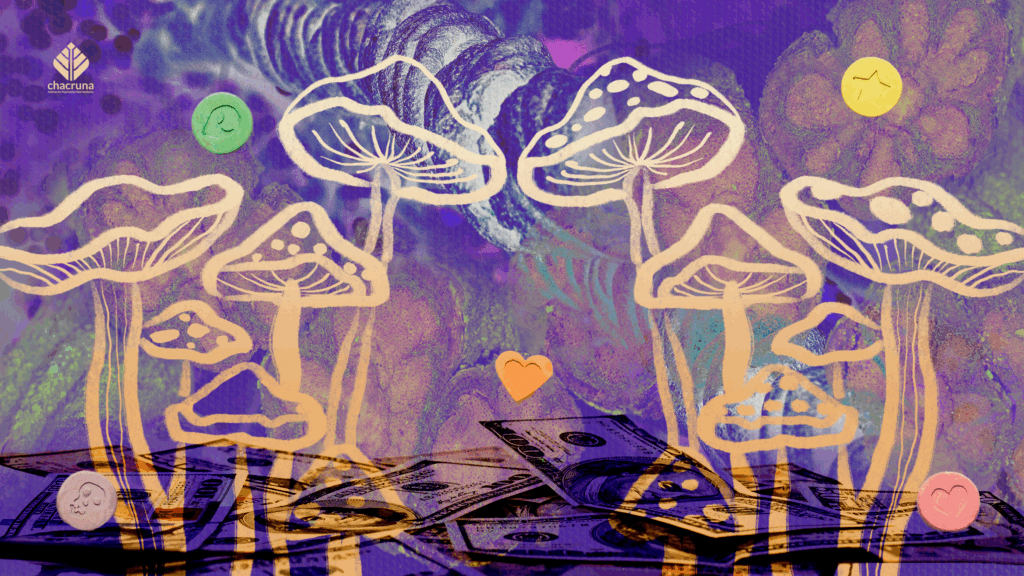
The interest of the tech sector in envisioning better products and greater market share by consuming psychedelics is one example of how the patriarchy influences the world of psychedelics. The plant medicine retreats for executives to enhance their ability to motivate workers and iron out their own neurosis impeding wealth generation is another, promising “life optimization” in seven weeks and a community of executive founders to share integration with after the experience. Microdosing is another psychedelic treatment that offers the benefits of psychedelic treatment without the fear of confronting scary shadows or disequilibrating forces, a way to enhance productivity and innovation in the interest of business success. These attempts to modify the traditional use of psychedelics to serve the demands of productivity are one aspect of patriarchal influence on the field of psychedelics. They are not bad in and of themselves, but they represent an insidious shift. We also can see other attempts to gain benefits from psychedelics without having to undergo the psychedelic experience, with scientists teasing out the molecules in substances like ibogaine and LSD to manifest their powers of neuroplasticity without subjecting patients to the paradigm-altering visions that accompany the use of these substances. These molecule modifications may be helpful in treating disease, but they are also likely to be profitable for the drug manufacturers who can patent them and do little to break open the mind to perceive new takes on reality or to question the powers that be.
Unequal trade is a hallmark of patriarchy, justified by the naivete of the Indigenous in willingly accepting some trivial crap from a dominating culture in return for the most precious resources and knowledge of their culture. The glee of the Dutch in convincing the Lenape to trade the island of Manhattan for some beads and tools is an example of this type of exchange. This kind of exploitation continues today with the patriarchy gaining steam even as Indigenous and minority groups awaken to their own power and begin to understand the tactics of the investors and businesspeople who see their cultures as sources of medical and therapeutic treatments that will enrich them as the “discoverers” of fantastic peptides and amazing cures for the addictions and mental health problems that have always plagued these unbalanced cultures. The venture capital funding driving much of the psychedelic renaissance comes from the same extractive capitalist system that has devastated Indigenous communities and natural ecosystems for centuries. These investors, predominantly white and male, see psychedelics as another market opportunity rather than as sacred medicines with profound implications for how we understand consciousness and human interconnection. The seductive nature of the promise of psychedelic healing is particularly dangerous because psychedelics do offer genuine healing and insight. The medicines themselves are not the problem; they are powerful tools for psychological and spiritual growth that have been used safely and effectively by Indigenous cultures for millennia. The problem lies in how they are being integrated into Western society, where every innovation must be filtered through systems of profit and control. The result is a distortion of the medicines’ true potential and a decrease in their revolutionary implications to fit within existing paradigms of medical treatment and consumer consumption.
The medicines themselves are not the problem; they are powerful tools for psychological and spiritual growth that have been used safely and effectively by Indigenous cultures for millennia. The problem lies in how they are being integrated into Western society, where every innovation must be filtered through systems of profit and control.
I, myself, am a beneficiary of this cultural exchange and have personally visited Indigenous people asking for healing from wounds inflicted by my patriarchal culture and specifically the complete freedom the patriarch of my own family took in exploiting the females in his home. The tight knot of patriarchy strangles those who are caught in it and even when we may seek a way out, pulling on one end of the rope can tighten the knot even more.
The solution is reciprocity, which can be found not just in a financial benefit for the cultures that have been exploited, but in a reciprocal valuation and respect for these cultures, a regard for their science and beliefs as worthy of respect, an approach to their elders and leaders as equal to the icons of our own culture, and even more so than the rapacious patriarchs who often have risen to power in Western cultures. This is feminism; how far we imagine we must stoop to regard the other as an equal is how deluded we are about our own “superiority.” How hard is it to look up to an Indigenous person who grew up intimately acquainted with plants and their cultivation and uses and the surrounding natural environment who has few possessions and does not know how to access the internet, when we see hordes of internet-savvy people lost in addiction, out of touch with the natural world, blind to basic kindness and respect for others, paid weekly the yearly salary of people in poorer nations, who generate mountains of e-waste and trash dumped into the oceans without a thought to its effects? “More” is the cry of the patriarchs, and more is never enough.
The history of psychedelics in the U.S. and Europe has largely unfolded beyond the bounds of conventional culture. In the 1960s, the psychedelic underground—populated by hippies, queer communities, and other countercultural figures—cultivated a space that was explicitly anti-patriarchal, anti-war, and in direct opposition to the conservative and racist norms of the mid-century mainstream. Psychedelic drugs helped people imagine a different world where freedom of expression was valued, and difference was applauded and appreciated. Feminism found fertile ground as women started to awaken to their own worth, and the uptight and rigid approach to emotional expression was questioned. The more recent psychedelic renaissance was born in the era of “wokeness,” the now despised term that has been thrown in the same heap as “feminism” for being a sign of foolishness, going too far, permitting too much, representing groups who demand too much. The backlash is in full swing now with a population turning against itself to purge the foreign and the different, women denied control of their own bodies, and political violence from the right on the rise. How will psychedelics be used in such an era? Past abuses of them in repressive environments have been documented, such as project MK-Ultra, weaponizing psychedelics, and the use of psychedelics in barbaric attempts to change the sexual orientation of gay people. The current head of Health and Human Services has a blueprint for using psychedelics to heal addicts, a commendable use indeed, if it were not part of a larger authoritarian government’s anti-science agenda involving possibly coerced three to four year stays on “wellness farms” for addicts to be “re-parented” by workers who have a spiritual 12-step agenda combined with psychedelics to replace the medical treatment models that substitute long-acting opiates that reduce craving. It is easy to see how that could go wrong and become another means of social control of undesirable individuals in society. Re-parenting is just a point away from re-education, and “camps” do not have a comforting history when it comes to personal freedom, bodily autonomy, or state-sponsored ideas of healing.
Another way the patriarchy influences the psychedelic renaissance is in the coopting of the substances from the world of the Indigenous people from whom the tradition of plant medicine originates, who discovered their magical properties and constructed practices of reverence and patterns of use. Indigenous cultures have been systematically erased by colonial forces who represent the grasping arm of the patriarchy. Indigenous people have been enslaved and murdered, their wealth stolen, and the remnants despised and ignored by the invaders who refuse to acknowledge or mitigate their theft. This includes taking the medicines and knowledge of these cultures and turning them into sources of profit and power for the colonizing invaders or as has happened in the past, banishing knowledge of these substances because they threaten the encroaching paradigm and must be criminalized. The history of peyote and marijuana are clear examples of racist stigma being attached to psychotropic plants and the vilification of those who use them, with the effects of the plants themselves exaggerated and defined as satanic or inspiring nefarious activity.
The history of peyote and marijuana are clear examples of racist stigma being attached to psychotropic plants and the vilification of those who use them, with the effects of the plants themselves exaggerated and defined as satanic or inspiring nefarious activity.
Moving from the victimization of the Indigenous, we can also see the activity of the patriarchy in the medical model of psychedelic treatments. The move from nonprofit to for-profit of MAPS itself is an example of the perceived “necessity” of falling in line with the profit-driven patriarchal model that creates a bubble outside of which the air necessary to breathe is absent. If you want to succeed, you must play by these rules. You must create profit for investors. The wealthy did not get that way by egalitarianism, and they cannot continue to remain wealthy if they do not create an ongoing stream of income. Wealth is the goal of modern Western culture. In Indigenous cultures, wealth is often regarded as a destabilizing force, corrected by potlatch, communal ownership, and gift-giving traditions that keep individuals from hoarding fortunes. In Western culture, we witness the destabilization created by inequality, but rather than correct it, even by minimally caring for those who are unable to survive without assistance, we double down on the hoarding, cutting taxes for the wealthy and services for the poor. Mass protests and political assassinations are a byproduct that serve those in power who use these as excuses for more force and greater shows of repressive power. All must bend the knee to the patriarchy, psychedelic research included.
When the paradigm is questioned, the advances of science and medicine are always cited, how much longer the lifespan and healthier worldwide people are with child mortality down and heretofore unknown treatments for diseases being studied and offered worldwide. All commendable, but that is only part of the picture. Profit does indeed drive research and it is in humanity’s interest to have a viable population but look again at the environment and its ability to sustain life. Look at the species dying out, the violent changes in the weather, the rising seas and melting ice caps. The arrogance of the patriarchal West in assuming it is best has resulted in the most alarming and destructive outcome of all for all peoples, the destruction of the balance of our natural environment. The benefit of species-specific health advances for homo sapiens does not improve the ability of the planet to sustain life. Rather than diminish the exploitation, the solution of the billionaires is to propose to colonize another planet. Obviously, nothing has been learned. The most advanced treatments for cancer are moot when we can’t breathe the air or must burn toxic fuel to refrigerate ourselves in scalding parched landscapes while desperate climate refugees run from disasters that make life untenable in their homelands, only to be vilified and spurned by more affluent countries.
Discover the Indigenous Reciprocity Initiative of the Americas
Let us introduce psychedelics, the key to seeing through the illusion, healing potions and brews that have been handed down in secret rituals, guarded by elders and kept from profane use. The initial explosion in the 60s was shut down just as the blossoms were opening and we return to the topic chastened and mindful of another reactionary response to such liberating compounds. This time around, however, they are being taken more seriously. Anecdotes of LSD takers thinking they can fly from skyscrapers have been replaced by clinical studies measuring efficacy in addiction relief and reduction of end-of-life anxiety and PTSD. This time, it will be different; we will be more careful. And this time, we can see beyond the multicolored prisms and flower power to something that can be bought and sold, careers that can be crafted on administering these substances, new uses and treatments for all manner of ills both physical and mental.
The surge in interest was evident a few years ago at the last Psychedelic Science conference, overrun with investors and parties to lure in the dollars that made the psychedelic economy an attractive market for bitcoins and prescient financiers. The air was let out of that boom by a few naysayers holding tiny but sharp pins, a few negative characterizations, and some axes to grind on the successes of MAPS’ trials; enough to convince the FDA that MDMA hadn’t been proven to be the miraculous cure it was claimed to be, despite testimony by hundreds of patients to finding relief from near-intractable PTSD, a diagnosis that often has resulted in suicides and addictions because of its unbearable symptoms. Cue the withdrawal of money, the signal that maybe the fortunes anticipated would not be forthcoming, and a renewed cynicism that the psychedelic renaissance was a fad. The phrase “psychedelic renaissance” has not yet acquired the historical capitalization that I predict it one day will earn as an historical period, much like the Tulip Mania of 1637 or the Rubber Boom of the late 1800s. Does this change the real value of psychedelic medicine? Does the lack of investors and decline in expected profits mean that this was all an illusion, or that the road forward is through microdosing and psychedelics with no mind-altering aspects? If it’s not profitable, will it survive?
Once again, we should look to the source, practices and ideas that come from the cultures that originated them. When the patriarchy loses interest, the ancestral practices remain, the Indigenous groups who are holding on in the face of efforts to exterminate them stand firmly on the science of their own antiquity. Yes, they are also in danger of being crushed, and their knowledge extinguished; in addition, bastardized versions are accepted as legitimate because they are spread via internet by those with “followers” who are confident in their own interpretations. I have recently read several posts by Westerners who claim that others are idolizing Indigenous healers’ opinions and that they are “no closer to God” than the guy in the Midwest who is cooking up “purge free” ayahuasca in his basement, met by eager followers asking for his recipe. The patriarchy thrives on ignorance, on people not understanding their own power and lacking respect for any power except that of the lords of the ruling class and their minions, those who look and sound and reason like they do.
Psychedelics have the potential to expose the illusions that sustain oppressive systems, but only if we use them in ways that honor their roots, challenge patriarchal values, and restore balance through reciprocity, inclusion, and fairness.
I want to remind us now of the power of the world of the underground. The breeding ground for the first psychedelic movement in the USA; not Indigenous but opposed to the patriarchy by virtue of being disdained by the patriarchy. Those who are characterized as hippies, queer people, outsiders, and artists. Despised because they did not participate in the generation of wealth, the climb to the top, who turned on and tuned in, creating alternatives that in hindsight are appreciated as visionary and who nurtured and fought for values of respect and equality, welcoming the influence of other cultures and respect for the natural world. These are the values that would ensure the continuation of the human species, these are feminist values, these are the insights that psychedelic substances can foster. Let’s not let these voices be drowned out by the incessant din of capitalist patriarchy.
Psychedelics have the potential to expose the illusions that sustain oppressive systems, but only if we use them in ways that honor their roots, challenge patriarchal values, and restore balance through reciprocity, inclusion, and fairness. Otherwise, we risk transforming instruments of liberation into implements of extraction. Psychedelics can be the tool to smash the patriarchy, but we must wrest control of that tool from patriarchy’s grip lest it be turned on us.
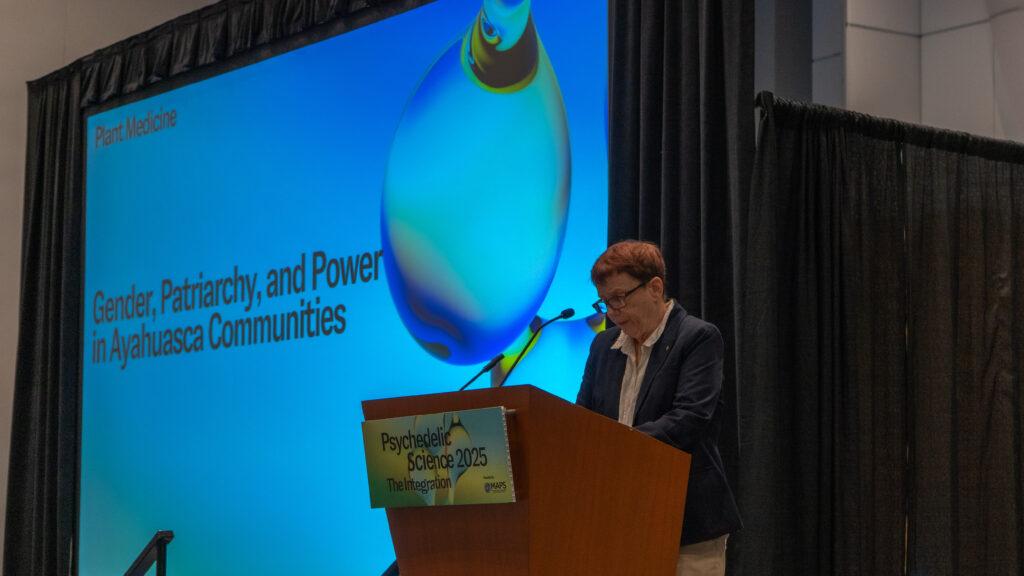
Note: This article was adapted from a panel at Psychedelic Science 2025, “Gender, Patriarchy, and Power in Ayahuasca Communities,” held on June 20, 2025.
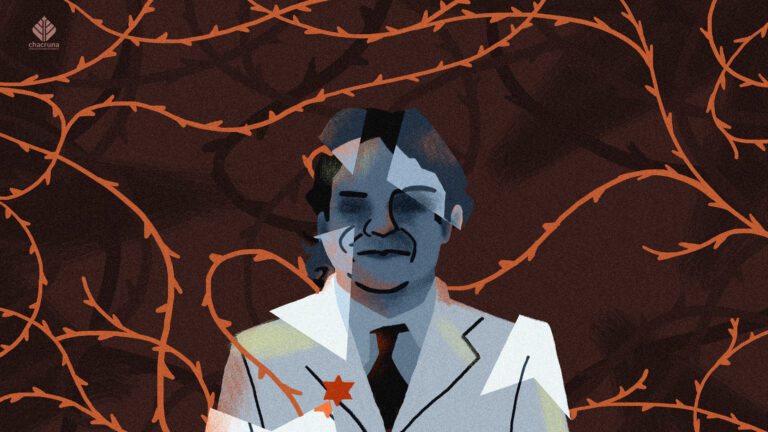
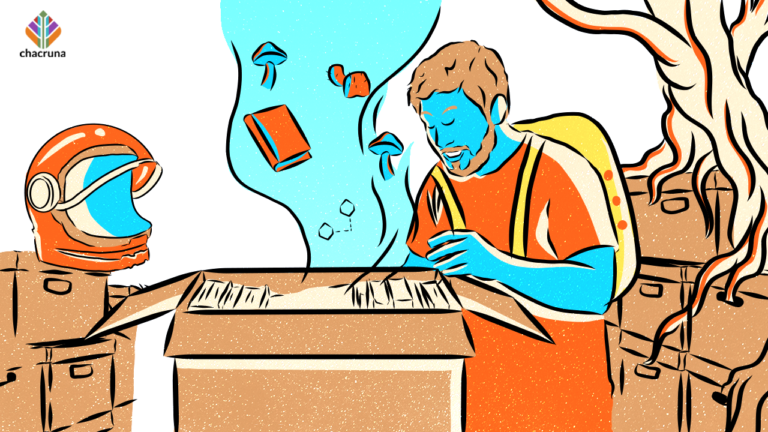
Art by Michelle.