
There’s a kind of beauty that emerges in the spaces between: between the rise and fall, between languages, between worldviews. At Psychedelic Science 2025, held in Denver this June, that beauty pulsed quietly beneath the surface, where the theme of Integration revealed itself not as a destination but as a collective process. Just as the word beautiful takes shape differently across tongues—bonita, beleza, linda, skjønnet, yofi, frumoasa, ziba—each carrying its own rhythm, nuance, and breath, so too do the many cultures, identities, and value systems that comprise the psychedelic movement. Though we speak in varied registers such as clinical, ceremonial, political, and ancestral, we are bringing our different perspectives and collecting our passions towards the shared mission of healing. That integration is not just psychological but cultural. Not just about past journeys but future agreements. This year, our takeaway has been that integration means bridging these voices into a shared language, a mission rooted in reciprocity, respect, and the willingness to imagine something new together.
Over the course of the week, an unveiling of a distinct cloud of introspection and recalibration occurred, noting a shift from the exuberant atmosphere of its 2023 predecessor. Journalists covering the event, such as Jane C. Hu writing on The Microdose Substack, remarked on a “subdued energy and a general sense of malaise,” suggesting the conference’s theme, “The Integration,” might more aptly be termed “The Comedown”. This sentiment stemmed largely from the significant setback in August 2024, when the US Food and Drug Administration (FDA) rejected the application for MDMA-supported psychotherapy for post-traumatic stress disorder, a decision that personally “crushed” Rick Doblin, the founder of the Multidisciplinary Association for Psychedelic Studies (MAPS), as Marcelo Leite highlights. This decision prompted a sober re-evaluation, with many panels focusing on “lessons learned” and the drawbacks of rapid growth and overcapitalisation in the psychedelic start-up sector.
What emerged was a living embodiment of the psychedelic movement as a social movement, cultural exchange, and collective inquiry. While the weight of global and personal realities still loomed large, many found a shift toward deeper, more intentional relationship-building. The heart of the conference seemed to emerge not only from institutions or top-down presentations, but from the presence of individuals that each brought their story, curiosity, and care in those community-driven spaces rooted in co-learning and co-creation.
Chacruna’s program, woven throughout the conference, offered a deliberate space for deep connection and critical conversation, often spotlighting underrepresented voices and challenging dominant narratives within the rapidly evolving psychedelic landscape.
Amidst this atmosphere of tempered optimism and critical self-assessment, the presence of the Chacruna Institute for Psychedelic Plant Medicines emerged as a counter-narrative, grounding the discourse in principles of social justice, ethics, cultural understanding, and community empowerment. Chacruna’s program, woven throughout the conference, offered a deliberate space for deep connection and critical conversation, often spotlighting underrepresented voices and challenging dominant narratives within the rapidly evolving psychedelic landscape. While microphones and platforms were present, they were not always used to amplify those historically silenced or excluded. The more intimate events provided a strengthened sense of belonging and collective agency, with the intention of planting seeds for a more inclusive and self-sustaining psychedelic movement.
Chacruna’s Foundational Commitment to Ethical and Equitable Practices
Chacruna is dedicated to producing high-quality research, promoting education and cultural understanding to reduce stigma, and bridging traditional ceremonial use with clinical and therapeutic settings through the lens of social sciences. The program at PS25 exemplified this mission, offering a rich array of community gatherings and events, a workshop, a full day of curated panels in the Plant Medicine Track and the Chacruna Sidebar Conversations.
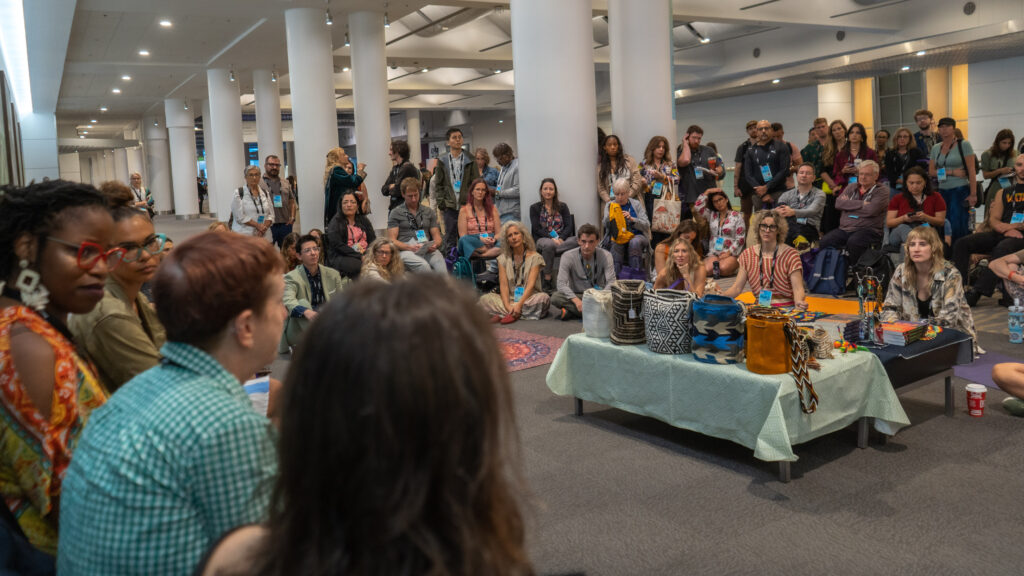
At Psychedelic Science 2025, Chacruna’s Sidebar Conversations offered grounding amid the whirlwind of panels and programming. This dynamic series of community briefings and themed circles was designed not just for presentation but for genuine exchange. Drawing inspiration from legal “sidebar” discussions — those private, focused dialogues between judge and attorneys held outside the jury’s earshot — these sessions borrowed the term playfully to spotlight sensitive, often overlooked issues across identity, ethics, and embodiment. Far from legal briefs, the Sidebars created space for underrepresented voices to shape the discourse directly. Instead of following hierarchical formats, they functioned as living consultations where activists, scholars, and community members co-authored conversations on topics like safety and ethics in psychedelic therapy, next-generation leadership, chronic pain, and sacred accountability. Intimate affinity meetups, including Queer, Latinx, and Brazilian circles, further enriched the container by offering moments of shared language, laughter, and lineage. Together, these gatherings seeded deeper reflection and collective visioning and reminded us that the psychedelic movement is not only a field but also a community in motion.
Exploring Leadership, Creativity, and the Future of the Field
At the Sidebar Conversations, Chacruna hosted a series of sessions exploring the ethical, cultural, and political dimensions of psychedelic practice and research. Dr. Bia Labate participated in a “Leadership Circle,” sharing her personal trajectory and the complex task of stewarding a nonprofit rooted in psychedelic justice, reciprocity, and the protection of sacred traditions.
Chronic illness and lived experience were the focus of “Psychedelic Relief: Chronic Pain and the Rewiring of Suffering,” led by Lorien Chavez. This session illuminated the ways psychedelics intersect with chronic pain management and offer alternative frameworks to rewire suffering.
The circle “Psychedelics, Creativity, and Social Change,” featuring Marta Camagna, Cassandra Muileboom, Karina Alvarez, and Seph Mortensen, highlighted how altered states can catalyze social imagination. Through artistic expression, performance, music, and meditation, the discussion underscored the potential of psychedelics to inspire transformative visions and challenge dominant paradigms, grounding this in the ancestral power of storytelling.
Finally, “Next Gen Psychedelics: Youth Leadership” brought together emerging voices – including Marta Camagna, Lorien Chavez, Alejandra Barajas, Nico Gusac, and Paula Bizzi Junqueira – to reflect on mentorship, career paths, and intergenerational dynamics in the psychedelic field. The discussion addressed the pressures of activism within mission-driven spaces, while calling for collaboration and knowledge exchange between generations of practitioners.
Centring Marginalised Voices and Decolonizing the Psychedelic Narrative
Chacruna’s program consistently amplified the voices of marginalised communities, a core tenet of their mission. Meet ups such as the “Latinx Meet-up – Spanish Speaking” and “Queer Meet-up” on Wednesday, 18th of June, featuring strong Chacruna voices explored the relationship between psychedelics and marginalized communities. This gathering focused on the specific needs of Latinx individuals, personal narratives of reinforcing all identities held in the psychedelic space, and offered a dedicated space for open dialogue on the unique intersections of each community in line with Chacruna Latinoamérica’s commitment. It provided a space for fostering cross-cultural learning and inclusion and recognizing the importance of destabilizing the colonial construct binary ideologies.
Maestro José López Sánchez’s presence at Chacruna Sidebar Conversations was a powerful testament to his commitment to sharing Shipibo ancestral wisdom with the world. “Healing with Plants: An Intimate Conversation”, co-led with Anne-Laure Vincke and moderated by Dr. Bia Labate, invited participants into the heart of Amazonian healing traditions. Maestro José spoke of the sacred role of icaros and the ethical foundations of Shipibo dietas, rooted in respect and collective care. His hard-won attendance – welcomed by a large and engaged circle – underscored both the importance of attentively listening to Indigenous perspectives and the structural barriers that too often prevent their bearers from being heard. Drawing from decades of experience and a rich lineage – further explored in his recent book “Trabajar con las plantas que tienen madres” (2024) – he offered a deeply meaningful contribution to Chacruna’s gathering. His contribution not only deepened the cultural and spiritual integrity of the gathering but also helped ignite a critical dialogue around avoiding the romanticization of Indigenous peoples as inherently pure. Instead, his presence invited a more grounded and complex listening — one that acknowledges the full breadth of psychedelic history, cultural struggle, and the responsibility required to engage with these traditions in a just manner.
Part of the psychedelic experience and narratives were explored in topics such as “Gender, Patriarchy, and Power in Ayahuasca Communities,” and “Romantic Delusions: What We’re Not Talking About in Plant Medicine Circles?” Here, Clancy Cavnar looked at sexual and gender bias in the world of ayahuasca, sexual prohibitions in diets, and the culturally different approaches to address homophobia and sexual misconduct in shamanic and neo-shamanic practices. The aftermath of identifying these problems was discussed by Nico Gusac and Bia Labate by candidly examining how plant medicine culture often overlooks issues of risk, trauma, mental health crises, and abuse. This brought to light the risks of idolizing Indigenous healers and balancing views on the influence of “othering” power.
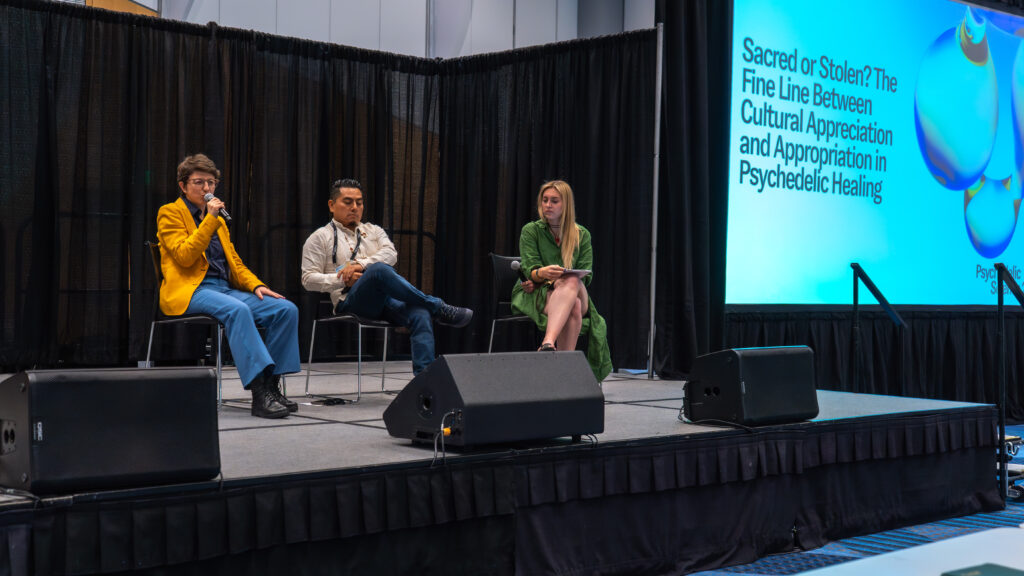
Creating space for intimate dialogue was achieved by stewarding conversations like “White Folks, Racism and Psychedelics” with Darron T. Smith and Dr. Bia Labate where participants were guided through concepts of privilege, power, and race, exploring why “race talk” is often feared by White Americans. This session aimed to help participants identify how racism impacts their lives and work towards unlearning discriminatory actions, beliefs, and behaviours. Similarly, the panel “Sacred or Stolen? The Fine Line Between Cultural Appreciation and Appropriation in Psychedelic Healing” with Lígia Duque Platero, Osiris García Cerqueda, moderated by Nico Gusac opened a vulnerable discussion about where the “fine line between cultural appreciation and appropriation” needs to be questioned.
Mazatec historian Dr. Osiris García Cerqueda starkly illustrated many a point of non-Indigenous individuals profit from Indigenous knowledge without sharing those profits by asking how many in the audience were Mazatec (none), versus how many had used psilocybin (most), highlighting the long history of Mazatec knowledge-sharing and the problematic commodification. Dr. Osiris García Cerqueda, Dr. Lígia Duque Platero, Karina Alvarez, and Marta Camagna presented “From Reciprocity to Sovereignty: Sacred Plants Conservation and Community,” which sought to bridge the profound gap between mainstream psychedelic narratives and the actual needs of Indigenous and local communities. This session posed crucial questions about the meaning of “reciprocity” in response to colonial structures within globalised plant medicine spaces, and how respecting relational ontologies can inform community autonomy to challenge exploitation and alienation, while sharing their work with the Indigenous Reciprocity Initiative (IRI). In “Indigenous Peoples, Indigenous Reciprocity and the Psychedelic Movement,” Dr. Osiris García Cerqueda cautioned that while financial donations for the protection of “sacred plants” are popular within the global psychedelic movement, this new form of Western philanthropy often perpetuates the false notion that communities who have safeguarded these traditions for centuries somehow need saving from those who only recently developed.
Cultivating Community and Shared Purpose
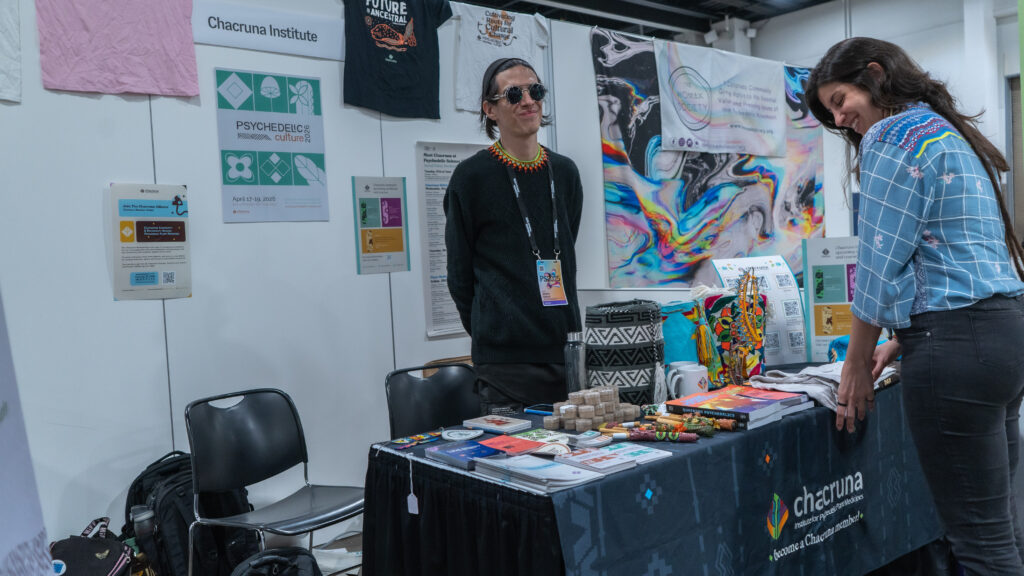
Chacruna’s commitment to community building was evident in sessions like the “Chacruna Membership Circle: For Current Members & Curious Allies” on Thursday, 19th of June. This inclusive gathering aimed to foster connection and explore the vibrant heart of the Chacruna community, prioritising meaningful exchange over surface-level networking. It offered current and prospective members insights into exclusive offerings, open dialogue on Chacruna’s mission, and opportunities to build authentic relationships grounded in shared values of respect and cultural humility.
Further illustrating the collaborative spirit, Chacruna co-hosted the “State Programs Happy Hour: CO x OR x NM” with the Healing Advocacy Fund. This event on Thursday evening provided a crucial opportunity for license holders, advocates, policymakers, and community members in state-legal psychedelic programs in Colorado, Oregon, and New Mexico to connect, share learnings, and deepen ties. It acknowledged Oregon’s psilocybin services program entering its third year and the opening of Colorado healing centres, as well as New Mexico’s medical psilocybin bill, fostering bridges for a stronger foundation in psychedelic healing. Bia Labate began by saying, “We are an ecosystem, and it takes a village. It is all of us together that are going to co-create this future. We need each other.“
Finally, the “You Can Sit With Us: Community Picnic” co-hosted by Students for Sensible Drug Policy (SSDP) and Chacruna on Friday, 20th of June, offered an informal break from the conference hustle, inviting attendees to Sculpture Park for connection, good food, and relaxation. This picnic underscored Chacruna’s dedication to fostering meaningful connections and shared positive experiences within the broader psychedelic community.
In a conference often dominated by clinical and commercial lenses, Chacruna’s presence reminded us that the psychedelic movement is, at heart, a cultural, political, and spiritual one and that real change is co-created in community.
In a conference often dominated by clinical and commercial lenses, Chacruna’s presence reminded us that the psychedelic movement is, at heart, a cultural, political, and spiritual one and that real change is co-created in community. The circles created weren’t just about sitting in a room, they were about sitting with one another — bringing our truths, our questions, and our commitments to shaping a field rooted in equity, care, and complexity. Sites of recognition and resilience, where cultural realities met visionary futures. Participants found themselves not just seen, but in solidarity.
What became clear through the informal circles, shared meals, and honest conversations at PS25 is that this movement is not just about balancing different cultural value systems. It’s about co-creating something new together. When diverse communities gather — bringing distinct epistemologies, ethics, and lived histories — it’s not enough to aim for equal representation or surface-level inclusion. What felt possible in this space was a deeper commitment: to build a shared value system rooted in relational accountability. One that doesn’t erase differences, but welcomes them as part of the greater tapestry. We learn that beauty does not ask us to become the same, but to become together.
Art by Mariom Luna.