Bia Labate: Tell me a bit about yourself and your journey.
Marcelo Leite: I’ve spent the last 45 years in science journalism, primarily focusing on stories about the destruction of the Amazon rainforest and climate change. After taking a sabbatical at Harvard in 1998, I returned to academia and earned a PhD in Social Sciences, specifically studying the Human Genome Project—incidentally, that’s when we first met!
In 2017, I covered the Psychedelic Science conference in Oakland, which sparked my interest in the clinical trials involving psychedelics. This led to the creation of my blog, Virada Psicodélica, and eventually to my book, Psychonauts, published in 2021. That’s when I reconnected with you, learned about Chacruna, and became intrigued by the social and cultural impacts of psychedelic research and use.
Not long after my book was released, I learned about the Brain Institute in Natal, located in Northeast Brazil, which was exploring a new line of research using DMT for treatment-resistant depression. Interestingly, they were extracting it from a plant called jurema-preta (Mimosa tenuiflora), rather than the DMT found in chacruna used in ayahuasca.
Through this, I discovered that Jurema has a complex and often violent history in that part of Brazil. Indigenous peoples have faced significant repression regarding their traditional practices, first from the Catholic Church, then from the police, and now from fundamentalist neo-Pentecostal groups. I found the topic so compelling that I began working on a new book.
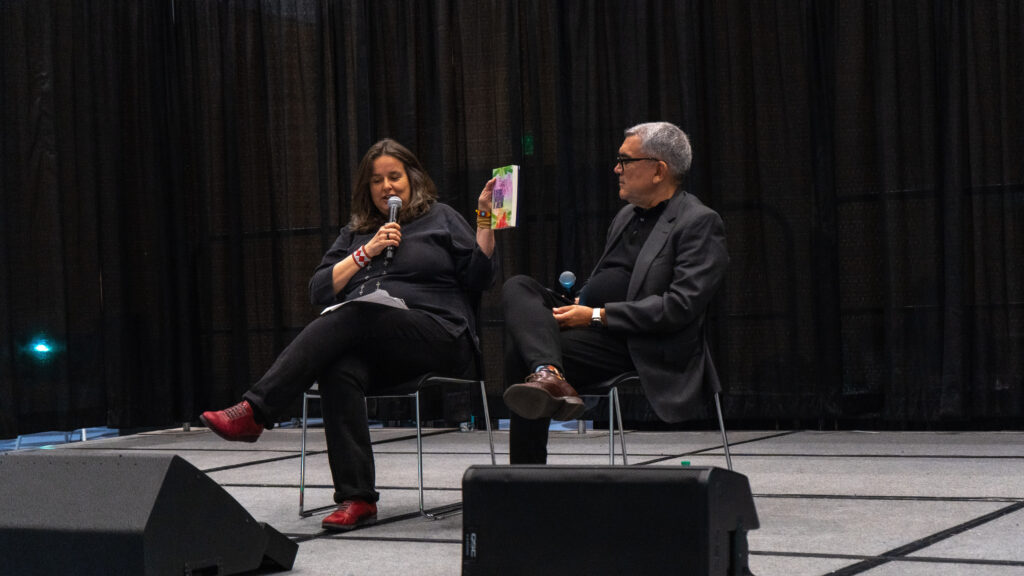
BL: Why did you choose to research Jurema Sagrada, a religion practiced in a region known more for its stunning beaches than its cultural richness?
ML: Precisely because this religion is largely overlooked by many, both in Brazil and beyond. It’s fascinating to realize that while people in big cities like São Paulo and Rio may have heard of ayahuasca churches like Santo Daime, they are often completely unaware of Jurema Sagrada, despite its similar use of a DMT-containing plant medicine.
The history of resilience within Jurema is remarkable. Rituals have been performed at least since the 18th century, according to historical documents, and likely for centuries or even millennia before that, despite ongoing repression and persecution.
Moreover, the history of resilience within Jurema is remarkable. Rituals have been performed at least since the 18th century, according to historical documents, and likely for centuries or even millennia before that, despite ongoing repression and persecution. Indigenous ceremonies were often held in secret in the woods of that semi-arid region, and to this day, the pajés and juremeiros maintain a level of secrecy regarding the preparation of their beverage and rituals.
Another captivating element of this religion is its syncretism. It blends influences and practices from various Indigenous groups across South America and Africa, whose peoples in both continents were enslaved by the Portuguese. European magical practices also contributed to what is now referred to as Catimbó, a term that has become stigmatized, leading many to refer to it as Jurema Sagrada today. By the 20th century, it began incorporating elements from Kardecism through another syncretic Brazilian faith, Umbanda.
BL: Can you give the audience an idea of what happens during Jurema Sagrada rituals?
ML: Describing these ceremonies cohesively is challenging because they vary significantly between Indigenous villages and different terreiros, as the Afro-Brazilian temples are called. It’s common for attendees to be served Jurema wine, but not always. Often, the drink doesn’t produce psychedelic effects, possibly due to the lack of MAO inhibitors or because it’s consumed in very low doses—more a sacrament than an entheogen.
During these rituals, people chant accompanied by drums called ilus and maracá rattles, invoking encantados (enchanted beings) such as Mestres, Mestras, or Caboclos, who are said to reside in various cities and kingdoms. They come down to the terreiro to offer advice, blessings, and recommendations for plant medicines, prayers, or herbal baths, helping attendees alleviate their suffering. “Coming down” refers to a medium being possessed by these beings, altering their voice and mannerisms, making it clear to those present which encantado is manifesting—often a revered juremeiro like Zé Pelintra, Maria do Acais, Mestre Carlos, Caboclo Aboiador, Reis Canindé, or Malunguinho.
BL: How does this differ from the rituals performed by Indigenous peoples in the Amazon?
ML: The differences are stark. Indigenous communities in Northeastern Brazil don’t fit the typical Indigenous stereotype many might have. You won’t see many naked people with feather headdresses; they often have a range of skin tones that might categorize them as Black in other regions of Brazil or in the U.S.
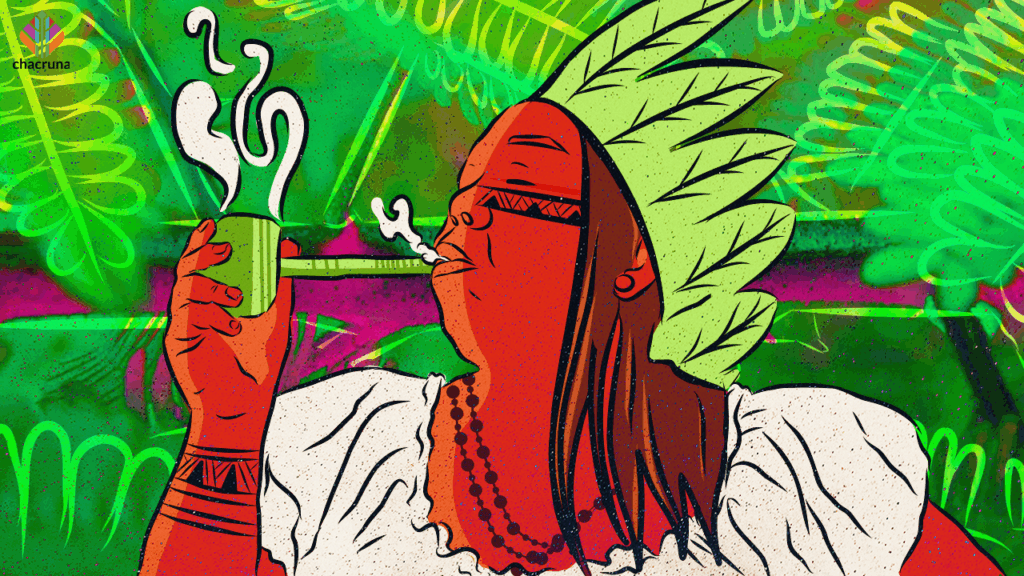
In contrast to Amazonian rituals, where pajés communicate with spirits or natural forces, the entities in Jurema rituals are more human-like, complete with personalities and stories. However, the Indigenous roots are still evident in the use of maracás, the abundant smoke from conical pipes, and group ritual dances known as toré. Even in Indigenous villages, chants often honor deities of African origin, like orixás.
Most juremeiros insist that a psychedelic experience is not necessary to connect with the enchanted beings—trips are more for tourists and hippies, they say, not their primary focus.
Discover the Indigenous Reciprocity Initiative of the Americas
BL: Your book encompasses not only religion but also science and philosophy. How did that happen?
ML: Absolutely, the book begins with scientific research, transitions into history and religion, and wraps up with philosophical reflections. I volunteered as a subject in the pilot phase of a clinical trial at the Brain Institute, which explored inhaled DMT for resistant depression. The trial showed promising results, as you might have seen in Dráulio de Araújo’s presentations here in Denver. The book recounts my experiences, including a trip with him to his family’s ranch in Ceará to harvest jurema roots, and discusses the potential inclusion of DMT in Brazil’s universal health system, SUS.
I also share stories from my interviews, encounters, and rituals during multiple trips to the Northeast—visiting Indigenous villages, terreiros, and neoshamans using juremahuasca (a blend of jurema-preta tea with Syrian rue or jagube vine as MAO inhibitors). I even visited Jurema terreiros outside the Northeast, in São Paulo and Minas Gerais, as well as entheogenic churches that are emerging in Ceará and Rio Grande do Norte.
To delve into the rich history of Catimbó and Jurema, I sought out the limited anthropological and sociological literature available, given that many scholars in Brazil have dismissed Jurema as a lesser form of Umbanda, much less spectacular, organized or institutionalized than other religions like Candomblé.
All this exploration led me to reflect on my own staunch atheism and my views on religion and spirituality as a journalist, intellectual, and individual.
All this exploration led me to reflect on my own staunch atheism and my views on religion and spirituality as a journalist, intellectual, and individual. I immersed myself in readings about plant and psychedelic thought, engaging with authors like Stefano Mancuso, Paco Calvo, Michael Marder, Peter Sjöstedt-Hughes, Chris Letheby, J. Christian Greer, Nicolas Langlitz, Marshal Sahlins, and Eduardo Viveiros de Castro, all of whom significantly shaped my reflections, culminating in a lengthy post-script that concludes the book.
BL: What is the main takeaway from your research on Jurema and your reflections over the past three years?
ML: Summarizing it is a challenge! This research felt like a continuation of my eight-year journey writing about psychedelics. People often tell me I seem younger—if not in looks, then in my attitude. I’ve definitely become more flexible and tolerant, especially regarding the trances and mediunic phenomena I witnessed, which I might have dismissed as nonsense a few years back. I still identify as a staunch atheist, but perhaps I’m a bit less rigid in that stance now.
BL: There’s an ongoing tension regarding the relationship between scientific institutions and traditional communities, especially as plant medicine is becoming a source of DMT for clinical trials. You recently participated in a Jurema gathering discussing these issues with Indigenous and Afro-religious practitioners. What are your thoughts?
ML: The gathering I attended in May at the Truká territory was called the “Seminar on Ancestral Medicines: Jurema,” and it attracted about 400 participants. The discussions were quite charged over those three days, with Brazilian DMT researchers facing accusations of cultural appropriation and disrespect towards the sacredness of the Jurema tree, spirit, and religion. One of the researchers was Dráulio de Araújo, who leads a team at the Brain Institute that published successful results from a clinical trial involving ayahuasca for treatment-resistant depression. He has since shifted focus to the antidepressant effects of inhaled DMT extracted from jurema roots, and after the seminar he announced that the team will favor synthetic DMT from now on.
While the dialogue was sometimes heated, it was a dialogue nonetheless—one that should have started 500 years ago, as the Truká chief Neguinho pointed out. It’s encouraging to see that both sides are beginning to address misconceptions. Traditional communities often overestimate the potential profits from Jurema, while researchers need to acknowledge the justified mistrust stemming from past experiences with scientists, including anthropologists. There’s a strong demand for Indigenous participation in studies, which I believe would enhance the quality and scope of the research.
Though there’s still a long way to go toward mutual understanding, it’s promising that both sides are committed to continuing the conversation and have already scheduled a second seminar for next May.
BL: In Brazil, there’s a discussion about integrating DMT or ayahuasca into the SUS (Universal Health System). Could you explain this to a U.S. audience and share your thoughts?
ML: SUS represents a significant achievement in Brazilian democracy, embodying the fundamental right to health outlined in our 1988 Constitution. The Health Ministry has a Special Indigenous Peoples Health Department (SESAI), which works to provide healthcare in Indigenous territories and transport patients to urban hospitals when necessary. There are often tensions between doctors and pajés (Indigenous healers), and Indigenous representatives within SESAI struggle to ensure that healthcare professionals respect and collaborate with pajés in these communities.
The challenge of introducing Indigenous health practices and medicines, like Jurema or ayahuasca, into the universal health system is much greater. However, it’s not impossible. SUS already offers integrative practices like Reiki, Ayurveda, meditation, Yoga, and Shantala—traditional techniques that are imported from other cultures and may not align with evidence-based medicine. So why not include the plant medicines that pajés have used for centuries or millennia?
BL: What are your future plans?
ML: In the coming months, I’ll be busy promoting my new book and possibly working on an English version of it. I’m also contemplating research for a new book on a related topic: a fresh perspective and philosophy on biology, informed by studies on sentience, intentionality, and even intelligence across all kingdoms of life—from animals and plants to fungi and microorganisms. But for now, it’s more of a dream than a concrete plan.
Note: A version of this interview, “The enchanted science of Jurema: DMT at the root of Afro-Amerindian rituals in Brazil,” was presented on June 20, 2025 at Psychedelic Science 2025 in Denver, Colorado.
Art by Mulinga.