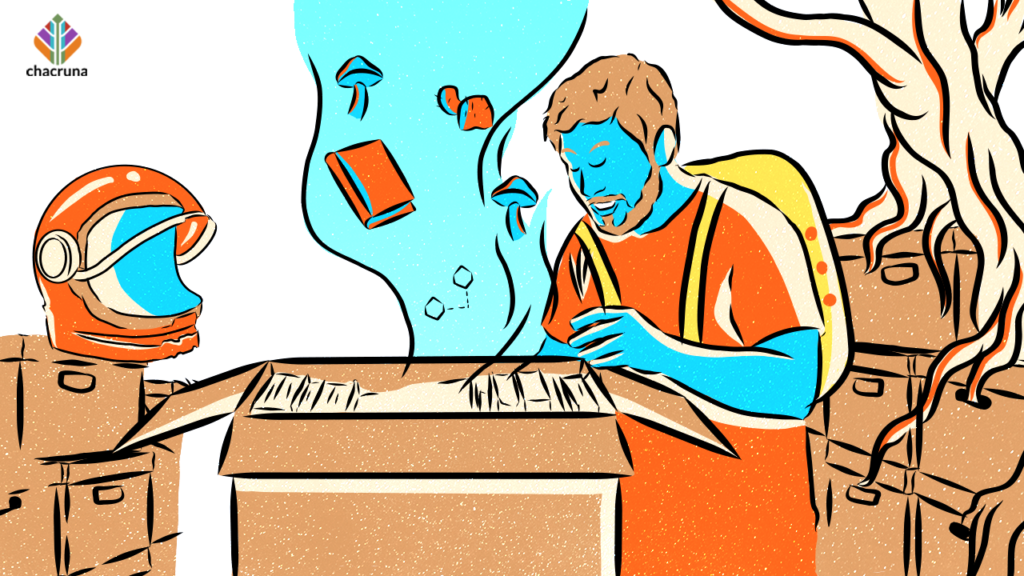
Imagine stepping into a dusty warehouse in the tropical rainforest of Xalapa, Mexico, only to find yourself suddenly surrounded by more than a hundred boxes holding hidden gems of ethnopharmacology and psychonautics.
That is exactly what a small team of Chilean researchers and activists from Fundación Lobeliana recently experienced when they traveled to the capital of the State of Veracruz to rescue the personal library of the late Jonathan Ott. When I sat down to speak with founder Benjamín Gelcich and team member Diego Hamilton about this monumental task, I quickly realized this wasn’t just about saving old books but a vital mission to rescue the transdisciplinary soul of psychonautics before it is locked away in sterile university departments.
Everything Started with a Friendship
My conversation with Gelcich and Hamilton revealed some deeply personal stories behind this rescue mission. Benjamín first met Jonathan Ott 14 years ago during a screening of the award-winning documentary Anadenanthera. Co-directed by Benjamín and archaeological conservator Francisca Gili in 2011, the experimental film poetically explored the South American tree Anadenanthera colubrina, used to prepare shamanic cebil snuff.
Ott happened to be in the audience at the museum in Cusco during the screening. The two psychonauts bonded instantly, recognizing each other as outsiders navigating an increasingly rigid academic world. This brief encounter sparked a massive, 200-page epistolary exchange over the following years.
Discover the Indigenous Reciprocity Initiative of the Americas
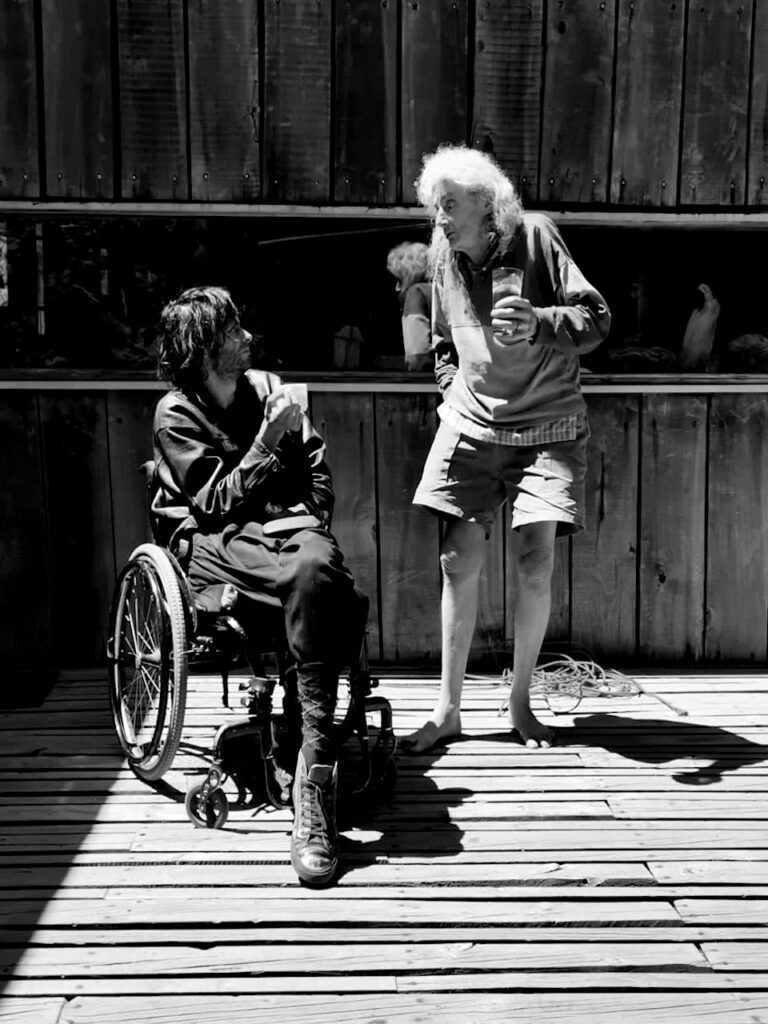
Sometime later, they planned a grand research expedition to Patagonia with an all-star group of anthropologists and researchers such as Stacy Schaefer, Luis Eduardo Luna, Giorgio Samorini, and Constantino Torres (with whom Benjamín co-organized the trip), along with his partner Donna. When a massive fire abruptly canceled the expedition, Benjamín invited the stranded group to his cabin in the woods.
For two weeks, this “dream team” of psychonauts lived together, sharing knowledge and experiences. Ott, who was naturally reclusive and often described as a hermit, felt entirely at home in the remote forest. According to Gelcich, Ott was like a “walking encyclopedia” during those two weeks, speaking non-stop about history, chemistry, and botany. Benjamín realized that Ott’s vast and lucid transdisciplinary knowledge had to be somehow preserved.
A Sanctuary at the End of the World
When legendary researchers pass away, their life’s work often tends to suffer a tragic fate. Their libraries tend to be dismantled, and the unique way these thinkers connected ideas sometimes gets lost forever. After a severe health crisis forced Benjamín to face his own mortality, he envisioned an “island of libraries” in the deep south of Chile to prevent this exact loss.
At that moment, he felt a profound urgency to act as a bridge between the older generation of psychedelic pioneers and the youth of today. He reached out to Jonathan Ott and shared his idea. Ott’s response was immediate: “You can count on my library!”
This shared vision led to the official constitution of the Lobeliana Foundation in July 2022. Their master plan includes building the Biblioteca Lobeliana (Lobelian Library) at their study center located in the Tinquilco Lake basin, right at the foot of the Huerquehue National Park in the Araucanía region. Ott’s library is just the beginning, as the foundation has already secured the collections of other important contemporary researchers and key figures in the psychedelic field. Together, they are projecting an initial archive of over 8,000 volumes.
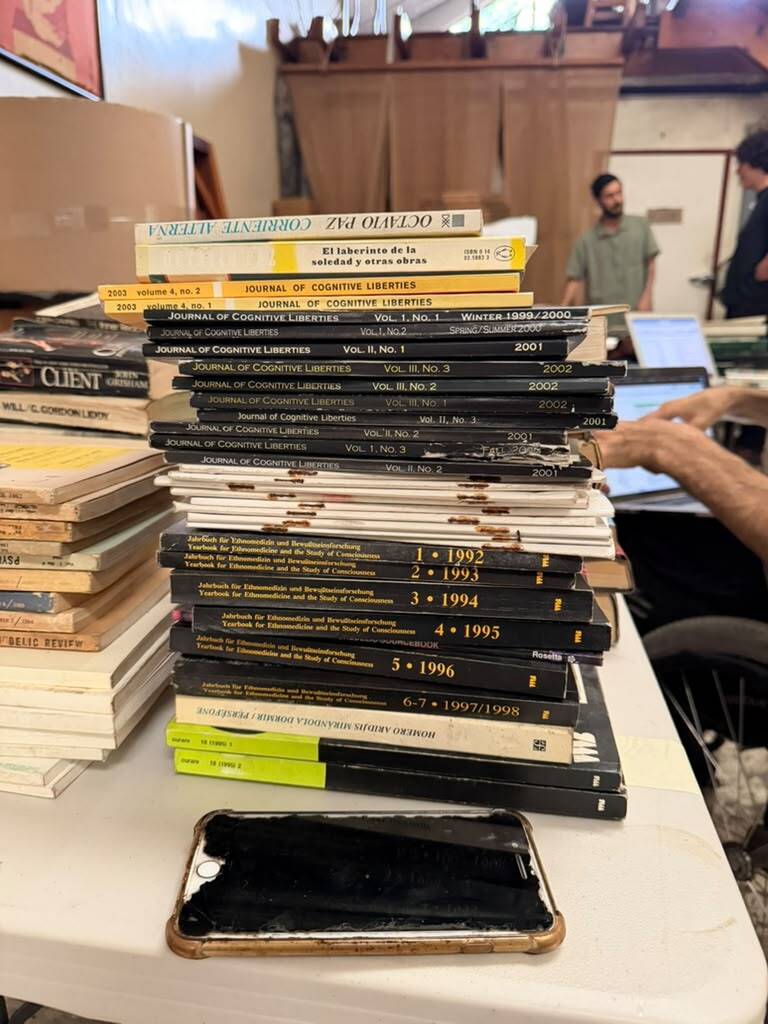
After Ott passed away in 2025 at the age of 76, the Lobeliana team traveled to Mexico to rescue his library. When they arrived in Xalapa, in May 2026, they encountered a massive logistical odyssey. Relying on volunteer help from Ott’s local friends and funding raised strictly from within their own network, the team set to work and cleaned, scanned, and cataloged thousands of books using ISBN scanning software and painstaking manual entry.
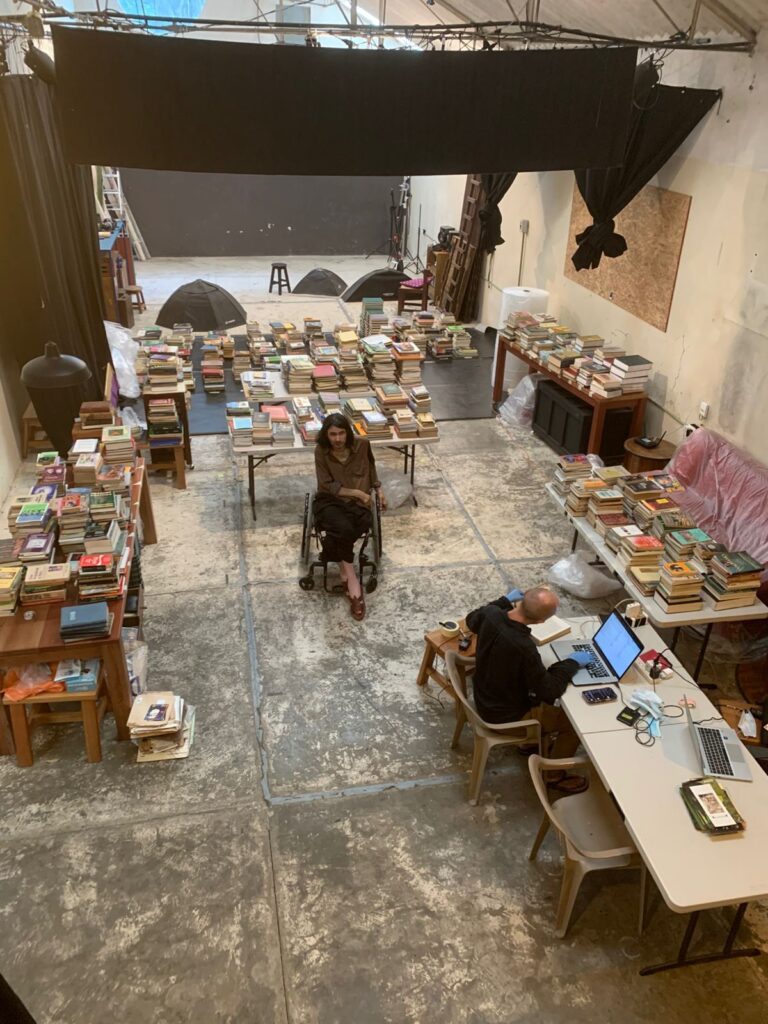
What they uncovered was staggering. Because Ott was exceptionally meticulous, many of his books were still packed in the exact boxes he had placed them in twelve years prior. The team even found a detailed map of his original library layout, which will allow them to eventually reconstruct the physical space exactly as Ott had designed it.
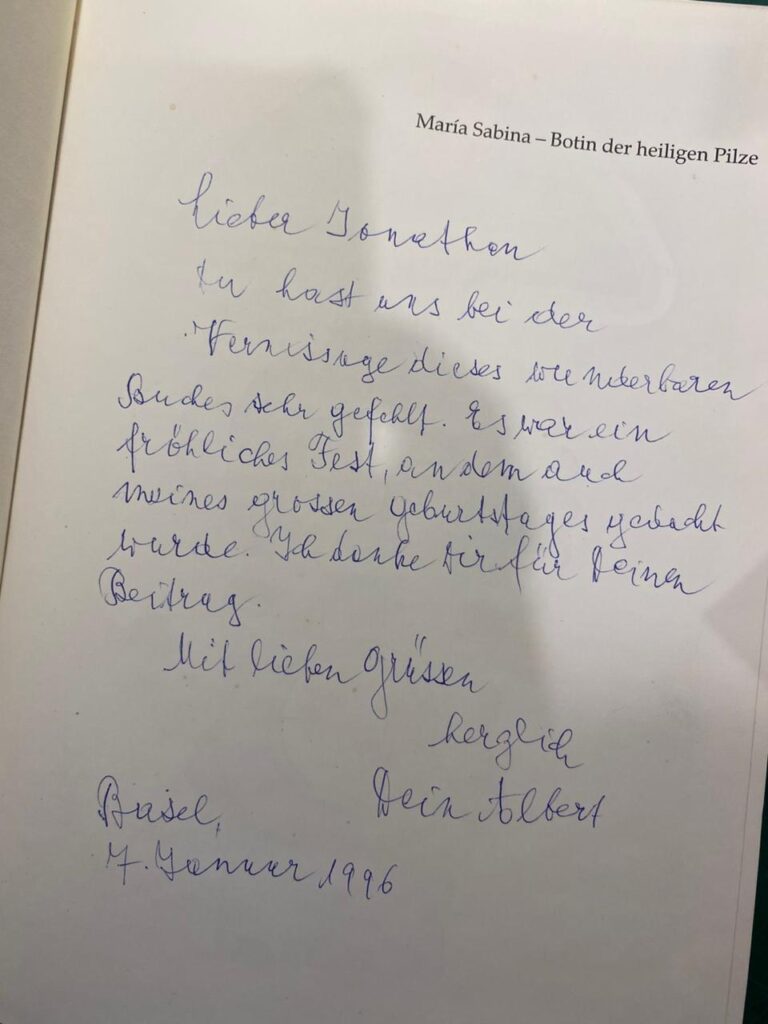
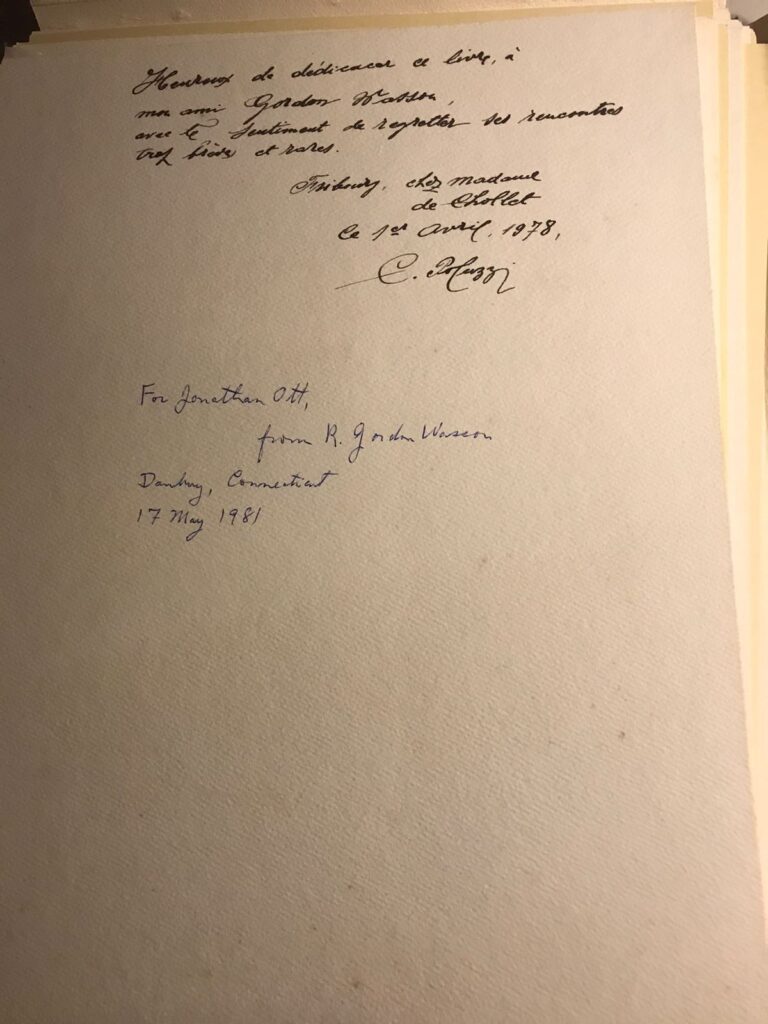
Beyond the thousands of books, they also discovered other invaluable treasures, such as Ott’s legendary correspondence files. Filling massive cabinets, the team found unseen letters that Ott had exchanged with some of the most prominent figures in the psychedelic field, including R. Gordon Wasson, Albert Hofmann, Richard Evans Schultes, Christian Rätsch, and Antonio Escohotado. These letters represent a monumental (thirty-centimeter-thick) foundational archive of contemporary ethnopharmacology and psychonautics.
Reclaiming the Psychonautic Soul
Being a psychonaut is not just about consuming a substance; it is, essentially, about actively navigating and mapping unknown states of consciousness. Because Western culture largely destroyed its Indigenous navigational knowledge regarding these states, a new cartography had to be drawn, and Jonathan Ott was one of those master mapmakers.
Understanding his work requires stepping outside isolated academic disciplines and embracing a truly transdisciplinary view. This is why the Lobeliana Foundation’s approach is so refreshing, since they define themselves as a multidisciplinary team connecting ethnopharmacology, ethnomycology, history, art, and mythology.
Previously, Lobeliana hosted the Primer Simposio Psiconauta: “Utopía y Ebriedad” in December 2023 in Conguillío. Conceived alongside Manuel Constantino Torres and backed by Giuliana Furci and Jonathan Ott himself, the event successfully bridged Latin American researchers with their Global North peers.
Now, 108 boxes filled with books, letters, and other important documents are safely stored and awaiting their long journey to South America, as they’re currently raising funds to ship the entire collection to Chile. This rescue mission connects directly to their upcoming II Simposio Psiconauta: “Navegación & Vanguardia”, scheduled for November 9–15, 2026, in San Pedro de Atacama. Envisioned as a tribute to the key figures of the field, it is a space where, as Benjamín notes, “we don’t wear masks; we speak openly about drugs and the psychonautic experience.”
“Preserving Ott’s library is not merely an act of archiving the past; it is about keeping the navigational charts open and accessible for future explorers.”
The ultimate destination of Ott’s library is the Araucanía region in Chile. There, the Lobeliana Foundation is building more than just a library; they are constructing a comprehensive center for psychonautic and ethnopharmacological research. The planned center includes a botanical garden, climatized greenhouses, a fungarium, a phytochemistry lab, and an editorial printing press to translate and digitize these rare works and make them available for humanity. By partnering with international researchers, they aim to duplicate and distribute these archives across different continents.
The goal of Benjamín and his colleagues is to translate and digitize these historical works to share them freely. Therefore, preserving Ott’s library is not merely an act of archiving the past; it is about keeping the navigational charts open and accessible for future explorers. For now, the memory, the maps, and a bit of Jonathan Ott’s mind are safely packed, awaiting their journey to the end of the world, where they will form the cornerstone of what might become a new sanctuary for the explorers of the realms of consciousness.
Art by Mulinga.