January 21st, 2026, 12:00 – 1:30pm PST
Do you wish you got into this event for free? Become a Chacruna member and receive free or discounted access to all Community Forums, Courses, Workshops, and more! Also get full access to our entire archive of past forum recordings and join our global network of psychedelic professionals and activists to dive deeper into discussion and discovery.
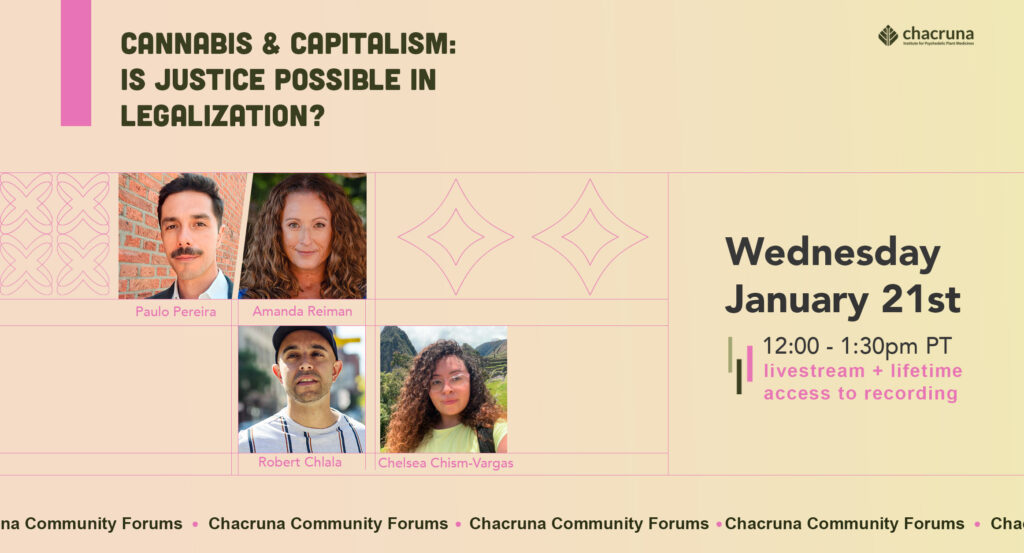
Join us for a critical examination of cannabis legalization’s trajectory in the United States and abroad, from grassroots movement to corporatized industry. This Community Forum explores the tensions between decriminalization, consumer and worker safety, and the realities of cannabis within traditional capitalist structures: How has free-market ideology subverted legalization efforts, particularly through moments like federal rescheduling? What’s the difference between legalization and regulation, and can we undo decades of propaganda-driven overtaxation and overregulation? As consolidation reshapes the industry, what models of organized resistance exist, and what can we learn from workers, drug war survivors, and community advocates building alternatives? Critically, what lessons does cannabis hold for emerging psychedelic markets and broader drug decriminalization efforts facing a re-branded global drug war? Speakers include Dr. Paulo J. R. Pereira, Associate Professor of International Relations at PUC-SP and author of Cannabis Global Co.: Cracked Consensus; Dr. Amanda Reiman, founder of Personal Plants and harm reduction researcher; Dr. Robert Chlala, Assistant Professor of Urban Sociology and Policy at CSU Long Beach, who co-led California’s first statewide cannabis worker equity study; and Chelsea Chism-Vargas, cultural practitioner, community organizer, and Development & Operations Intern at the Chacruna Institute. Together, we’ll examine how to center justice, equity, and solidarity in drug policy reform.
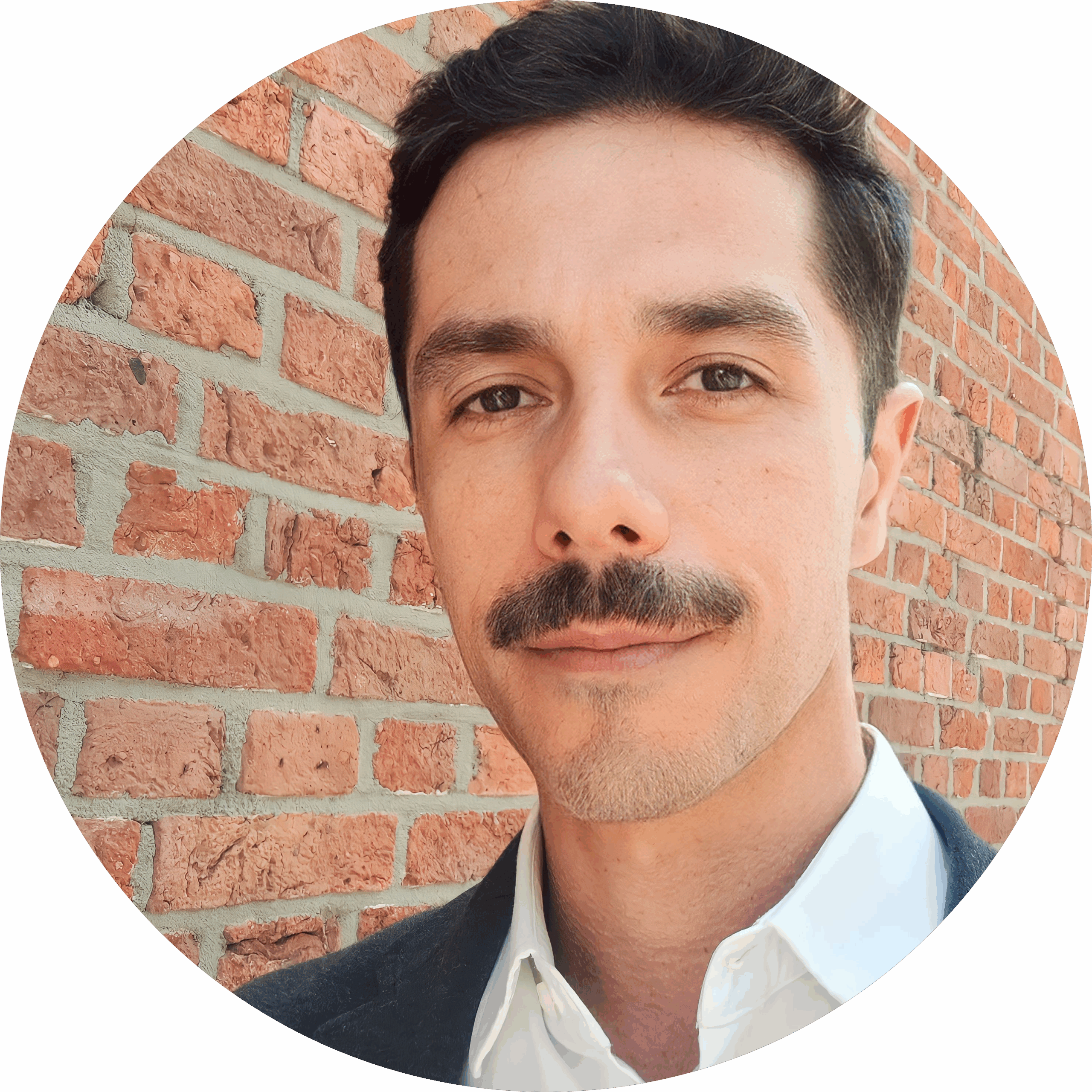
Paulo J. R. Pereira holds both a Master’s and a PhD in International Politics and is an Associate Professor of International Relations at the Pontifical Catholic University of São Paulo (PUC-SP), Brazil. He is the author of the recently published book Cannabis Global Co.: Cracked Consensus. His research focuses on the international dimensions of drug policy, with particular emphasis on cannabis regulation in the Global South. He has published articles in academic journals such as Contemporary Drug Problems, Latin American Perspectives and Critical Military Studies, examining issues of corporate capture, associativism, and social justice in emerging drug markets. He coordinates the Research Group on Drugs and International Relations (NEDRI) and has served as an ad hoc researcher for the Brazilian Drug Policy Platform, as well as a consultant for the National Secretariat for Drug Policy at the Ministry of Justice of Brazil and for the UC Berkeley/California State University–Long Beach project funded by the California Department of Cannabis Control. He has been a visiting researcher at the University of Ottawa (Canada), at the Drugs and Democracy Program of the Transnational Institute (TNI) in the Netherlands, and at Birkbeck, University of London (UK).
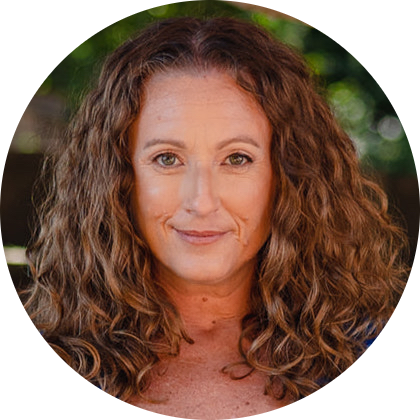
Amanda Reiman is the founder of Personal Plants, an education platform focused on helping people develop healthy, balanced relationships with cannabis. Personal Plants includes a collection of articles relating to cannabis use, harm reduction and public health and a weekly web series that uses science to answer questions about the risks and benefits of cannabis use. In development is a 10-week online program called Cannabis in Balance which helps people identify and change unhealthy behaviors around cannabis use. Dr. Reiman earned her PhD in Social Welfare from the University of California, Berkeley and conducted one of the first research studies on medical cannabis patients and the use of cannabis as a substitute for alcohol and other drugs. She then taught courses on substance abuse, drug policy and sexuality at Berkeley for 11 years. She is in the process of publishing a textbook on harm reduction approaches to working with adolescents who use substances.
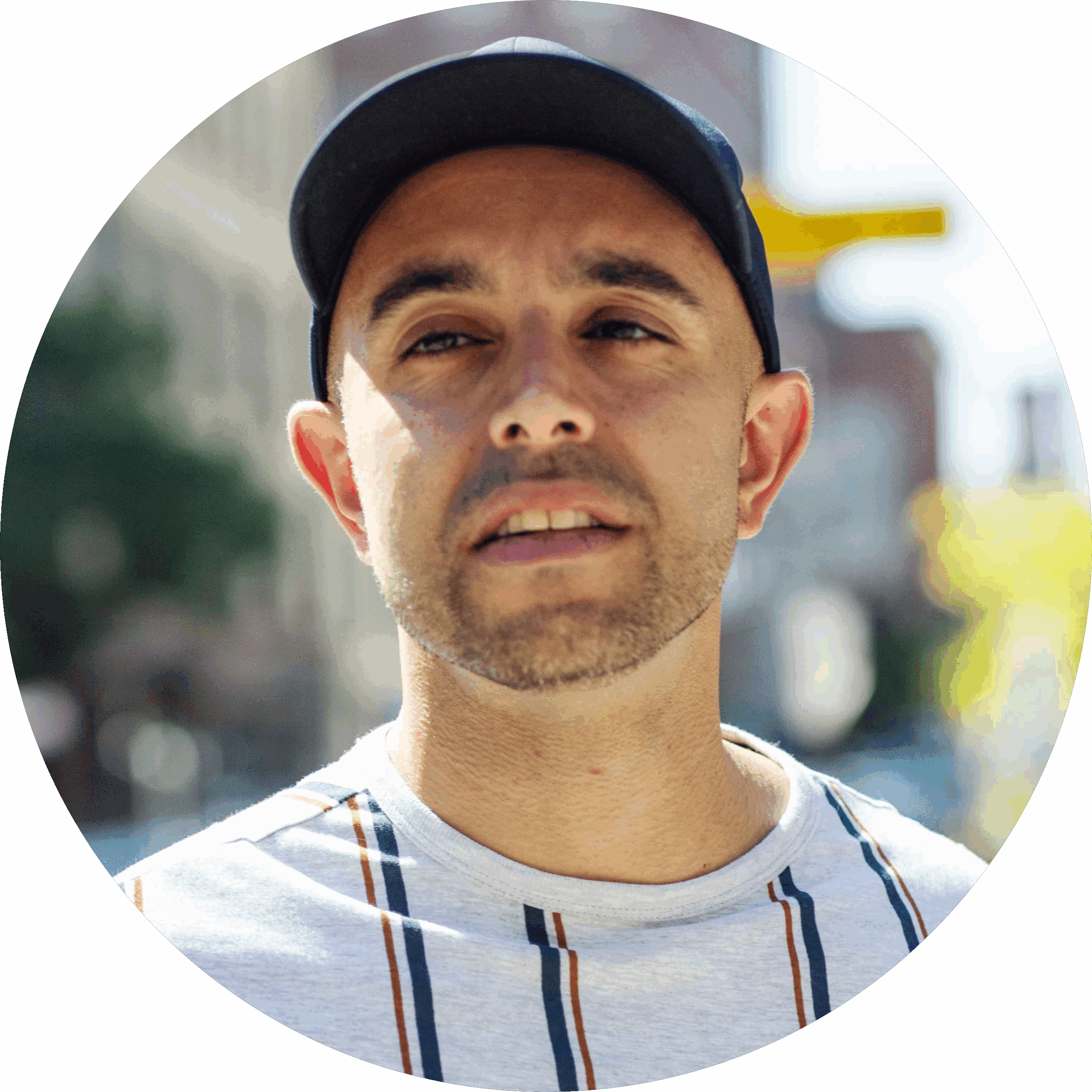
Robert Chlala is a Assistant Professor of Urban Sociology and Policy at California State University Long Beach, as well as an affiliated researcher with the UC Berkeley Cannabis Research Center. His research explores the cannabis industry and other drug markets as an opening to deeper understanding of global labor, urban development, movement-building and queer geographies. Obtaining a $1.05 million grant from the Department of Cannabis Control, he co-lead the first-of-its kind statewide study of California cannabis workers centering equity, in deep partnership with worker and community partners. The statewide study builds off research alongside workers, labor unions and equity advocates in the Los Angeles cannabis industry since 2013, which informs an upcoming book manuscript. He completed his PhD in Sociology at the University of Southern California in 2021. Throughout his career has build engaged research models linking theory and practice mobilizing media/film, creative writing, graphic novels and other interventions in the public conversation to explore the horizons of abolition, solidarity economics, and the possibilities of value-creation with community partners.
Chelsea Chism-Vargas (she/ella) is a Peruvian-American community advocate and organizational leader grounded in spirituality, cultural practice, and liberation work. Her work has spanned racial justice, reproductive freedom, climate justice, abolition & more. Her experience with the war on drugs, plant medicines, Indigenous frameworks, and reciprocity led her to the Chacruna Institute where Chelsea serves as Development & Operations intern. A Buddhist practitioner, Chelsea focuses on Tantra while weaving in her cultural belief systems. She explores dreams, ceremony, prayer, and pleasure as portals to the divine.