

- This event has passed.
From Siberia to Super Mario: Amanita muscaria Reconsidered
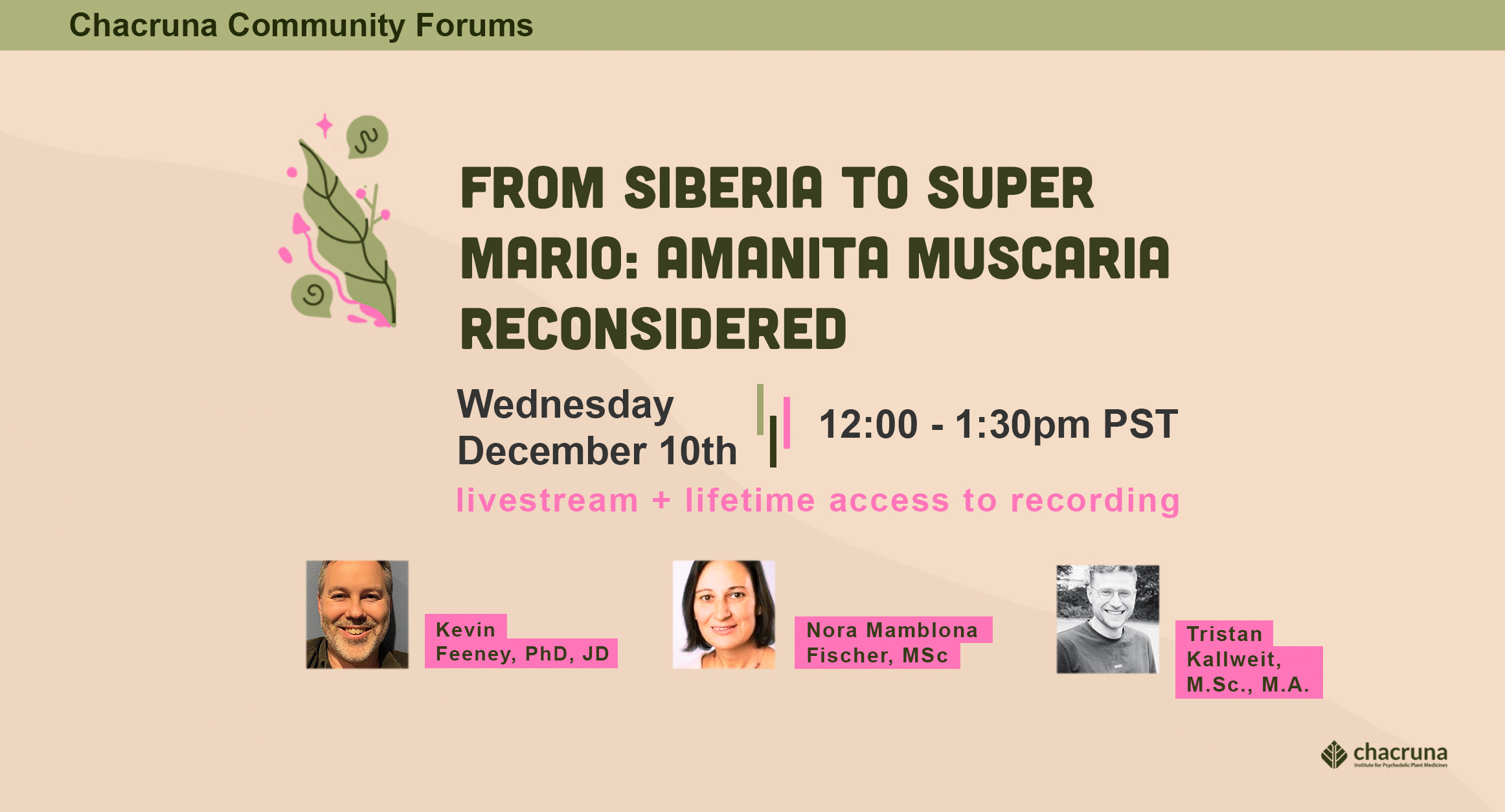
Join us for a timely and necessary conversation about Amanita muscaria’s emergence as a global phenomenon, from traditional Siberian and Sámi ceremonial practices to rapidly expanding retreat centers, commercial markets, and unregulated products. This Community Forum explores the opportunities and urgent risks that accompany this medicinal mushroom’s growing popularity: What happens when untrained facilitators, inconsistent dosing, and commercial pressures outpace scientific and ethical understanding? How do we establish responsible standards for practice, product integrity, and professional competence? And critically, as Amanita muscaria retreats proliferate across North America, Europe, and Asia, what can we learn from the trajectories, both harms and innovations, of ayahuasca and psilocybin tourism?
We’ll examine the paradox of Amanita muscaria’s contemporary moment: a mushroom with deep roots in Indigenous traditions that remains strikingly understudied, overlooked by its own toxicological stigma, and caught in regulatory limbo, neither officially recognized as food nor as medicine. Key questions we’ll explore include: What are the psychological and ethical implications of commercialization, particularly around contested products like “Amanita gummies”? And how can we conduct responsible scientific research while ensuring that Indigenous and traditional knowledge holders are co-creators in relationships grounded in reciprocity and accountability?
Speakers include Kevin Feeney, PhD, JD, researcher in law and cultural anthropology and member of Chacruna’s Council for the Protection of Sacred Plants; Nora Mamblona Fischer, trauma-informed psychologist and neuroscientist conducting PhD research on low-dose Amanita muscaria and initiator of the Amanita Online Congress 2025; and Tristan Kallweit, researcher in social and cultural anthropology with expertise in Amanita muscaria history since 2018. Together, we’ll navigate how to honor this mushroom’s significance while building ethical, scientifically grounded, and equitable frameworks for its responsible use and study.