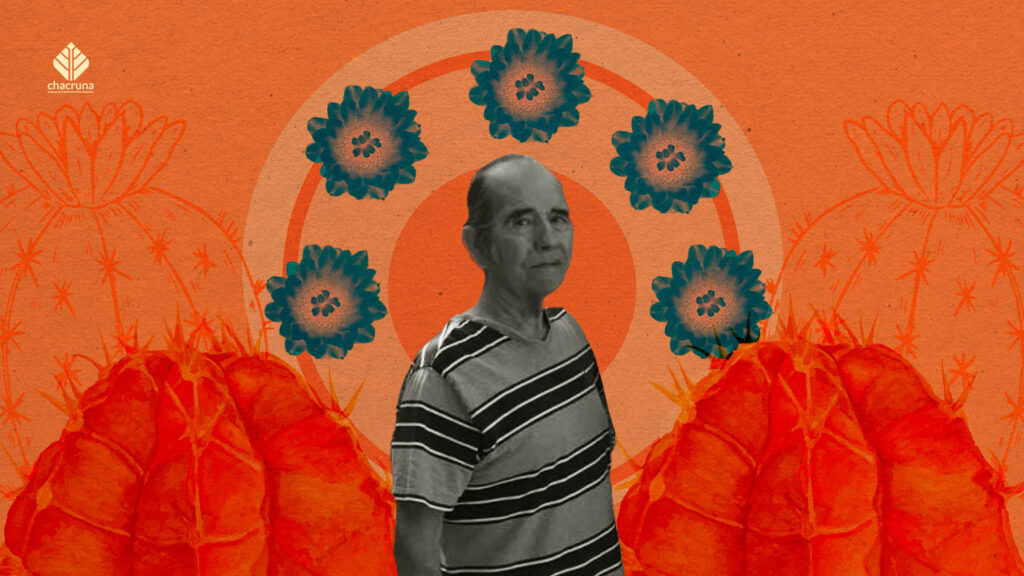
I first met Mauro Morales in 2012 during my initial visit to South Texas. I was a graduate student in cultural anthropology at the time and was trying to determine whether a study on the federally licensed trade in peyote (Lophophora williamsii) would be a viable topic for my doctoral research. I didn’t know anyone in South Texas, didn’t know my way around, and my Spanish was marginal, but with a phone call, Mauro came to meet me downtown and guided me back to his place. I was welcomed warmly by both Mauro and his wife Dora, who invited me into their home and treated me like an old friend.
I learned a lot from Mauro during the months that I spent with him and his family. Mauro was a wealth of knowledge and loved to tell stories, including stories of local folklore, of his relationships and experiences with his Native American customers over the years, as well as discussing his lifelong involvement with the peyote trade.
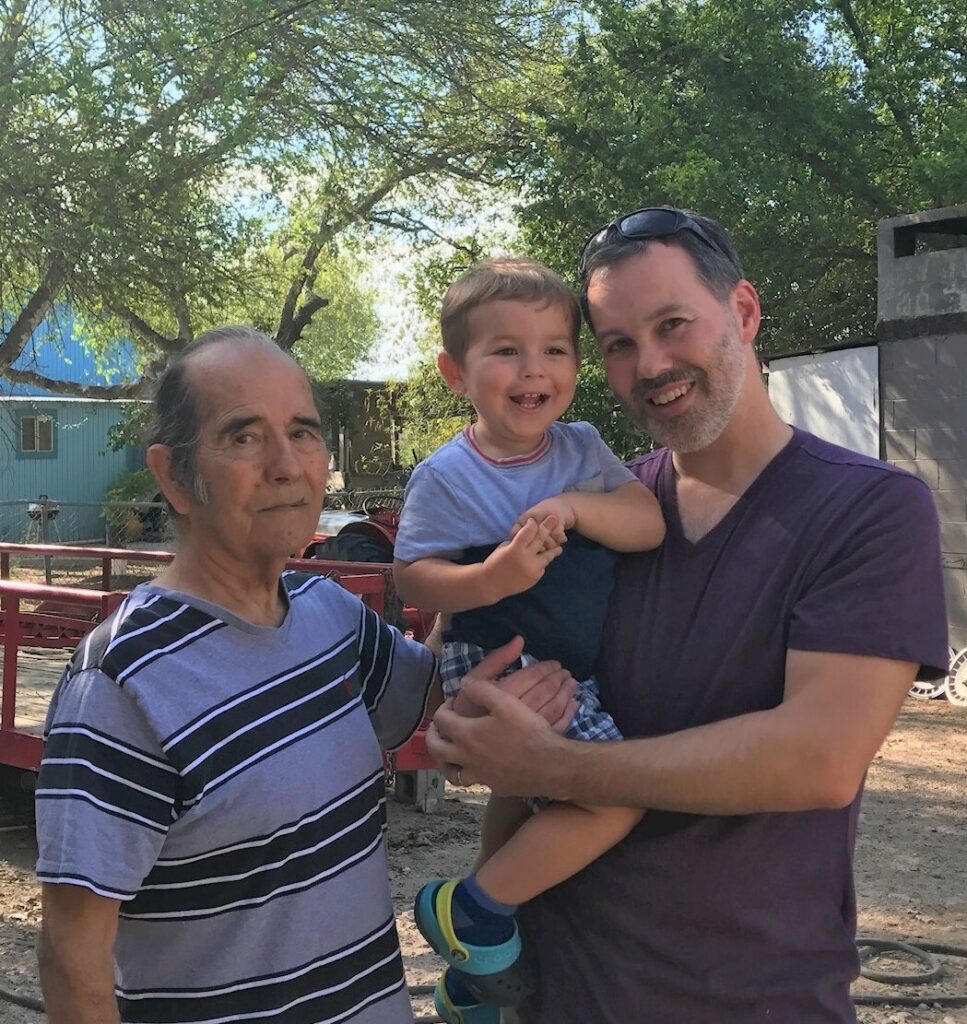
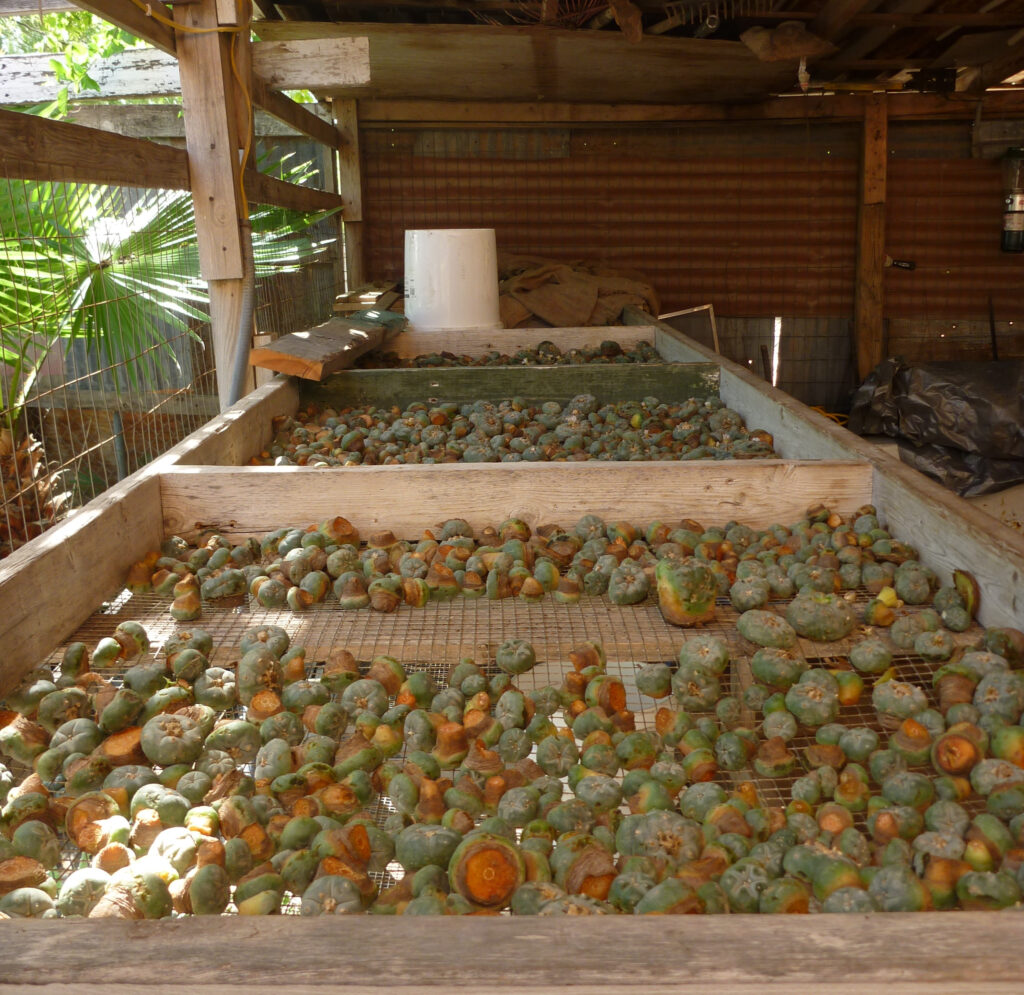
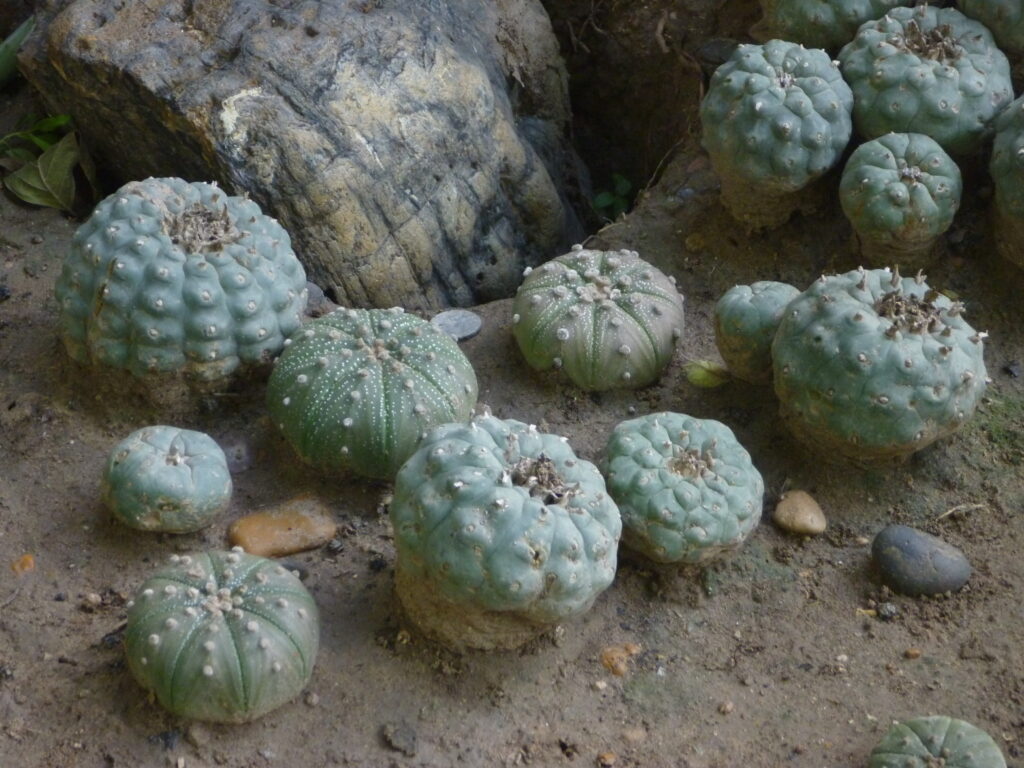
Left: Mauro Morales (left), Kevin Feeney and son, Keller, in Rio Grande City, Texas (2017). Center: Peyote bins at Mauro Morales’s place of business in 2013. The orange staining on the peyotes indicates the buttons were picked while wet or during a rain. Buttons are typically sold by the thousand. Right: Mauro Morales’s peyote garden, including specimens of peyote (Lophophora williamsii) and star cactus (Astrophytum asterias). While many peyote distributors keep peyote gardens at home, these are typically provided for Native American Church members to conduct prayers rather than for harvesting and sale.
Mauro first started picking peyote when he was around eleven or twelve years old. He recounted that he could get about two cents a button (cactus top) from the local peyote dealers so long as the peyote was half-dollar sized or larger (now they are typically quarter-sized). He also collected arrowheads which he could sell in town to schoolteachers and others for a few cents each. Like others in his community Mauro worked the peyote seasonally. Due to few local economic opportunities many families worked as migrant workers, traveling to different parts of the country during the spring and summer to work on farms or in factories. Peyote was one of the few local sources of income, but for pickers it was not sufficient to support a family, though it provided important income in the off-season.
After years of traveling to Maryland, Delaware, and other locales, Mauro took a job at a local feed yard in the early 1980s that allowed his family to stay in South Texas year-round. Eventually an injury stopped him from working and he began to get involved in peyote again, where he found he could make more money than working at the feed yard. Mauro decided to leave his job and filed his paperwork to become a federally licensed peyote distributor in 1992. With the help of his family, Mauro soon became one of the largest licensed distributors in South Texas. He developed relationships with Native Americans from around the country, some who would stay with his family for days or weeks at a time, and hosted peyote ceremonies on his family ranch. In the late 2000s, Mauro became seriously ill and his weight dropped to a mere 97 pounds. A Lakota Roadman, hearing of his illness, came to visit him and held a healing ceremony. Mauro eventually recovered but he slowed down physically and so did his business. When I met Mauro, he was only one of three remaining peyote distributors and he continued to work with his family in the peyote business until his passing.
While the peyote trade continues in South Texas, it has lost one of its warmest, kindest, and gentlest souls. Rest in Peace Mauro Morales (March 5, 1943–January 16, 2022).
Note: This article was originally published in the newsletter of the Cactus & Succulent Society of America; Feeney, K (2022, Summer). Last of the Peyoteros, Mauro Morales: In Memoriam. To The Point, 2nd Quarter 2022. Cactus & Succulent Society of America.